
32 answers, 23 videos
Frequently Asked Questions About Your Roof
Icon Roofing answers the roofing questions Valley homeowners ask most: how often to inspect a roof, how long it lasts, what insurance covers, how pricing and financing work and how to vet a contractor. Most answers come from founder Zac Payne. For your own roof, an in-person inspection gives the specific answer.
These are the questions Icon Roofing hears most from homeowners and property managers across the Valley. Many of the answers come from short videos recorded by founder Zac Payne, who worked 8 years in the roofing industry before he started Icon Roofing. They are grouped by topic so you can find what you need fast.
The answers here are general. Your roof, your policy and your budget are specific. For a number tied to your own home, the online roof cost estimator gives you a planning range in a few minutes, and a home roof inspection with photos gives you pictures and a written recommendation.
If a storm brought you here, start with the step-by-step guide to filing a roof damage claim. If you are weighing the cost of a new roof, see monthly payment options through Wisetack.
Still have a question? Call (480) 427-7600, Monday to Friday, 8:00am to 4:00pm, or write to the Icon Roofing office.
Inspections and repairs
How often should I have my roof inspected?
Once a year works for most homes with nothing hanging over the roof. Zac Payne recommends every two to three months if you back up to a golf course, because stray balls crack tiles. If trees, palms or birds drop debris that dams up water, plan on every four to six months. Have it checked after a strong monsoon storm too.
What happens at the first roof assessment appointment?
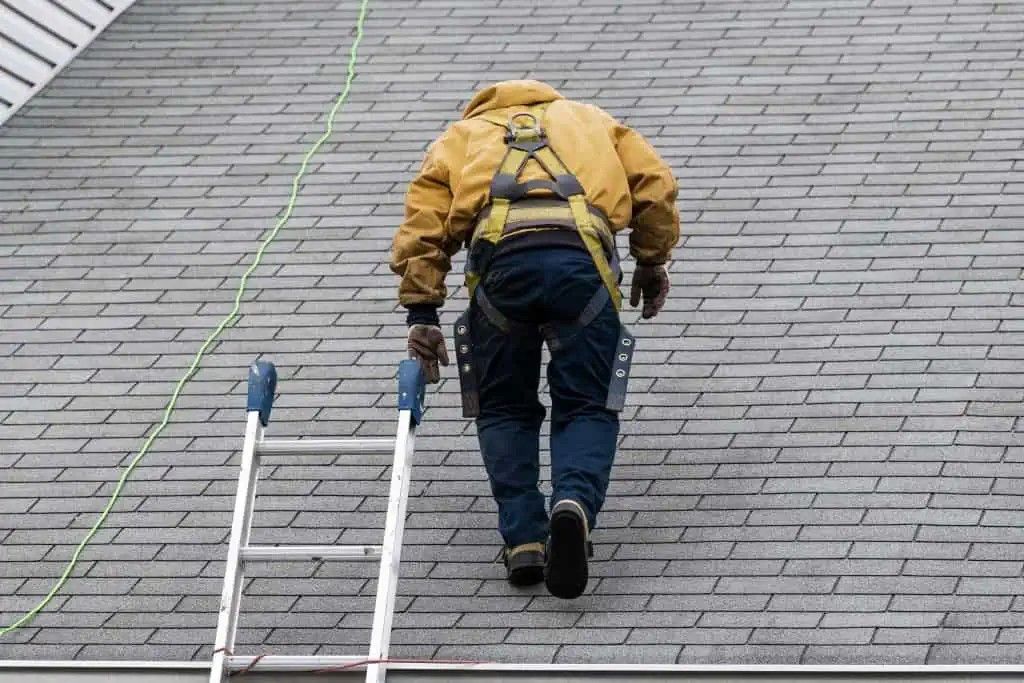
A roof advisor from Icon Roofing gets on the roof, checks the surface, flashings, vents and any problem areas, and takes photos. You then get a plain recommendation. Either the roof is in good shape, or it needs work in specific spots, and you get an estimate to fix it. The photos show you exactly what the advisor saw.
What can damage a roof between inspections?
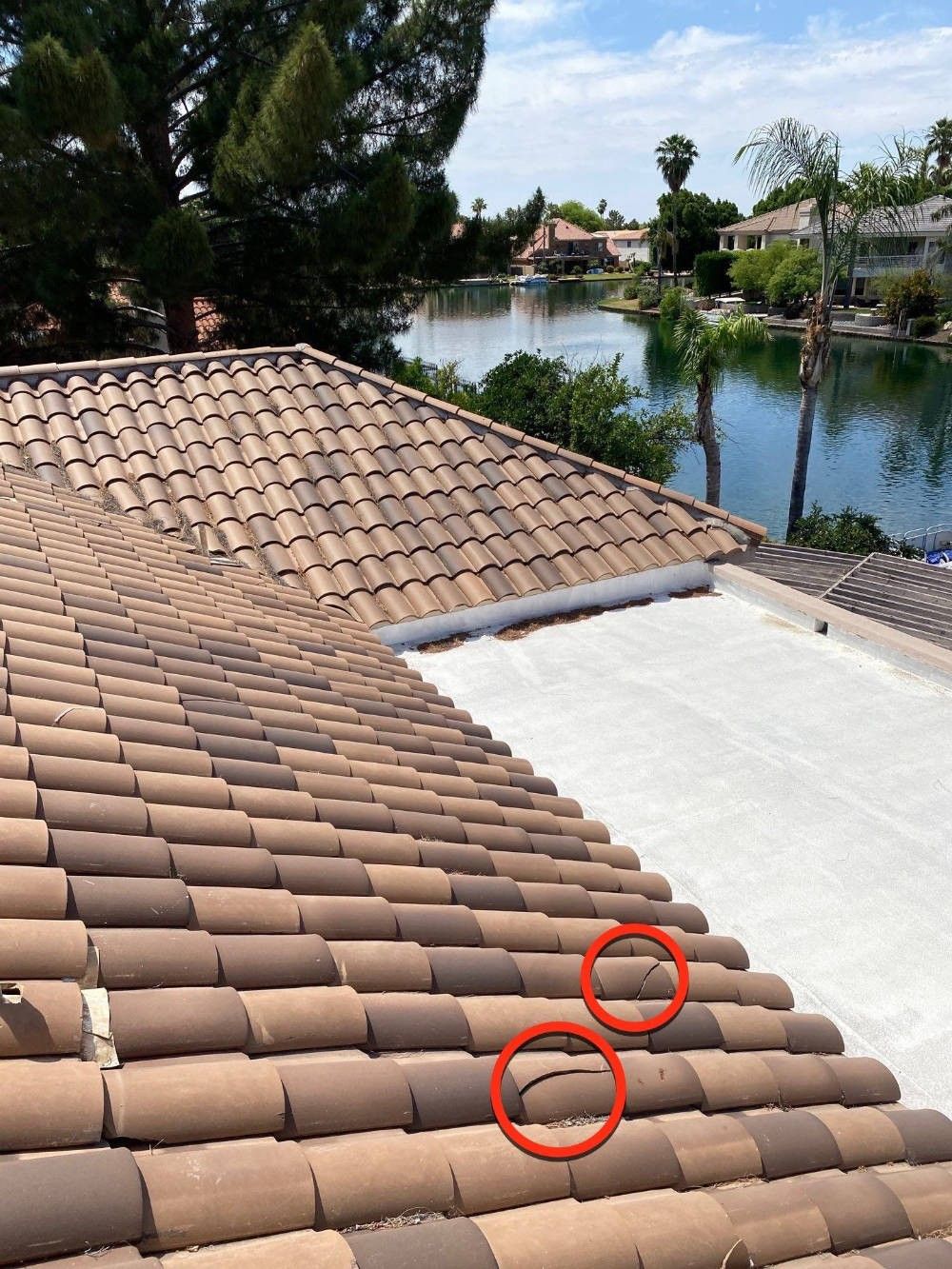
More than storms. Solar installers and AC technicians walk on roofs and can crack tiles. Birds nest under tiles and push them out of place. Kids throw toys up there. Monsoon winds blow debris onto the roof that skips across the surface. Each problem is small on its own, but left alone for months it can turn into a leak and a much bigger repair bill.
Can my roof be repaired instead of replaced?
Often, yes. A few cracked tiles, lifted shingles, a failed pipe vent flashing or a small leak can usually be repaired. Replacement makes more sense when the underlayment has failed across large areas, the decking is soft or rotted, or leaks keep coming back after repairs. Photos from an inspection show you which side of that line your roof is on.
Do foam roofs need ongoing maintenance?
Yes. A spray foam roof depends on its coating to shield the foam from UV. Arizona sun wears that coating thin over time, so foam roofs need periodic recoats. The timing depends on the coating and how the roof has weathered. Recoating on schedule protects the foam underneath, which is far less work than replacing the foam itself.
Roof replacement
How long will my roof last?
It depends on the material, the install quality and how well the roof has been maintained. Zac Payne says a typical tract home roof in the Valley lasts about 15 to 20 years, with a realistic range of 10 to 30. Icon Roofing has replaced roofs that lasted 40 years, and one that failed after 8 because of a poor install and no maintenance.
Do tile roofs last forever?
No. Concrete and clay tiles can last 60 to 70 years, but the tiles are not the waterproof layer. The underlayment beneath them is, and it typically needs replacing every 10 to 30 years depending on the product and install quality. Broken or displaced tiles, often from pigeons nesting underneath, expose that underlayment to the sun and speed up its failure.
What happens on install day?
The crew arrives early, usually between 6 and 8 a.m. A trailer goes in your driveway, so move your cars out of the garage the night before to avoid getting blocked in. Tarps go down to protect shrubs and landscaping around the house. Expect noise through the workday. Most home reroofs take a few days of work on site.
Will my property be messy during the roofing job?
Yes, while the work is underway. Old roofing comes off and goes into the trailer, and the yard can look rough during the day. The crew cleans up when the job is done. Zac Payne puts it plainly: if the site is not clean when the crew leaves, call him personally and he will come clean it up himself.
What should I expect after my roof is replaced?
The crew cleans up the site, and you receive the warranty information for your new roof. Icon Roofing backs both its craftsmanship and the materials. Keep that paperwork with your home records. From there, a yearly inspection and a check after strong monsoon storms help catch small issues early. If anything looks off, call the office at (480) 427-7600.
Materials and energy
What is the most expensive roof to put on a house?
Among the roofs Zac Payne sees, specialty tile such as Japanese clay sits at the top. Standing seam metal and cedar shake are the more common high-end choices. Both cost more upfront, but they look great, last for decades and need little maintenance. They are two of Icon Roofing's favorite roofs to install.
What is the cheapest roof to put on?
Asphalt shingles usually have the lowest upfront cost of the common pitched roof types in Arizona. The cheapest roof is not always the cheapest to own, though. A low-cost install with thin underlayment or poor ventilation can fail years early in Valley heat. Compare the full scope, materials and warranty on each bid, not just the total.
How do I make my roof more energy efficient?
Start with ventilation. Many Valley roofs older than about 10 years lack enough vents to let hot attic air escape, unless the attic has spray foam insulation. When you replace a roof, you can also add reflective products under the tile or shingles, such as a white underlayment like Tile Seal or a radiant barrier sheet like Low-E ThermoSheet, to keep the attic cooler.
How big is my roof?
Bigger than your home's living space. The roof also covers the garage, porches and the overhangs that wrap the whole house. A typical 1,800 square foot home often has close to 3,000 square feet of roof, and some roofs approach double the living area. The online estimator gives you a measurement, and an in-person inspection confirms it.
What is a square of roofing?
A square is 100 square feet of roof area, and roofers measure jobs in squares. A 3,000 square foot home roof is 30 squares. A 60,000 square foot commercial roof is 600 squares. On an estimate, SQ means squares and SQFT means square feet, so check which unit you are reading before you compare bids.
Storms and insurance
Will homeowners insurance cover my roof?
Often, if the damage came from a sudden event your policy covers, such as a severe windstorm, hail, fire or a fallen tree. Insurance usually does not pay for normal wear, age or a lack of maintenance. Your policy sets the details, including your deductible and whether it pays replacement cost or actual cash value. Read it, then call your carrier's claims department.
What should I do right after a storm damages my roof?
Photograph and video the damage as soon as it is safe, from the ground and inside the house. If water is getting in, a temporary tarp can limit further damage. Keep the receipt, since many policies reimburse it. Then call your insurance company's claims department and schedule a roof inspection so the damage is documented before the adjuster visits.
Can Icon Roofing meet with my insurance adjuster?
Yes. Having your contractor on the roof during the adjuster's inspection helps make sure every damaged area gets recorded. Tell Icon Roofing when the adjuster is scheduled, and a team member can walk the roof with them, point out the damage and compare notes on the scope of repairs. It is far easier to settle questions on the roof than by email later.
What if my roof insurance claim is denied or underpaid?
Do not assume the decision is final. Read the denial letter for the exact reason, then get an independent inspection with a written scope of damage. From there you can request a reinspection, file a written supplement or, for disputes over the amount, look at your policy's appraisal clause. Icon Roofing's denial help page walks through each step in order.
Payment and financing
How does Icon Roofing price its work?
Zac Payne describes Icon Roofing as neither the cheapest nor the most expensive roofer, somewhere in the middle and maybe toward the upper side of middle. Prices reflect fair pay for the crews, the cost of quality materials and the warranties Icon Roofing provides. Competitive pricing is one of the four tenets of The Icon Way.
Do you offer financing for roofs?
Yes. Icon Roofing offers financing through Wisetack for roof repairs and replacements. You can prequalify online in about one minute, and checking your options does not affect your credit score. All financing is subject to credit approval, and your terms depend on what Wisetack's lending partners offer you.
How much do you pay your roofing contractor, and when?
Your written proposal should spell out the total price, what it covers and when each payment is due. Read those terms before you sign, and ask about anything unclear. Be wary of any roofer who wants full payment before work starts or will not put the scope in writing. If paying all at once is hard, ask about Wisetack financing.
Do you offer free estimates?
Yes. Icon Roofing offers free roof estimates. For a quick starting point, the online roof estimator measures your roof and gives you a planning range. For an exact quote, a roof advisor inspects the roof in person, confirms the measurements and checks for damage that an online tool cannot see, like soft decking or failed underlayment.
Working with Icon Roofing
Is Icon Roofing insured?
Yes. Icon Roofing carries general liability and workers' compensation insurance. Proof of that coverage is included with every proposal, so you can check it yourself instead of taking anyone's word for it. Ask every roofer you are considering for the same proof, and confirm the coverage is current and adequate for the job.
Is Icon Roofing licensed in Arizona?
Yes. Icon Roofing holds Arizona ROC# 333889 CR-42. You can look up any contractor's license on the Arizona Registrar of Contractors website by name or license number. The listing shows whether a license is active, expired, suspended or revoked. If a roofer does not show up there at all, they are not licensed.
What does GAF Master Elite mean for my roof?
GAF Master Elite is a certification GAF says is held by roughly the top 2% of its roofing contractors. It lets Icon Roofing offer the GAF Golden Pledge limited warranty when the roof system qualifies. Icon Roofing describes that coverage as 50 years on materials and 25 years on workmanship, with a 40-point factory inspection by GAF.
How do I know if my roofing contractor is legit?
Check four things. Look up the license on the Arizona Registrar of Contractors website. Read the bad Google reviews and see how the company responded. Look for a working website and some social media presence. Ask neighbors on local apps like Nextdoor. Legitimate roofers are easy to find, with branded trucks and crews in company shirts.
How do I know if a roofing contractor is ripping me off?
Warning signs include pressure to sign the same day, a vague estimate with no itemized scope, a price far below every other bid and a request for full payment upfront. Get at least two written estimates that list the same scope so you can compare like for like. Ask what underlayment, flashing and ventilation are included, since that is where corners get cut.
How can I tell if a roofer is lying about damage?
Ask for photos of every problem they report, taken on your roof, with the location marked. A good roofer can show you exactly what is wrong and explain why it matters. If the story keeps changing or they will not show proof, get a second opinion from another licensed contractor before you approve any work.
What questions should I ask a roofer before hiring them?
Ask for their Arizona ROC license number and proof of liability and workers' compensation insurance. Ask who will do the work, what materials and underlayment they use and what warranties cover the materials and the labor. Ask how long the job will take, how they protect your landscaping and how they handle cleanup and payment.
What can I do if a roofing contractor did bad work?
Start by putting the problem in writing to the contractor and giving them a chance to fix it. If that fails, you can file a complaint with the Arizona Registrar of Contractors, which handles complaints against licensed contractors. For questions about suing or recovering money, talk to an attorney. This answer is general information, not legal advice.
What does Icon Roofing care about most on every job?
The Icon Way sums it up in four tenets: competitive pricing, quality materials, a satisfaction guarantee and warranties on both craftsmanship and materials. In practice that means fair prices, products that hold up in Arizona heat, a clean site when the crew leaves and a team that picks up the phone when you have a question.
Video answers from Zac
23 short videos, 31:57 in all. Each one loads only when you press play, and every video has a written transcript underneath.
How often should you get your roof looked at?
Read the transcriptHide the transcript
How often should you get your roof looked at? Honestly, depends on the property. If you live up to a golf course, then probably every two to three months because there's a lot of bad golfers, myself included, that sometimes those balls go wayward and they break tiles, they damage stuff. That is obviously a concern and you'll wanna get it looked at probably every two to three months at minimum because of how bad roofs get without being looked at and serviced.
If you don't back up to a golf course but you have a lot of foliage like trees and leaves and all that that sheds on top of a roof, that'll probably every four to six months to get your roof looked at because that dams up water and makes water go not where it's supposed to go, sideways or even backwards. But if you have those leaves and debris cleaned off, water will go where it's supposed to. So if you have foliage like a lot of trees, palm trees, anything like that, or you have a lot of birds, unfortunately some properties have a lot of birds infestations, you wanna be every four to six months to have your roof looked at. You may not need anything after they look at the roof but it's good to know so that if there is something wrong, you can get it done right away and then you're not in a very big expensive repair bill when you can just do it for a couple hundred bucks, replace a few tiles or blow the leaves out, whatever it is.
So that's kind of like the parameters for either up to a golf course or you have a lot of foliage. The other one is if you just have like a normal house where nothing's around you, once a year is pretty good because we have really good monsoon season sometimes where they blow stuff off or not stuff off, but they'll blow stuff onto your roof and damage it and it'll skip across. And again, that's damage that should be addressed right away. But you can also use your homeowner's insurance a lot of times to pay for that damage if it was done during an act of God, a severe wind storm or a hail storm, a fire, a flood, whatever it is, you can usually use your insurance for that.
But if you just have like a normal house, nothing around it, once a year is a good time to get your roof inspected. Our inspections come with nice photos and a recommendation of, hey, you're great, or hey, you may need some work over here. Here's an estimate to fix it. And then that way you're up to snuff, your roof is good, and then we'll see you next year and hopefully no storms or anything happens.
Sometimes there's solar people on the roof. There's AC people on the roof. There's birds. There's, you know, kids throw stuff.
My kids throw stuff on the roof all the time. That kind of stuff you want to be on top of just so you don't have a bad roofing issue, which could be resolved pretty quickly and pretty reasonably priced. But if it goes a long time without being done or noticed, that's when you get a lot higher of a roofing bill.
How long will my roof last?
Read the transcriptHide the transcript
How long does my roof last? Great question. Depends on the roof. Depends on the roof type.
Depends on if you've kept up with it, you've serviced and maintained it. It also depends on how the install was. Like the people that actually built the roof. It also depends on the quality material they put on.
If they put all the flashings on. There's a lot of different variables. On average in the valley, let's say it's a track home or a normal regular neighborhood home, 20 years is typically on average how long they last. You might get a roof leak at the 10 to 15 year mark, but you might be able to patch it, live a few years, and then actually come time to replace it down the road.
But really it's 10 to 30 years is a good range. We've done roofs eventually that were 40 years old that lasted 40 years without having to be replaced. That's great. It's just not that common because the builder grade is not the best.
And we'll say it to anybody's face. Builder grade is not very good typically. Unless it's a semi-custom or a custom home, they don't invest in the roof because no one looks at it. No one goes up there.
No one cares. They all want a nice bathroom or a nice kitchen. They don't spend a lot of money on the roofer on a track home new build. So 20 years on average could be 15, could be 10.
We did a roof not too long ago that was only eight years old. Complete redo because it wasn't done well. They didn't keep up with it. And there was leaks everywhere.
And there was rotted wood everywhere because lack of maintenance and bad install. So every roof is different. So I can't give you an exact answer for how long the roof lasts. But there are some parameters of what we typically see which is 15 to 20 years is on average how long the roof lasts these days.
Do tile roofs last forever?
Read the transcriptHide the transcript
I heard tile roofs last forever. Is that true? No, it is not. The tiles themselves are made of concrete, sometimes they're clay, most are concrete and they're very durable and they last several decades.
However, they are not waterproof. So underneath a tile is an underlayment which is waterproof. That's usually what goes bad every, you know, 10 to 30 years depending on how bad of a job or how good of a product it is and how good of an install it was. That's what needs to get replaced every, you know, so many years.
The tiles themselves, yeah, they can last 60, 70 years sometimes, but no, they don't last forever. You think you have a tile roof and it's gonna last forever? I promise you it will not because the underlayment is not a forever product. The tiles will last a while, this does not.
Especially if these tiles break, fall off, get blown off, whatever it is, gets lodged out of place because of a pigeon milled in their house. That happens a lot. It'll expedite that roofing material underneath that underlayment and makes the roof go bad sooner, which makes the replacement timeline much sooner because of these other, you know, elements that force the roof to go bad sooner. But no, your tile roof does not last forever.
No roof lasts forever. I'll preface that. No roof lasts forever. There are some great products that last decades, some that don't last very long, but be aware your roof will not last forever and you want to get looked at routinely so that you're in the loop on, hey, is it gonna leak this summer or am I fine this winter rainstorm?
Kind of depends on the roof and how long it's been, if you kept up with it, how the install was. All those are factors on how roof lasts and, you know, is it gonna last forever? No, but sometimes they can last a very long time.
How big is my roof?
Read the transcriptHide the transcript
How big is my roof? It's a little bit of a challenging question to answer because every roof is different. Your home is your home. It's not your roof.
Your roof is typically much greater than your home is because it covers your garage, your front porch, your back porch. Sometimes you'll have a overhang that's one to three feet long. That is not covered in your livable square footage of your home. So, if you have a typical, let's say, 1,800 square foot home, your roof is probably closer to 3,000 square feet because your garage is several hundred square feet.
You have a front porch that's a couple hundred square feet. Your back porch is a couple hundred square feet. All the overhangs are two feet by the whole perimeter. So, you have a lot of roofing square footage, not just your livable square footage.
So, I don't want to say it's double, but a lot of times it could be double your roofing square footage versus your livable home square footage. If it's a commercial building, it's always going to be more than you expect because it's your office space and you have your warehouse space. You might have a design space. Then again, you might have overhangs.
You might have some walls. The roofing goes up the walls a certain amount, maybe all the way up and over, maybe just a foot. All that is not included in your livable square footage of the building or the actual usable space of your building. So, hard to say.
We have an app on our website that will give you a free estimate and it'll actually tell you the square footage of the roof. It may not be perfect, but it's actually pretty accurate. And again, it's always better to have a roofer go out and verify that information, but we do have an app on our website that will give you a free estimate and give you the square footage of your roof so you can feel like, okay, my roof is actually 4,000 square feet when really my livable square footage is only 2,500. And that's actually accurate.
So, do your due diligence. You can do some stuff online. It's always safer to have a roofer come out and make sure that they accurately measure it all, but there is a few ways to go about it. And it's almost never what you think it's going to be.
It's always more than what you think it's going to be.
How much is a square of roofing?
Read the transcriptHide the transcript
Another question we get a lot is how much is a square of roofing? As roofers, we're not the brightest, so we typically like to simplify things. So a square of roofing is 100 square feet of roofing. So if it's a 60,000 square foot building, it's 600 squares.
If it's a residential home and it's 3,000 square feet, it's 30 squares. So simple math. Again, we're not the brightest, so we try to make it as simple as possible and make it very concise. So if you have a question about roofing squares, that's where it is.
Our SQ doesn't mean square feet, it means squares. SQFT is square feet, but SQ is squares and roofing terms.
What is the cheapest roof to put on?
Read the transcriptHide the transcript
What is the cheapest roof to put on? So right now in the market, asphalt shingles is the least expensive roof to put on. Now that's a complete replacement, taking the roof off and putting new asphalt shingles down. There is a different way of roofing in the valley where they have concrete tiles and the clients reuse their tiles and all you do is take the tiles off, replace the underlayment and everything about it and then put those same tiles back on.
Sometimes less expensive than doing a complete overhaul of all new asphalt shingles. So depending on the type of the roof there is and what you're going to do with it, I'd say asphalt shingles are probably the least expensive and the most cost effective than probably a refelt or an underlayment or replacement of a tile roof. If you want to go with all new tiles, then yeah, it's usually almost double if you're going to take all the tiles off and put all new tile on. If you want to go higher end, there's metal, there's cedar shake, which we're doing soon at a nice custom home.
So there's a lot more expensive options, but I'd say the least expensive are an asphalt shingle or reusing your tiles and just replacing the underlayment.
What is the most expensive roof to put on your house?
Read the transcriptHide the transcript
What is the most expensive roof to put on your house right now? There is standing seam metal roof, which is fantastic. It's kind of expensive. There's also cedar shake, which is gorgeous, but it is wood.
So it's quite costly. There's some special tile like a like a Japanese clay. That's probably the most expensive on the market right now. But there's so many different types of roofs you can put on there on the higher end that are designer nice roofs, but like the most reasonable expensive roofs are gonna be cedar shake or a standing seam metal roof.
They are gorgeous. They last decades and they're very very good very low maintenance, which is nice because some roofs are more on the maintenance side heavy but cedar shake and metals probably our favorites to put on that are on on the expensive side. But they're gorgeous and they're worth every cent and you don't have to touch that over for you know decades to on average maybe a little bit of maintenance here and there but on average you'd put up there and you're done for a very long time and you're very happy.
How do I make my roof more energy efficient?
Read the transcriptHide the transcript
How do I make my roof more energy-efficient? So there's a couple ways one if you replace the roof, there's a couple products that you can install that are more reflective so there's like a white underlayment versus a black one or there's also a energy-efficient product called a thermosheet that is basically foam with with aluminum foil laminate on both sides. It kind of acts as a radiant barrier on top of the roof under the tiles or under the shingles. That's another way you can keep the cost down instead of blowing in all this insulation in the attic you can do a roofing insulation like that.
That can keep your roof more energy-efficient. Keep your attic cooler. Keep your house cooler. So that's like if you were to replace your roof on average the most part we have problems with is the roof being underventilated normally on a new build or in the last decade or so.
They've been very adamant about ventilation with the architects so they have to have a certain amount of roofing ventilation vents on the roof in order to for the attic to breathe well enough if your roof is older than 10 years. On average they probably aren't ventilated very well because there's no laws or people really enacting those those rules for ventilation so the biggest thing for us, especially with shingle roofs is ventilating the roof if you don't have any vents on your roof. It's usually a bad thing if you have spray foam insulation in your attic perfect. I have at my house.
I love it. You don't need vents on your roof but if you don't have spray foam insulation then you have to have vents on the roof to get the hot air out of your attic and let some fresh air go in so ventilation is very important. There's also like I said a couple energy-efficient products you can install on the roof like a white underlayment like the tile seal or you can do the thermos sheet which is by low e. They can put under the under the roof tiles or under the shingles that help combat a lot of that heat.
So there's a few ways that you can work on energy efficiency and not having your roof cook inside out.
Will homeowners insurance cover my roof?
Read the transcriptHide the transcript
Will homeowner's insurance cover my roof? That's a great question. If you have a concrete tile roof, almost never. Not to say it's impossible, but concrete tiles are very sturdy.
They're not impenetrable, they're not perfect, but it has to be like an act of God or severe windstorm or severe hailstorm to do enough damage to actually constitute an insurance claim from your homeowner's insurance. If you have a shingle roof, those get paid for a lot by insurance to blow off or things hit it during a storm and skid across and damaged it or things just naturally just blew off or they creased. There's a lot of things that happen when that happens. If you have any other type of roof, the answer is usually yes, but it has to make sense for the insurance company to cover it.
If it's like you have one tile that blew off, they're not gonna give you the entire roof. If you have a few shingles that blow off, maybe that constitutes more coverage because there's a few things like the shingles that are not made anymore, or it looks completely different now because the colors are different. Whatever it is, homeowner's insurance is great, but don't bank on that paying for your roof. Especially if you have a concrete tile roof, you might get some money, but rarely do they give you an entire roof for your deductible because you had a leak.
Even because you have to have damage to constitute a claim. It can't just be my roof is 20 years old, it leaked, homeowner's insurance paid for it. They have to have some sort of reason to cover it because it's something like wear and tear, wear and tear, age, neglect, lack of maintenance. Those are all things that they'll throw back at you and you want to get your ducks in a row and say, hey, I have been cleaning off my roof.
I have been doing good. It wasn't just, you know, wear and tear. This happened, you know, a bullet hole. We've had a few bullet holes go into a roof and start leaks.
That is coverable because it's not, well, I'm not sure if it's coverable by insurance, but it's something that you can bring up like, hey, I didn't do this. So it's not wear and tear. It's something to bring up to an insurance company for sure.
Do you offer financing for roofs?
Read the transcriptHide the transcript
We do offer financing and payment plans. So there's a few different companies that we work with. Again, if you guys have your own financing person or you want to go through your bank, that's totally fine. It doesn't hurt our feelings.
If you want to use who we vet and we like, we have Wisetack, we have Green Sky, we have Moment, we have Mosaic. We have a lot of different companies that you can use. They're all different, right? They all have different plans and terms and all that nice things.
So if you don't want to use your own credit card or your own cash or take out your savings, we totally understand we do have financing options. Just let us know beforehand so that we can help you along the way or if you want to do it yourself, it doesn't hurt our feelings at all. But we do offer financing to make it easier on our clients to, again, hopefully jump over some hurdles and make it a little bit quicker.
How are you priced?
Read the transcriptHide the transcript
Okay, so how are you guys priced? Yeah, so I'll be honest. We're not the cheapest. We're not the most expensive, but we're somewhere in the middle maybe on the higher end of the middle side.
But we price it accordingly to what we pay our crews which is well, and how much the material costs and the warranties that we provide so we're definitely on the cheap end. We're not on the higher end either, so we're somewhere in the middle. Which is what we consider fair and you know competitive.
Are you insured?
Read the transcriptHide the transcript
Are you guys insured as a roofing company? Yeah we both have the general liability and workers comp insurance and we're so confident in it that we actually include on every one of our proposals so you can even fact-check and look it up versus just trusting and saying oh yeah we have it and then no one ever looks it up we provide it for you so you can look it up yourselves to make sure you actually have it and that it's adequate insurance as well so we have that on all of our proposals.
How do I know if my roofing contractor is legit?
Read the transcriptHide the transcript
How do I know if my roofing contractor is legit? There's a few ways you can do it. My main way is to go on Google, look at any, I look at the bad reviews. Not the good reviews, because you can always pay for good reviews.
The bad reviews is what I look at, because those ones you can't hide typically. And you look at how the roofing contractor responded. If they did a bad job, and you guys called them out for it, good for you. They should respond nice, like, hey, I'm so sorry we did that.
Let me make it right. Let me make sure that you're happy. That way, you know, we all move on amicably, right? That's one way to do it, is look at their reviews.
You see if they have a website. If they don't have a website, it's not the end of the world, but it is very rare this day and age, it's 2025 now, they should have a website. Even if it's a trashy one, they should have a website in general. Next, I look at social media.
They don't have to be on social media, but I like to believe at minimum, they have like a Facebook, or an Instagram, or maybe an ex account, a YouTube channel, something that kind of shows that they're not hiding from people, because if you're a bad contractor, you will do everything you can to be in the shadows. You won't be out in front. You won't have your vehicles wrapped. You won't have your logo anywhere.
You won't have your crews wear your shirts. You won't be anywhere online because people can find you, and if you're doing bad stuff, then it's hard to find them. So that would be my suggestion. If you don't know if a roofing company is legit, look at their reviews, look on Google, look on their website, look at social media.
There's a few companies that, like Nextdoor, there's this new citizen app that I'm not familiar with, but you can look up roofing companies in there and say, hey, has anybody had a bad experience with this company, and they can work that route. So there's a few ways that I think you can see if a roofing company is legit, and again, I think a lot of it is just a gut feeling. If I say yes to a company, and after that I'm like, oh man, do I really feel like they're gonna take care of me, or do I feel like I'm being taken advantage of, that might be the beginning of my research of, okay, now I need to look at are they actually legit. Another great way that I forgot to mention is looking on the ROC website, and looking up either their name or their number of their license, because if they're not licensed, they're not gonna show up.
And if they are licensed, great. It should say how long their license is active for. They're usually for two years, and if they ever get revoked or they get canceled, that's a bad thing, obviously, and it'll say license expired, or license revoked, or it's suspended. All those things are good to know about a roofing contractor because the ROC website's free, and again, it's for you guys, it's not for us, it's for you guys to be able to vet a company well.
So website, ROC, Google, any of the local groups like Nextdoor, Citizen, any of those people are good ways to kind of see if a roofing company is legit or not.
What are questions you should ask your roofer?
Read the transcriptHide the transcript
What are some questions you should ask your roofer when getting an estimate? Yeah. One good one is project timeline, like when, how long the job should take. The second one would be when you can start.
The third one would be, are there going to be extra expenses you can expect when you start the job? Like, is there going to be extra layer tear-off? Is there going to be some bad wood? Is there going to be something else that's not expected or you don't know about on the front end?
And then the last one is, do you have proof of license and proof of insurance? Those are four good questions to ask your roofer when you're getting an estimate.
How do you know if your roofing contractor is ripping you off?
Read the transcriptHide the transcript
How do you know if your roofing contractor is ripping you off? One way I would say is to get multiple bids from multiple different companies and just kind of compare and contrast them because some of you might be really high. It doesn't mean they're ripping you off.
It just might mean they have a lot of overhead expenses or they want to make a lot of profit or they just did bad math. Some of you might be really cheap or less expensive because they don't have a lot of overhead or they don't want to make a lot of money or they just want to keep the lights on and that's it and not really stay in business for a long time.. How you can tell someone's ripping you off is more of the numbers sure but I feel like it's if they over promise and under deliver.
I feel like to me that's ripping you off.. If we say we're going to do something we're going to write it down in our system and make sure it actually gets executed so that way you feel like that what we tell you is going to actually happen and then we make sure on the back end we do a walkthrough at the end to make sure that what we promised you is actually executed and if it's not we won't take your paycheck or your final paycheck until it's executed like it's executed like it's executed like you said it was.. So being ripped off I feel like it's a little bit of a vague term but I wouldn't really go off price unless it's you look at other people and it's like wow I paid $30,000 for a $10,000 job.
Yeah you might feel like you got ripped off but it also is the perceived value of that roof so it's kind of hard to say if you got ripped off because some of you might value that $30,000 contractor more than a reasonable $15,000 roofer because they feel like they're being taken care of more or they get a better value out of it, whatever it is so being ripped off I feel like there's a little bit of a again inside perspective of do I feel like I was taken care of because if you feel taken care of it could be really high price or it could be really low price it really is perceived by the person so I would still get multiple bids just to make sure that you can compare and contrast and feel like you are making a good investment because the roof is a big investment so doing the right homework on the front end and then executing it throughout the process I feel like that's the best way to feel like you don't get ripped off.
How do you tell if your roofer is lying?
Read the transcriptHide the transcript
Honestly, it's more of a gut feeling of if you feel like they're actually telling you the truth or not. But in our eyes, as another roofing contractor, we feel like if they ever dodge a question or don't answer you straight on with like, hey, I asked you about this and they kind of dodge around that question. It may not be a lie. They may just generally don't know the answer.
But if I don't know an answer, I'll say, hey, I truly don't know. But what I can tell you is I will do my research and come back to you by the end of tonight and give you that answer. I think it's like this and this like I'll just tell you straight up. I don't know, but I will find out.
So I can give you the information and plus I learn and you'll learn at the same time. So if you can tell roofers lying, mostly it's skirting around a question or they don't really answer it directly or they just beat around the bush and never get to the actual answer. That's what I feel like it is. Or if it's too good to be true, that might be a good indicator that they're lying.
But again, it might just be a bad salesperson. They just generally don't know how to communicate well. So there's that interpersonal communication that people may aren't as good about. So how you can tell they're lying?
More of a gut feeling is what I feel like most people can tell.
How much do you pay your roofing contractor?
Read the transcriptHide the transcript
So we get this question a lot. How much do you pay your roofing contractor? Everything's different. Going from a roof inspection, that could be anywhere between $50 to $200.
If you want to get a maintenance done, like a servicing on your roof, that could be between $200 to a couple thousand, depending on how bad it is and what kind of roof it is, if it's concrete tile versus clay tile. So there's a couple of different things there. If you want to do a repair, it could be, again, between $500 to several thousand dollars. Depending on how big the scope of work is and how big of an area has to be done.
If there's bad wood, there's a lot of different variables there. That's kind of a general guide of where you want to go for money, $500 to a few thousand. Roof replacement, that's where it goes from, you know, if it's a shed, it could be a couple thousand dollars versus a multi-million dollar house, and it's $50,000, $60,000, $70,000, $100,000. It just depends on the square footage of the roof.
So that gives you a little bit of it. If it's residential, that's usually cheaper, it's usually cheaper because the square footage is smaller. If it's a commercial property, then yeah, it's way bigger. You're usually looking in the hundreds of thousands of dollars because of the magnitude of the roofing size.
So hopefully that gives you some insight of how much you should pay your roofing contractor. If you want to get a couple bids from people, that's what we suggest. That way you can at least kind of vet a good company versus one that may be a little bit cheaper, but may not give you as much value as what we give you or what another roofing contractor has. So get a few bids.
That way you don't feel like you're being taken advantage of, and you can kind of compare and contrast the quotes and feel like you did a good job.
How do you sue a bad roofing contractor?
Read the transcriptHide the transcript
How do you sue a bad roofing contractor? So we've never been part of a lawsuit, but from what I've heard, what the best way to do is try and work it out with the contractor the best you can. If you come to a point where they're just being unreasonable or they're not coming out anymore or they're not responding to you, the next best way is to reach out to the ROC, the Registrar of Contractors. As a licensed company in Arizona, you're part of this Registrar of Contractors for the owners of the homes, not really for the contractors.
They don't really help us. It's more for you guys. So if you ever have a problem, reach out to the ROC. They will typically, right then and there, set up a third-party person to come out and act like an umpire between you, the homeowner or the building owner, and the actual roofing contractor.
And they're going to listen to both sides, go out to the job site, check out the roof, check out the documentation that you have. So they're going to be critical from your roofing contractor, the better the scope of work and more detailed, the better, because that way you can tell the ROC person, hey, they said they're going to do this, this, this, this, this. Look it, they missed this and this. Well, in that situation, the ROC can typically say, hey, contractor, you have to do this because you agreed to it.
If not, you're going to get in trouble, you're going to get fined, you're going to get your license taken away, whatever they deem fit. But typically, you want to get an ROC involved first, not a lawyer. And then you're going to get a lawyer, because lawyers are expensive. And if you are wrong, it sometimes happens.
If the homeowner's wrong and the contractor's right because they have it written down, sometimes it costs you a lot more to go through a lawyer because you have their fees and it takes a lot longer and you might actually be wrong and the roof is right, but you just don't see eye to eye, which isn't a bad thing. I think there's always some sort of give and take that happens between a contractor and a homeowner. I try to take the company. I try to take the homeowner's side as much as possible to an extent where if they're being unreasonable, it's like, well, yeah, we didn't promise that and you thought it was going to happen, but we never said that.
We never have it written down. That just may have been a preconceived notion that was never actually going to take place. We try to be reasonable, but there might be some points where it's like, okay, you're right. The roofer just isn't coming back, not calling you back, not coming back, not responding, whatever it is, or they just did a very terrible job.
That's when you want to get the ROC involved.
What to expect during your initial roof assessment/appointment
Read the transcriptHide the transcript
Hey, Mr. Smith, this is Zac with Icon Roofing. I'm headed to your house right now. It should be in about 15 minutes.
Is that okay?
What to expect when we do your roof!
Read the transcriptHide the transcript
Hey, this is Zac with Icon Roofing. Thank you for choosing us to choose your roof. So, when we do a job, we're gonna come out to your house, we'll bring a trailer in the driveway, make sure that there's no cars in your garage, that way we don't block you in. Then we're gonna get there pretty early, so sorry if we wake you up, but we are gonna get to the house pretty early, on average between six and eight a.m.
Once we get here, they put the tarps on the ground to protect your shrubbery, everything around your house. It will be pretty noisy, pretty dirty. During the day, when the job is all done, it should be pretty nice and clean. But, during the day, it will look kind of like a war zone, so just be prepared.
We wanna make sure you know what you're getting into on any project of roofing, whether it's us or a different company. It's gonna be messy, but it will be clean when it's all done, I promise. And if you don't, call me personally and I'll come clean it up myself. So, this is kind of what it looks like when we're doing a job.
The guy's up on the roof, throwing the trash in the driveway. There'll be some trash around it, but we'll clean it up. So, just be aware. If you have any questions, call us, text us.
We're always happy to help. This is kind of what you can expect when we're doing your roof, because it will be a few days of a job and it will be pretty noisy and pretty messy. So, just be prepared.
What to expect during Install Day
Read the transcriptHide the transcript
Hey, this is Zac with Icon Roofing. Thank you for choosing us to choose your roof. So when we do a job, we're gonna come out to your house, we'll bring a trailer in the driveway, make sure that there's no cars in your garage, that way we don't block you in. Then we're gonna get there pretty early, so sorry if we wake you up, but we are gonna get the house pretty early, on average between six and eight a.m.
Once we get here, they put the tarps on the ground to protect your shrubbery, everything around your house. It will be pretty noisy, pretty dirty. During the day, when the job is all done, it should be pretty nice and clean. But during the day, it will look kind of like a war zone, so just be prepared.
We wanna make sure you know what you're getting into on any project of roofing, whether it's us or a different company. It's gonna be messy, but it will be clean when it's all done, I promise. And if you don't, call me personally and I'll come clean it up myself. So this is kind of what it looks like when we're doing a job.
The guy's up on the roof, throwing the trash in the driveway. There'll be some trash around it, but we'll clean it up. So just be aware, if you have any questions, call us, text us, we're always happy to help. But this is kind of what you can expect when we're doing your roof, because it will be a few days of a job and it will be pretty noisy and pretty messy.
So just be prepared.
What to expect once your roof's been replaced
Read the transcriptHide the transcript
So once we do your job, what we're going to do is we're going to bring a magnet around, take around the whole property, make sure there's no nails or staples that are hanging around. Any big roofing debris will pick all that up and throw it away. Then when we're done with that, we're going to take our handy-dandy leaf blower, clean up the driveway, the sidewalk, anything like that. That way it looks all nice and clean.
And once that's done, then we're going to go up on the roof, take a bunch of photos of all the after, make sure everything's painted, cleaned up, done right. Because if it's not done like it says in the scope of work, we'll make sure it is because that's part of our process is, if it's not done right, we won't bill you the final bill until all that's done. So you should always expect a magnet, a leaf blower, and us with the ladder on the side, getting up on the roof, taking a picture of everything. We send all that to your email so you know exactly what happened from the very beginning to the very end of it and you can rest assured that everything is done right.
What do you love the most about roofing?
Read the transcriptHide the transcript
So I love when you take an ugly roof and make it a pretty one. So we take all the old, replace it with new. I love before and afters because it's so easy to tell like what a good roof looks like versus what it used to look like. That's my favorite part about roofing is doing old versus new or reusing tile but replacing everything underneath.
I love that. I love seeing a good before and after and bad versus good, my favorite.
Want an answer for your own roof?
A roof advisor looks at the roof, photographs what we find and gives you a written estimate. Free estimates on all roofing work, with no pressure to sign.
Mon to Fri, 8am to 4pm. Arizona ROC# 333889 CR-42. Financing available through Wisetack.