
What roof problems are common in Glendale’s older neighborhoods?
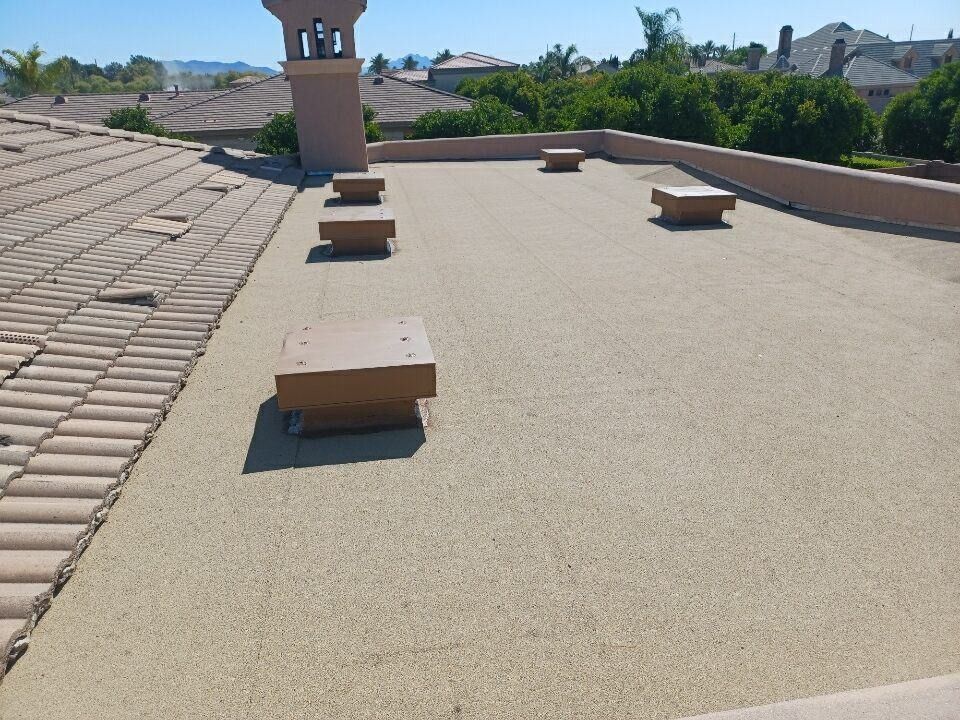
Central Glendale has some of the oldest housing in the West Valley, and its roofs show it. Historic bungalows in Catlin Court, mid-century ranch homes and small rentals near downtown often have flat or low-slope roofs with built-up, rolled or foam surfaces. Common problems are worn coatings, cracked seams, ponding water and leaks at parapet walls.
Many of these homes have had several roofs over the years, sometimes layered on top of each other. Extra layers add weight and hide damage to the deck underneath. We check how many layers are on the roof before recommending a repair.
On historic homes, we also look at how the roof meets old chimneys, porches and additions. Those transitions were often patched by hand over the decades, and they are a frequent source of leaks.
Older Glendale homes also tend to have less attic ventilation than newer builds. Trapped heat bakes the underside of the roof deck and shortens the life of whatever covers it. During an inspection we check for signs of poor airflow, such as darkened sheathing or a musty smell, and we tell you whether adding vents during the next reroof would help.
How is a Glendale flat roof repaired instead of replaced?
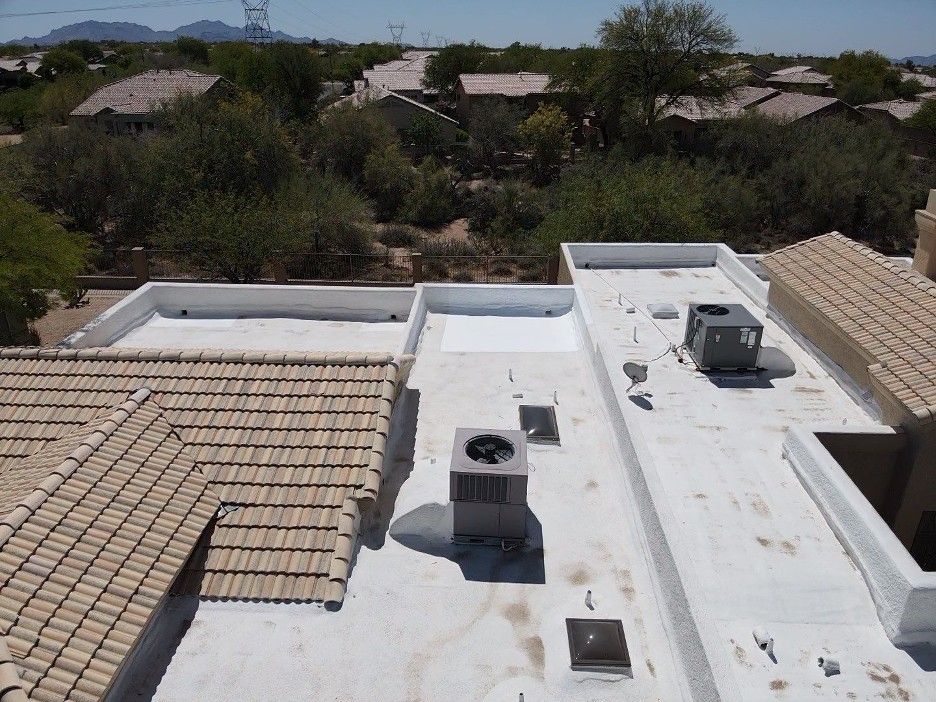
Most flat and foam roofs can be repaired when the damage is limited to a few areas and the foam or deck underneath is still dry. We cut out wet or damaged spots, fill them, and apply a fresh protective coating. Replacement makes sense when moisture has spread through the roof or the surface has failed everywhere.
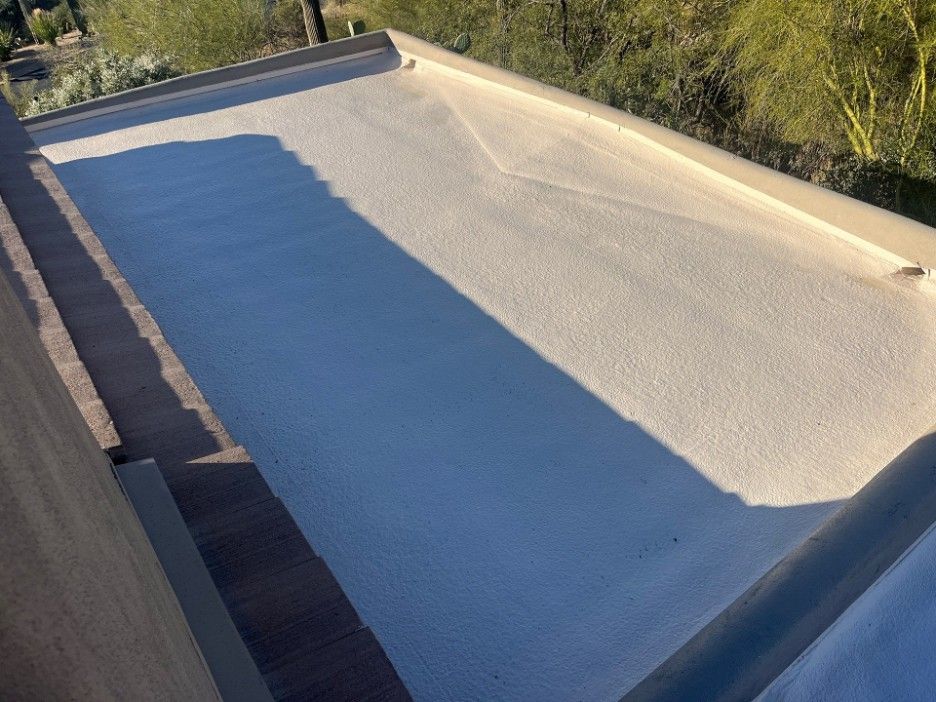
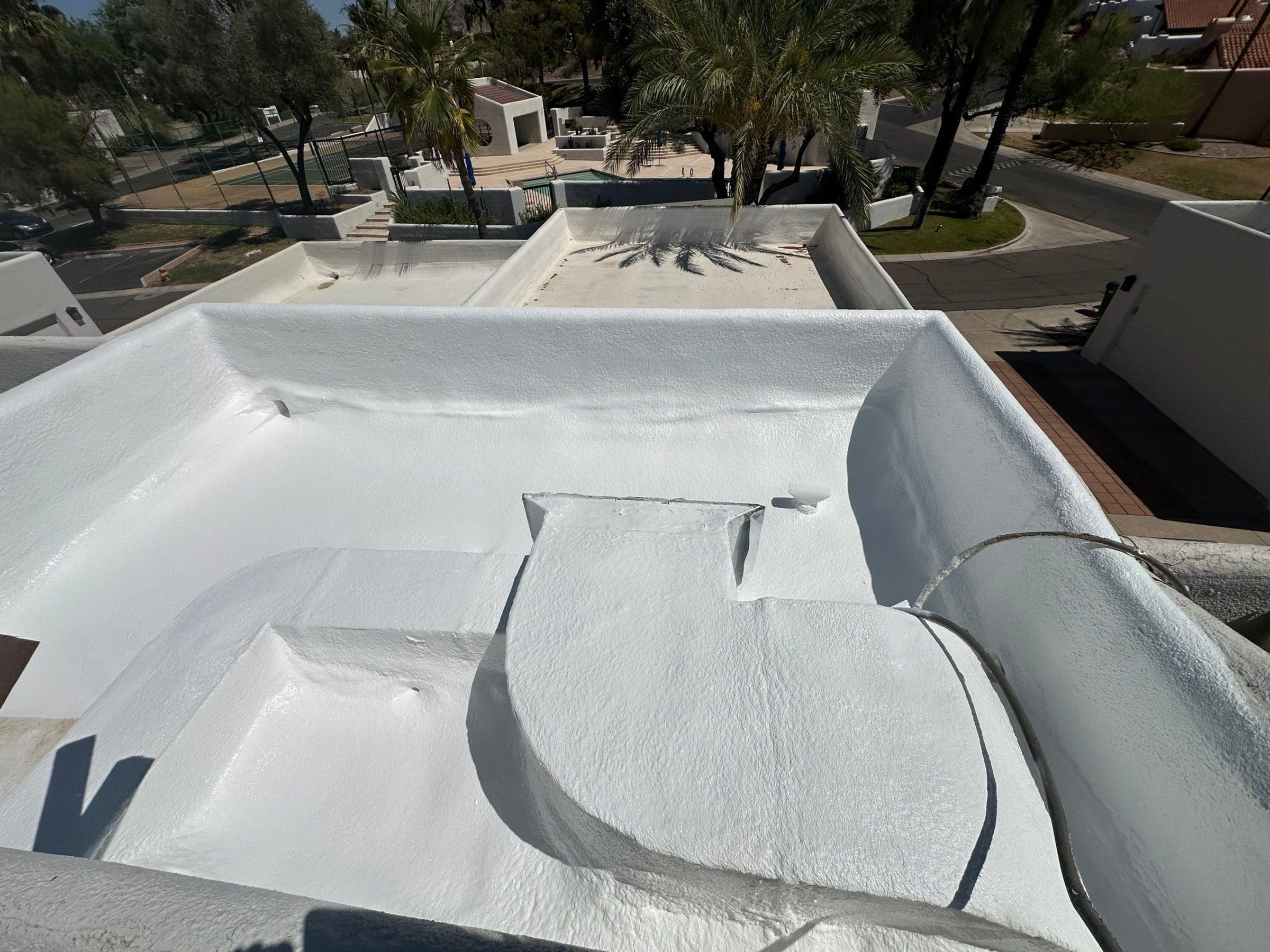
A foam roof’s coating is its sunscreen. When the coating wears thin, UV light breaks down the foam itself. Catching that early with flat and foam roof repair in Glendale usually costs far less than starting over. When the roof is soaked, sagging or failing across the whole surface, we recommend replacing the flat roof with new foam, which adds insulation and one continuous waterproof layer.
| What we find | Likely fix |
|---|---|
| Thin or chalky coating, foam still sound | Clean and recoat |
| A few blisters, cracks or bird pecks | Spot repair, then recoat |
| Ponding from a blocked scupper | Clear drain, repair low area |
| Wet foam or deck across much of the roof | Full flat roof replacement |
What about tile roofs in Arrowhead Ranch and north Glendale?
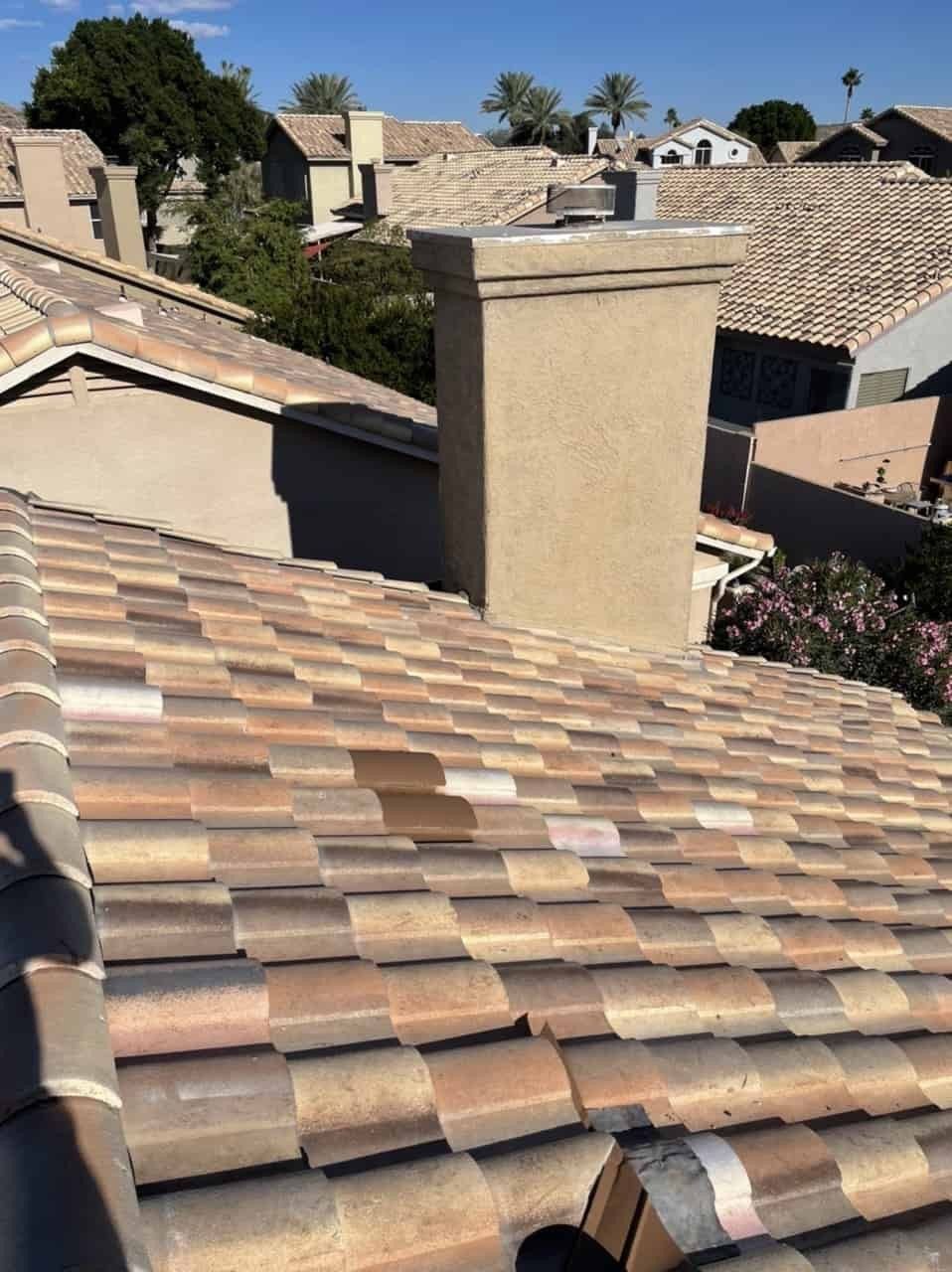
North Glendale grew later than the central city, and concrete tile is the main roof in Arrowhead Ranch and the subdivisions around it. Those roofs are now old enough that the underlayment under the tiles is often the weak point. Tiles may look perfect from the street while the layer beneath is brittle and torn.
We lift tiles at the eaves, valleys and around vents to check the underlayment directly. If problems are limited, we repair those areas. If the underlayment is failing on most slopes, a lift and relay replaces it and puts your existing tiles back on. Many HOAs in north Glendale also require approval of the tile color and profile if you change them.
Homes near the Thunderbird Conservation Park hills often have desert trees close to the house. Leaves and seed pods collect in tile valleys, hold moisture against the underlayment and slow drainage. Clearing those valleys each spring is a simple step that helps a tile roof last.
Do you handle commercial and multi-family roofs in Glendale?
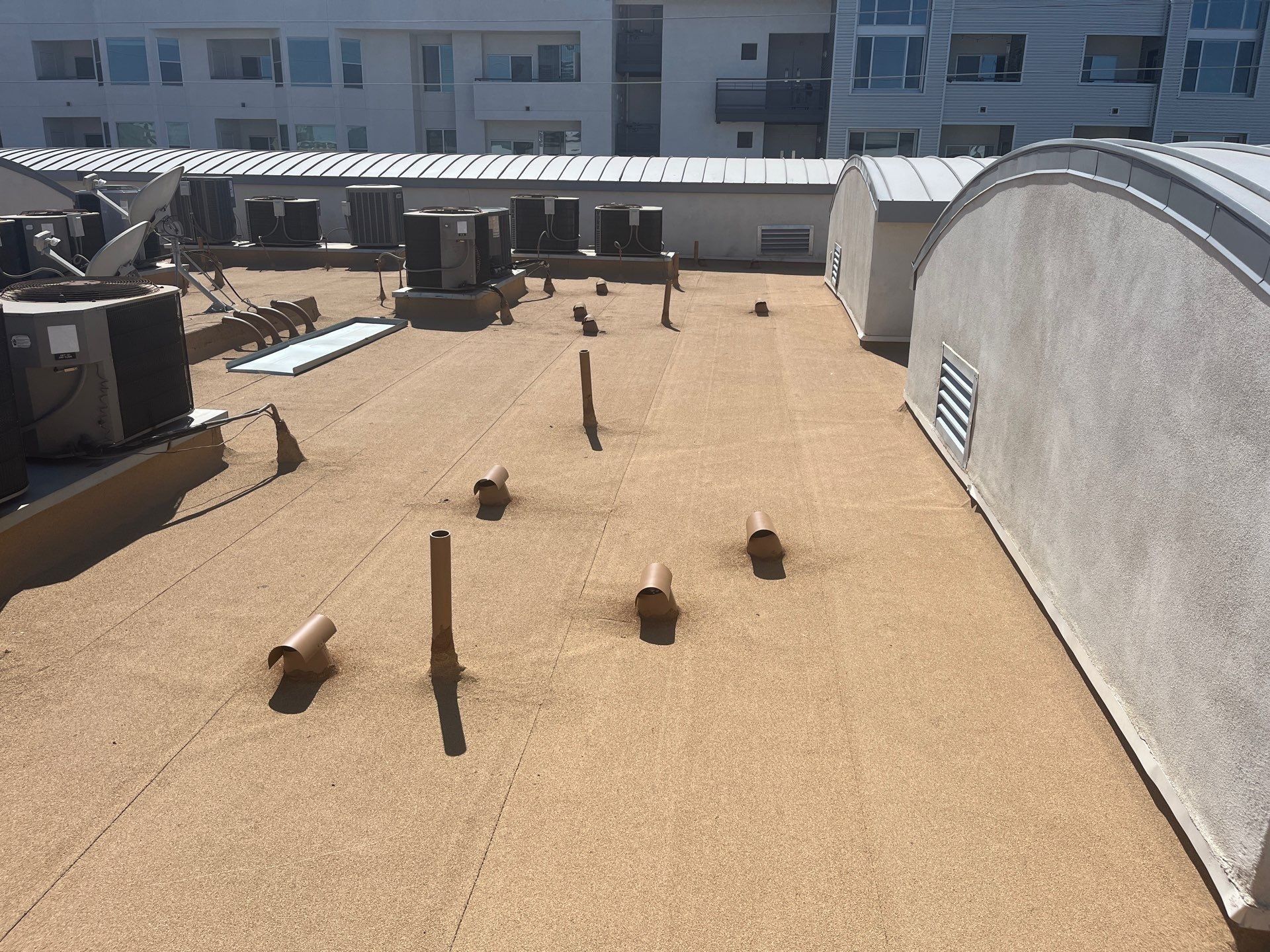
Yes. Icon Roofing repairs and replaces roofs on Glendale retail buildings, offices, warehouses, apartment complexes and HOA-managed properties. Most of these have flat roofs with foam, built-up or membrane surfaces and lots of rooftop equipment. We schedule work around your tenants and customers and keep you updated as each phase finishes.
Commercial flat roofs take a beating from foot traffic around HVAC units, ponding near drains and dust from nearby construction. For leaks and damaged areas, our commercial roof repair team works through one problem at a time. For apartment communities, we can inspect each building and give you a plan that ranks repairs by urgency, so you can budget over more than one year.
How do haboobs and monsoon storms affect Glendale roofs?
Glendale sits in the path of the big dust storms that roll across the West Valley in summer. Haboobs push fine dust into vents and seams, then monsoon rain turns that dust into mud that blocks scuppers and drains. Strong outflow winds also lift shingles, crack tiles and peel back loose flat roof edges.
Monsoon season runs June 15 to September 30. Before it starts, a pre-monsoon roof inspection in Glendale lets us clear drains, reseal flashing and fix weak spots while the weather is calm. After a storm, check for:
- Standing water on flat roofs more than two days later
- Pieces of shingle or tile in the yard
- New ceiling stains near exterior walls or skylights
- Debris piled against parapets or in roof valleys
If storm damage leads to a claim, read our guide to filing a roof damage insurance claim before the adjuster visits.
How do you get started with a Glendale roofing project?
Call Icon Roofing at (480) 427-7600 or send us a message through the contact page. A roof advisor will schedule a free assessment, inspect the roof and show you photos of each issue. You get a written estimate that explains what needs to be done now and what can wait.
We work across the West Valley, including roofs in neighboring Peoria, so we know the housing mix on both sides of the Loop 101. Icon Roofing is licensed under Arizona ROC# 333889 CR-42 and is a GAF Master Elite contractor. Our office is open Monday to Friday, 8:00am to 4:00pm.