
How much of a tile roof can be repaired instead of replaced?
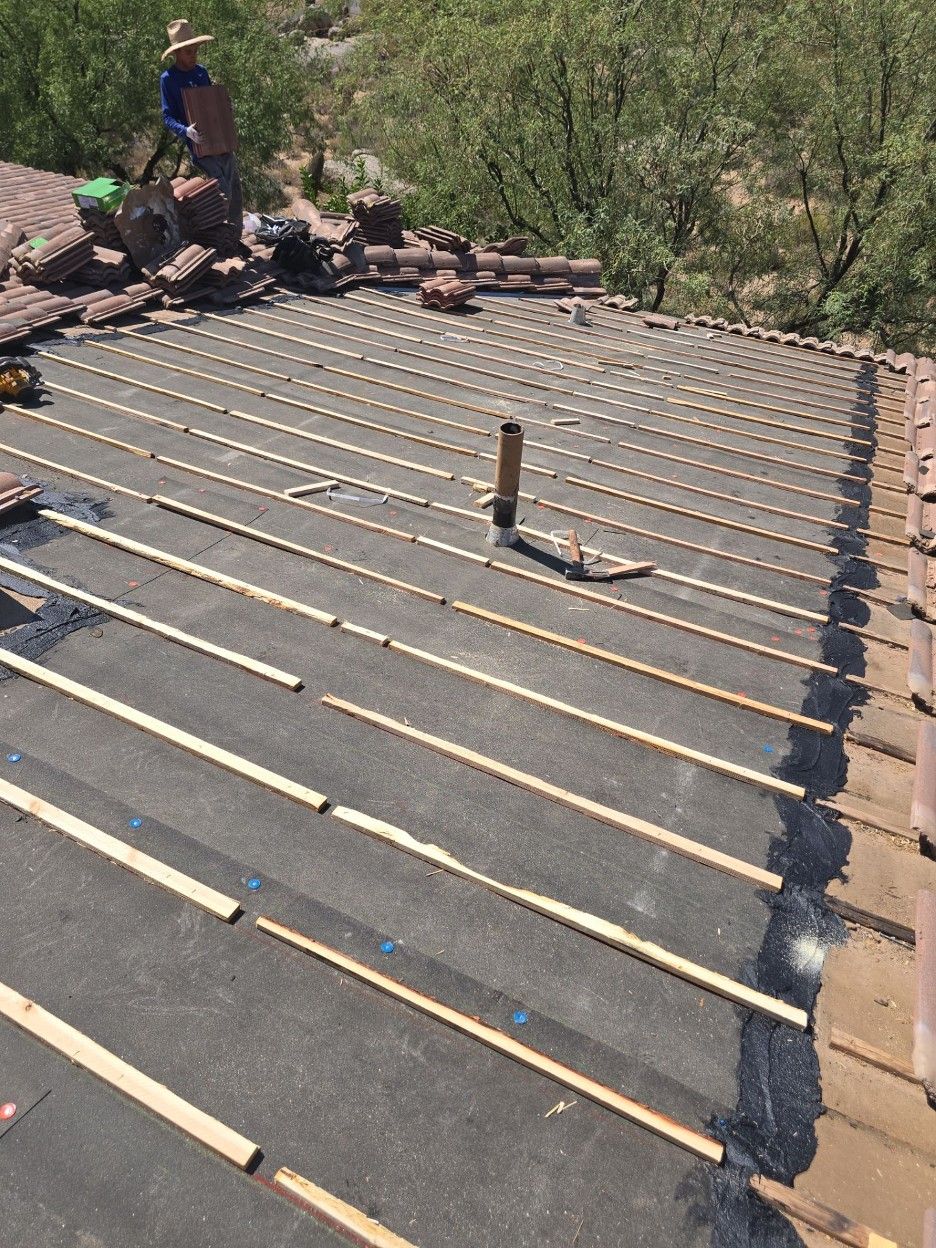
Most of it, in many cases. Concrete and clay tiles can last for decades, so a tile roof repair usually means replacing a few broken tiles or fixing the underlayment in the area that leaks. Your existing tile is lifted, the layer below is replaced, and the same tile goes back on the roof.
Repairs make sense when the failed underlayment is limited to one area, such as a valley, the low edge of a slope, or the section around a vent. When the underlayment has failed across most of the roof, repairing it piece by piece costs more than doing the whole roof at once. At that point we talk with you about replacing the underlayment under your tile roof, which often reuses your tile.
Why do tile roofs leak in Arizona?
Most tile roofs in Arizona leak because the underlayment under the tiles wears out. Tile sheds most of the water, but some always runs beneath it. The underlayment carries that water to the edge of the roof. After years of heat, it dries out, cracks and tears, and water reaches the wood decking.
The tiles usually outlast that layer. That is why a tile roof can look perfect from the street and still leak into a bedroom. Other common causes we see on tile roofs around Mesa and Scottsdale:
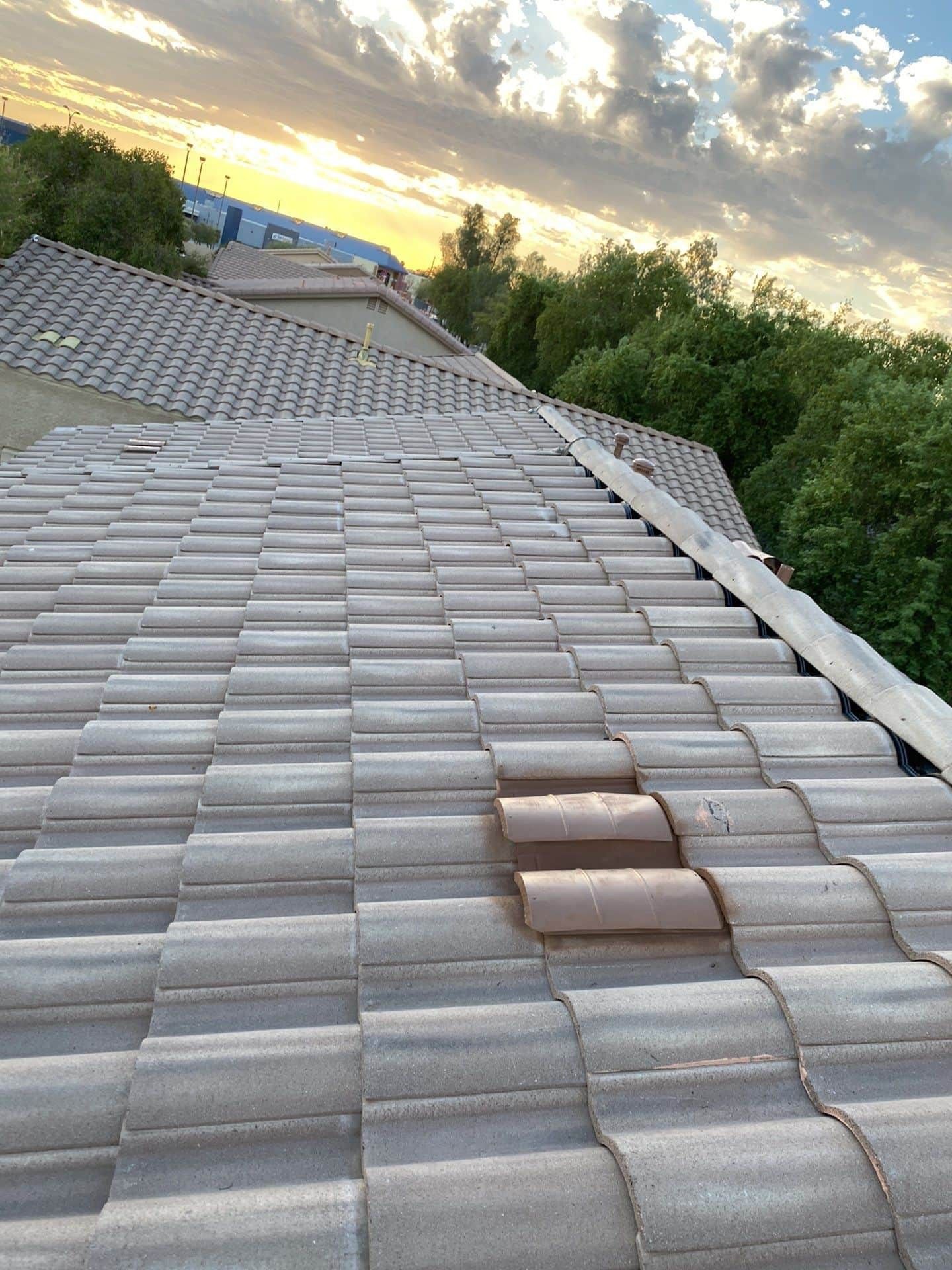
- Cracked tiles. Foot traffic, hail and falling branches crack tile. A cracked tile lets more water reach worn underlayment.
- Slipped tiles. Tiles slide when fasteners or adhesive fail, leaving gaps near the ridge or eaves.
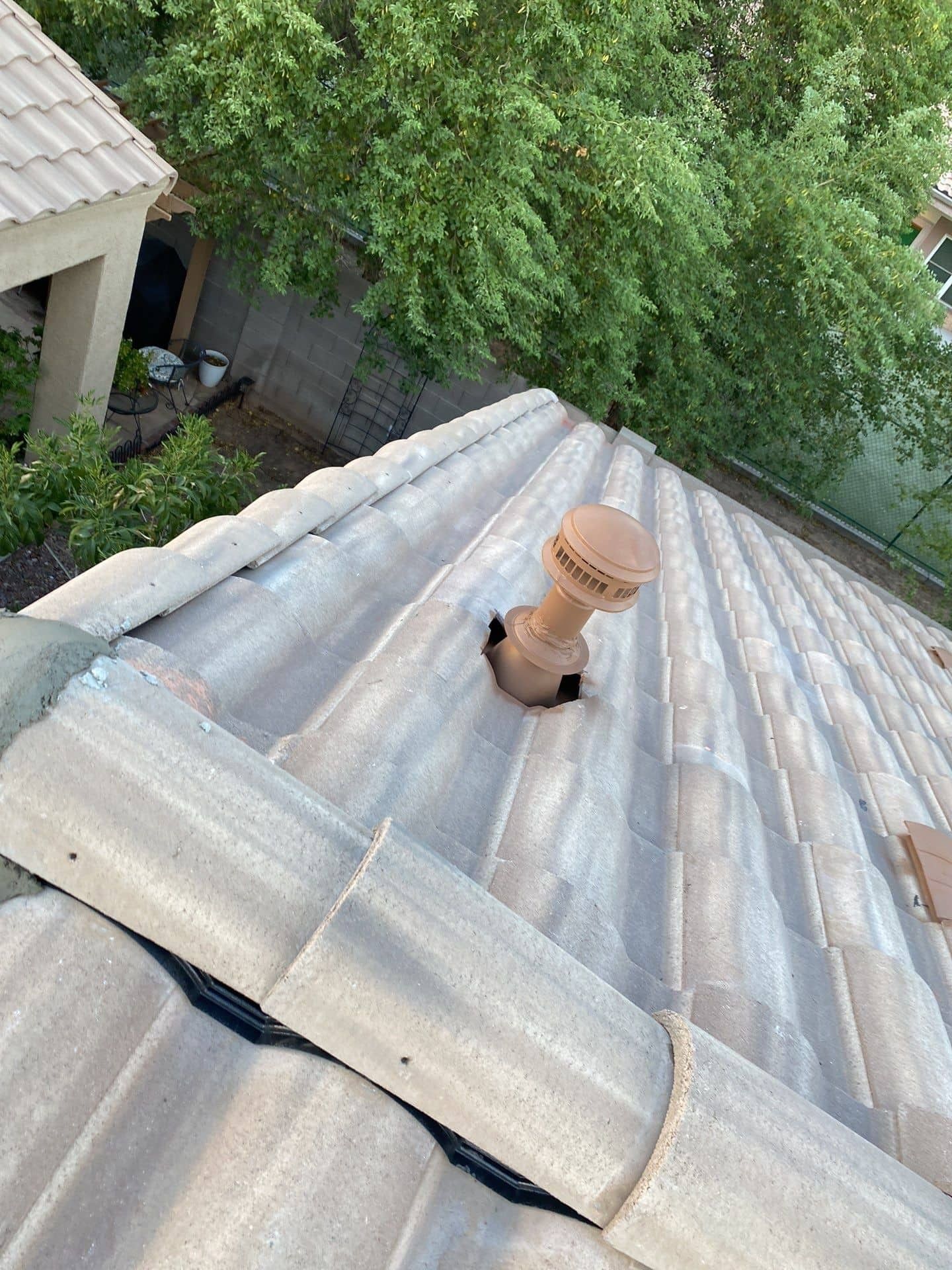
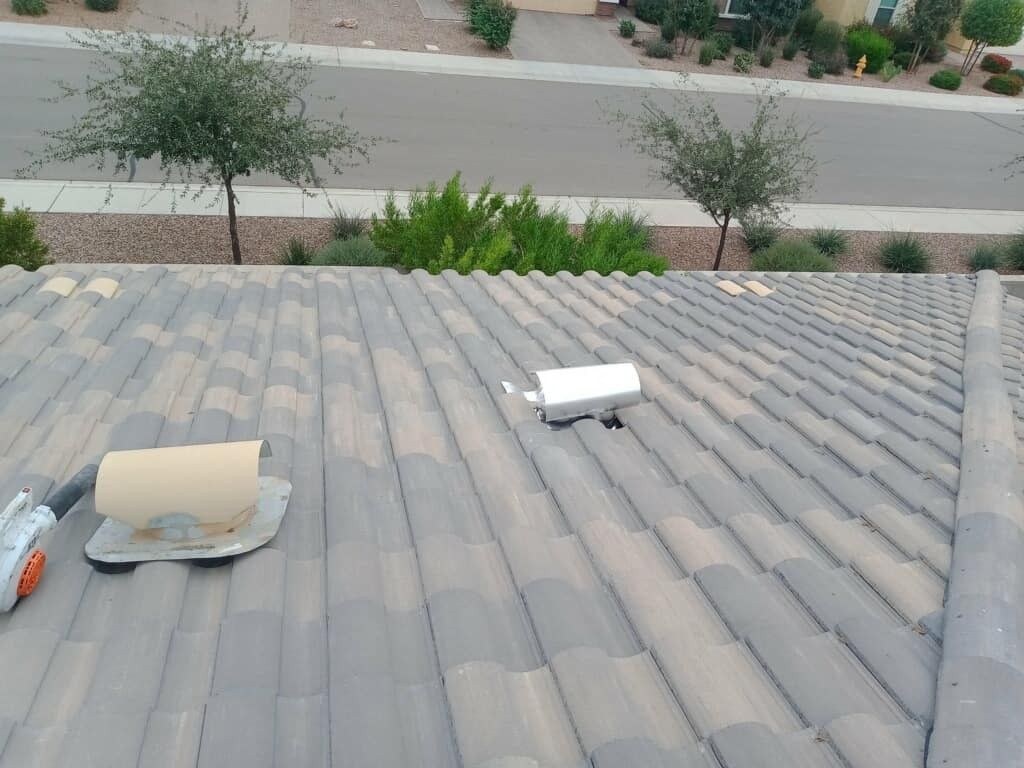
- Flashing failures. Pipe vents, skylights, chimneys and roof-to-wall joints rely on flashing that can rust, lift or lose its seal.
- Debris in valleys. Leaves and dust from haboobs build up in valleys and hold water against the underlayment.
- Deteriorating mortar. Ridge and hip mortar on older roofs cracks and lets wind-driven rain in.
What are the signs your tile roof needs repair?
Water stains on ceilings or walls are the most common sign. Others include cracked, chipped or slipped tiles, gaps along the ridge, rusted or lifted flashing around vents, and a roof line that sags. If your tile roof is older and has never had the underlayment checked, an inspection is worth booking before monsoon season.
You can spot a lot from the ground. Look for:
- Tiles that sit out of line with their neighbors
- Broken tile pieces in gutters or on the ground
- Cracked mortar at the ridge or hip lines
- Dark stains on the fascia or soffits below a valley
Should you seal a cracked roof tile with caulk or roof cement?
Only as a short-term stopgap. Caulk and roof cement dry out and crack in Arizona sun, often within a summer or two, and they hide what is happening underneath. A cracked tile should be replaced with a matching tile, and the underlayment below it checked while the tile is off.
Sealant also makes the next repair harder. Tiles glued together have to be broken to lift them, which means more tiles to replace. If someone has already sealed tiles on your roof, tell us at the inspection so we can plan for it.
How is tile underlayment repaired?
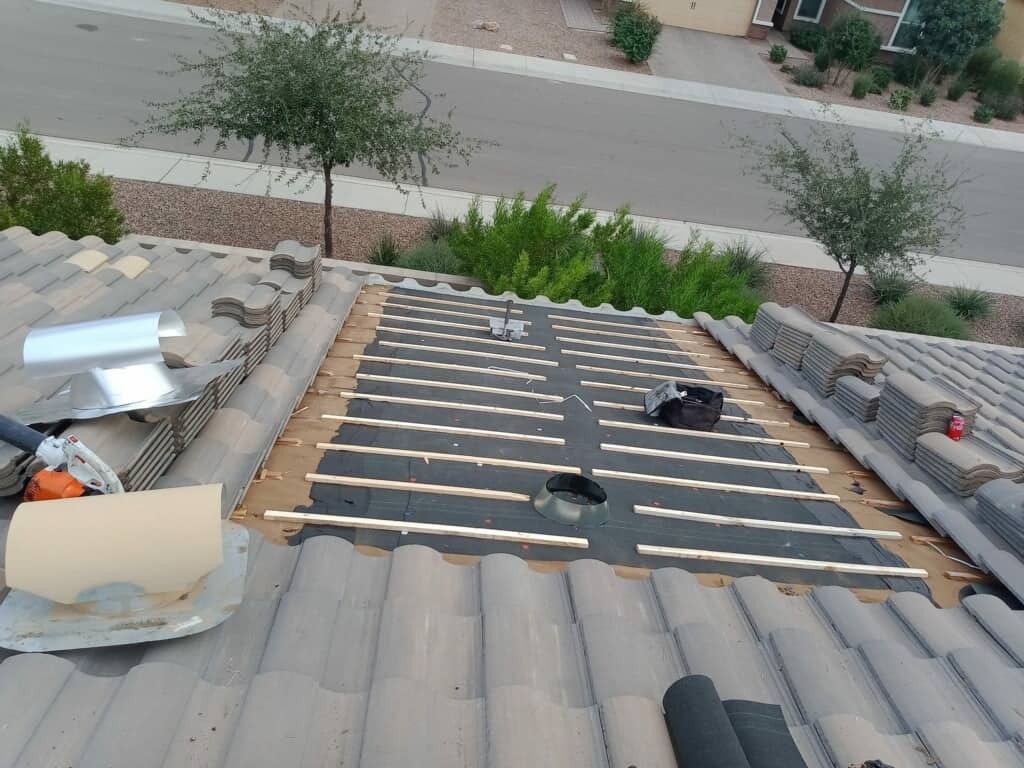
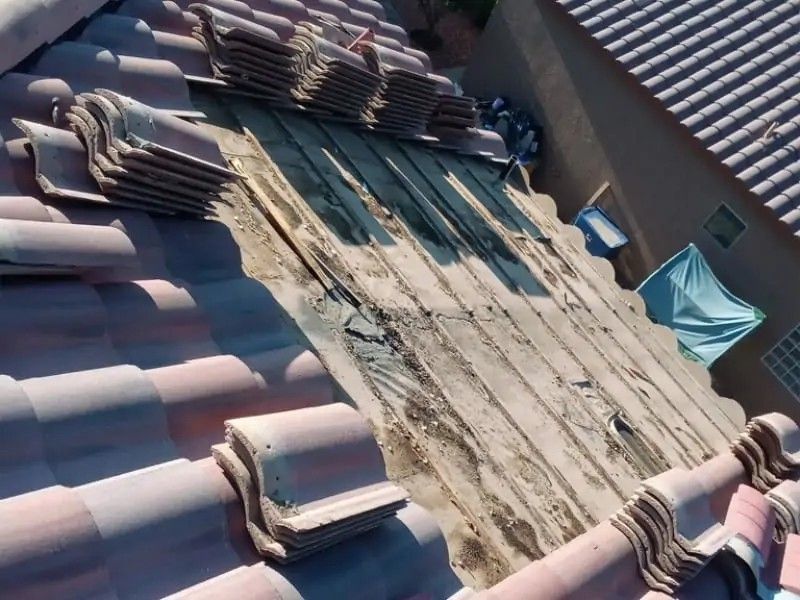
Tile underlayment is repaired by lifting the tiles in the leaking area, stacking them on the roof, tearing out the old underlayment, and installing new underlayment, battens and flashing. The same tiles are then relaid. Any decking that has gone soft from a long leak is replaced before the new underlayment goes down.
This is also called a lift and relay. It takes more labor than swapping a cracked tile, but it fixes the real cause of most tile roof leaks. We extend the new underlayment far enough past the wet area that it laps correctly with the old layer, so the repair does not create a new seam that leaks later. If your inspection turns up storm damage at the same time, our team also handles hail and wind damage repair and can document it for an insurance claim.
How long does a tile roof repair last?
A repair with new underlayment can last as long as that underlayment does, which is usually many years. The weak point is the old underlayment next to the repair. If the rest of the roof is close to failing, the next leak may show up in a different spot, and we tell you that up front.
That is why we inspect the whole roof, not only the area that leaks. If most of the underlayment is in decent shape, a repair is a good value. If it is failing everywhere, you will likely spend less over time with a full underlayment replacement. Tile roofs on Scottsdale, Fountain Hills and Gold Canyon homes built in the same era often reach that point around the same time, so neighbors may be facing the same decision.
Can you pay for a tile roof repair over time?
Yes. Icon Roofing offers financing through Wisetack, so you can prequalify online and see monthly payment options before you commit. If a storm caused the damage, your homeowners insurance may cover the repair instead. Many tile repairs are a mix of storm damage and age, and we document both in our photos.
See our Wisetack financing details for how prequalifying works. If you are still deciding between tile and another material for a future roof, our comparison of tile and shingle roofs covers weight, cost and lifespan.
Where does Icon Roofing repair tile roofs?
We repair tile roofs across Metro Phoenix, with a lot of work in Mesa, Chandler, Scottsdale, Paradise Valley, Fountain Hills and Gold Canyon. Tile is the main roof type on many homes in these cities. Many HOAs in Scottsdale and Fountain Hills require approval of roof color and material, which matters when a tile has to be replaced.
Our office is in Mesa, so the East Valley is close by. See tile roof repair and other services in Scottsdale, or go back to our main roof repair page.