
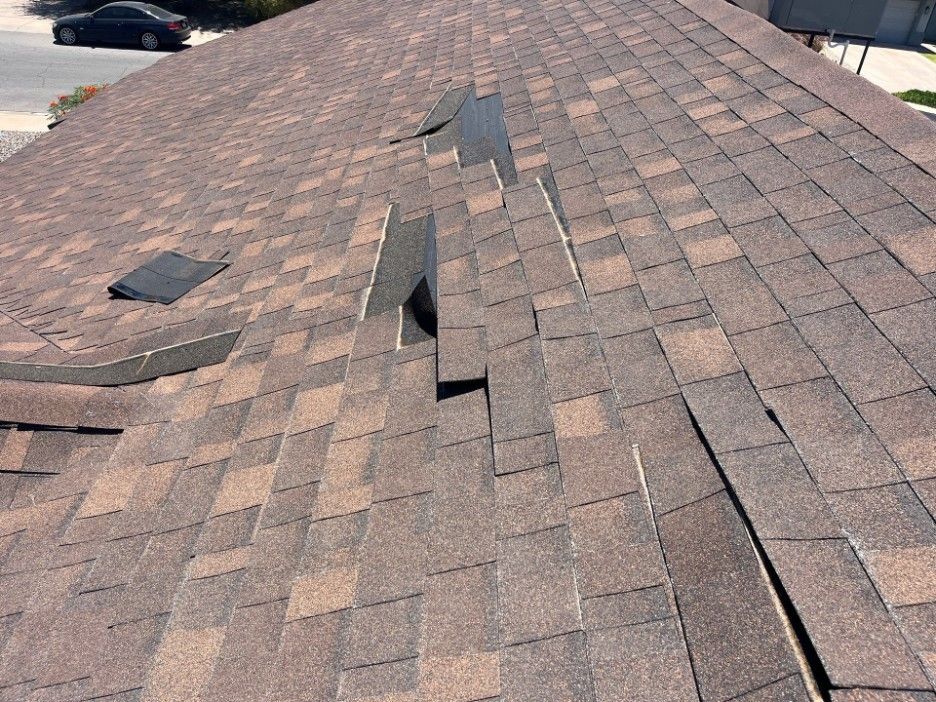
What kind of roof damage do Arizona monsoons cause?
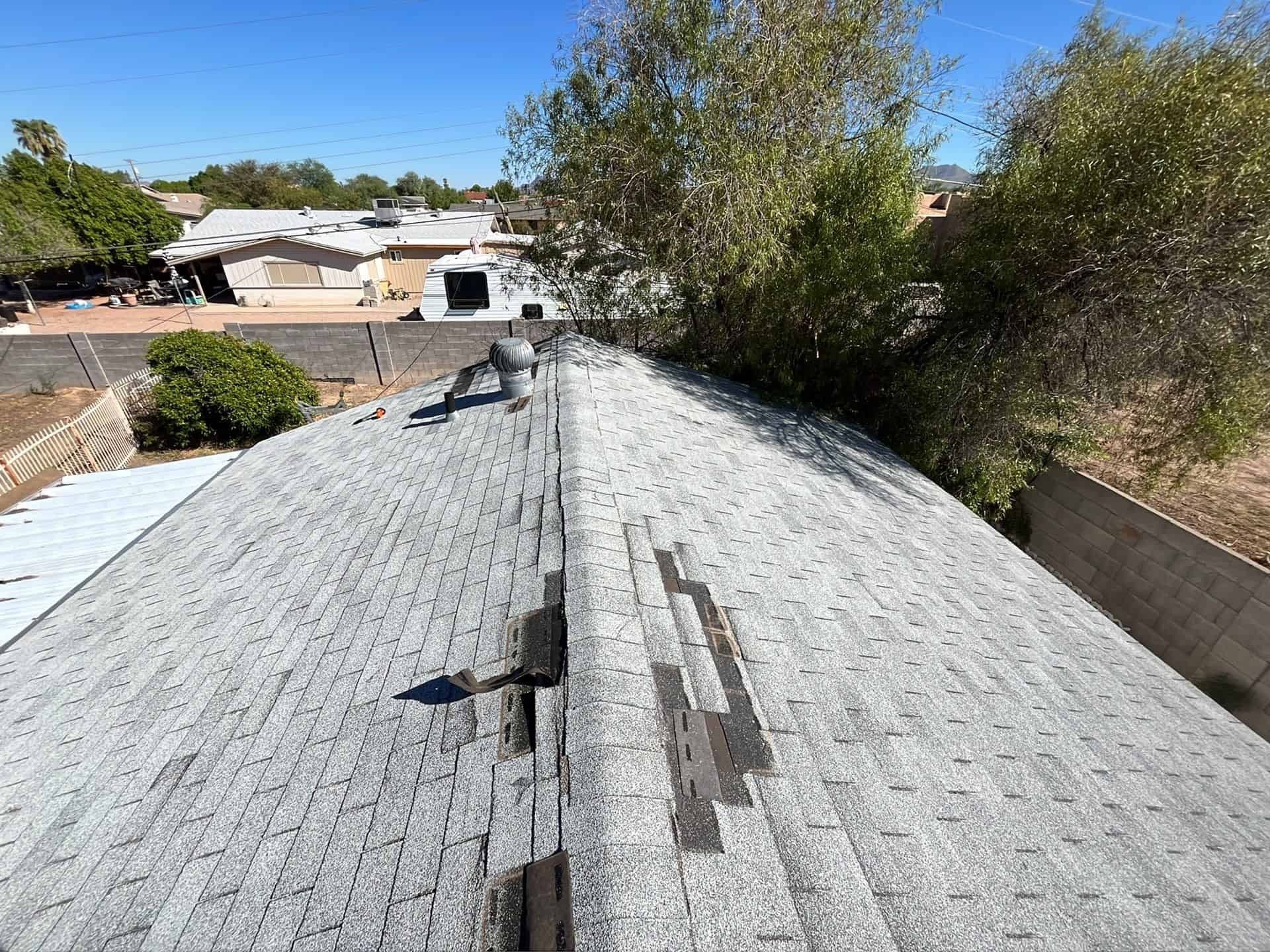
Arizona monsoons damage roofs with downburst winds, heavy rain and, in some years, hail. Wind lifts and tears off shingles, slides tiles out of place, and throws branches and debris onto the roof. Heavy rain finds any weak flashing or worn underlayment. Hail knocks granules off shingles, cracks tiles and dents metal.
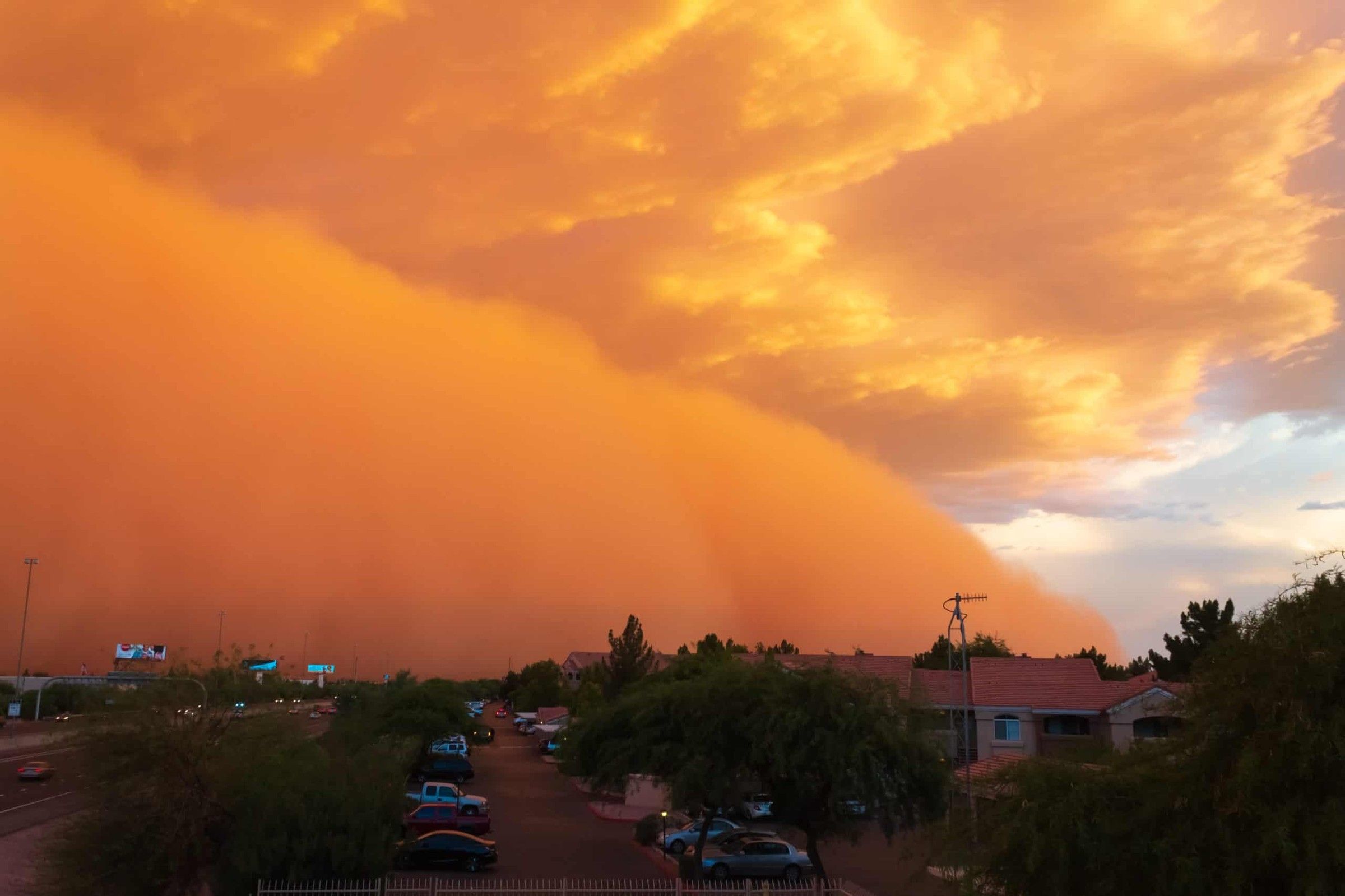
The National Weather Service sets monsoon season in Arizona from June 15 to September 30. Storms in that window often hit fast, with little warning, and a single cell can damage one neighborhood and miss the next. Haboobs, the walls of dust that roll across the Valley ahead of some storms, add another layer: grit that clogs gutters and valleys and holds water against the roof.
What does storm damage look like on each roof type?
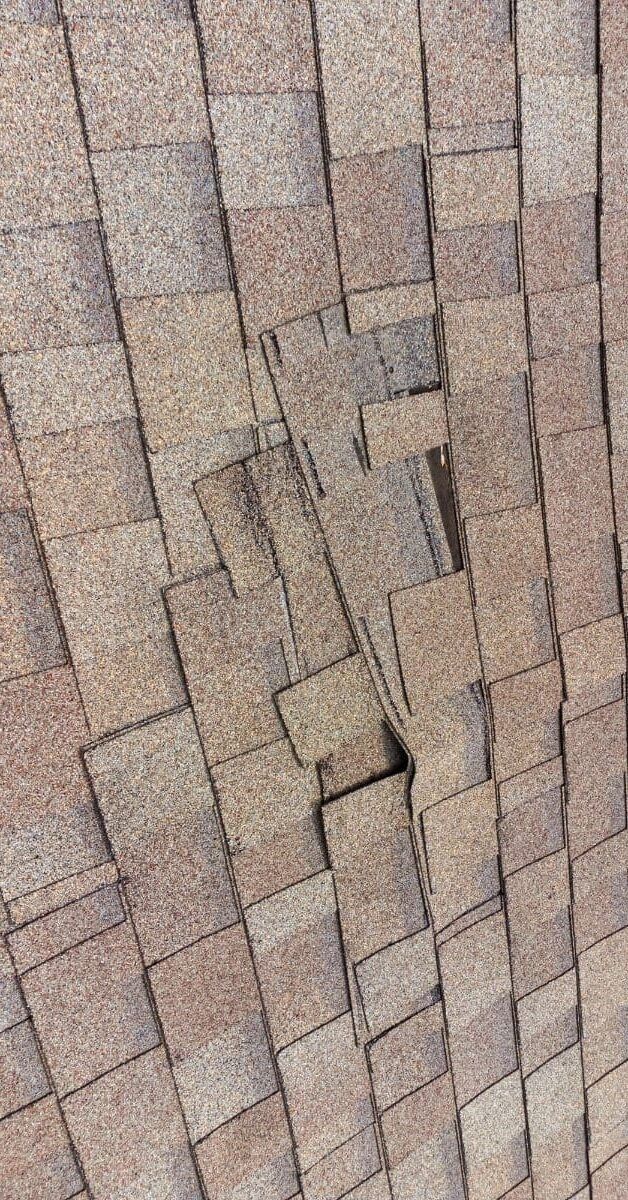
Storm damage looks different on each roof. Shingle roofs show lifted, creased or missing tabs and bruises where hail knocked granules loose. Tile roofs show cracked, slipped or missing tiles, often near ridges and edges. Foam roofs show punctures and torn coating. Metal roofs show dents, bent trim and fasteners pulled loose by wind.
| Roof type | Wind damage | Hail damage | Rain damage |
|---|---|---|---|
| Asphalt shingle | Lifted, creased or missing tabs | Bruised spots, granule loss | Leaks at flashing and lifted tabs |
| Concrete or clay tile | Slipped or blown-off tiles, cracked ridge | Cracked or broken tiles | Leaks through worn underlayment |
| Flat foam | Debris damage, torn coating | Punctures and dents in coating | Ponding, leaks at blisters and cracks |
| Metal | Lifted panels and trim, loose fasteners | Dents, cracked coating | Leaks at seams and flashing |
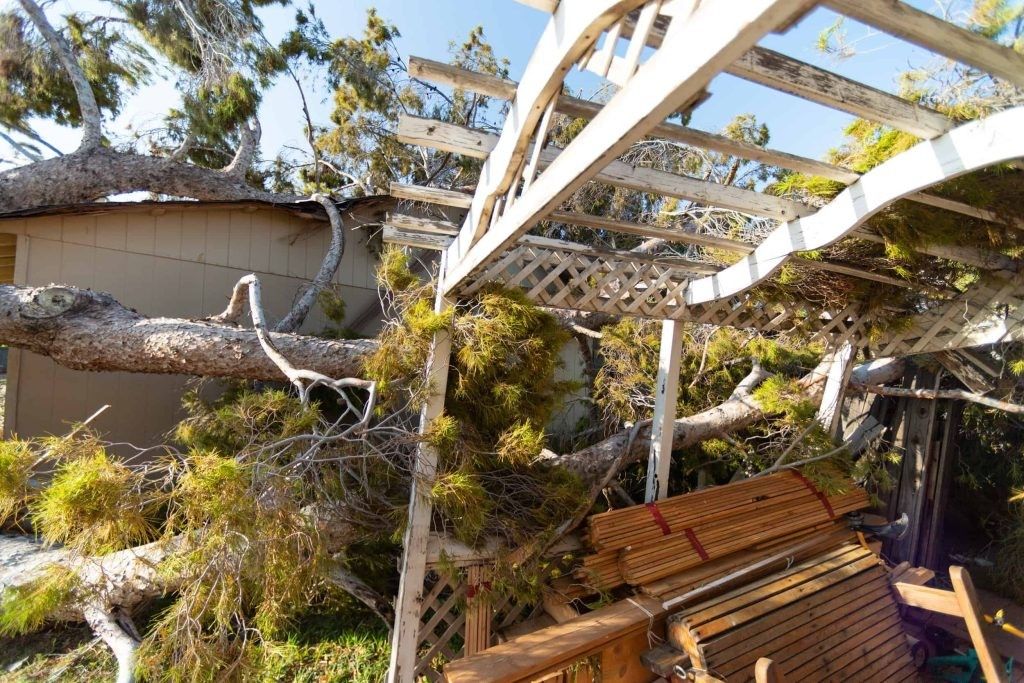
Fallen trees and large branches can damage any roof type, including the decking and framing underneath. If a tree has landed on your roof, keep everyone out of that part of the house until it has been checked.
What should you do right after storm damage?
Stay off the roof, protect the inside of your home, and document what you can see. Move belongings away from leaks, catch dripping water, and photograph damage from the ground and inside. Write down the date of the storm. Then schedule an inspection and contact your insurer about a claim.
Some homeowners try a tarp or roofing tape to slow a leak. If you do, only work from inside the attic or from the ground. Wet tile and shingle roofs are slippery, and storm-damaged decking may not hold your weight. Temporary fixes only buy time. The roof still needs a proper repair before the next storm. Our office takes calls Monday to Friday, 8:00am to 4:00pm, and we schedule storm inspections in the order they come in.
How does a storm damage roof repair work with insurance?
Many homeowners policies cover sudden storm damage, such as wind or hail, minus your deductible. Wear from age usually is not covered. The process usually runs in this order: inspection, claim filed, adjuster visit, approved scope, then repair. Our photos and estimate help your insurer see the damage clearly.
Our guide to roof damage insurance claims explains each step in more detail, including what to photograph and how deductibles work. If your insurer has already said no, read our help page for denied roof claims before you give up. For damage the policy does not cover, Icon Roofing offers financing for storm repairs through Wisetack, and you can prequalify online.
How is storm-damaged roofing repaired?
Storm damage is repaired by replacing what the storm broke and checking what it loosened. On shingle roofs, that means new shingles and resealed tabs. On tile roofs, it means replacing cracked tiles and checking the underlayment. Foam roofs get cut out, filled and recoated, and metal roofs get new fasteners, panels or trim.
The details depend on your roof:
- Our team handles wind-lifted and hail-bruised shingle repairs, including matching color and fixing broken seal strips.
- For tile, our cracked tile and underlayment repair service covers both the tiles you can see and the layer beneath them.
When storm damage is widespread across an older roof, your insurer may approve a full replacement instead of a repair. We explain the difference in our report.
Should you repair or replace a roof after a storm?
Repair it when the damage is limited to a few areas and the rest of the roof is in good shape. Replace it when the storm damaged most slopes, when the roof was already near the end of its life, or when matching materials are no longer made. Your insurer’s adjuster also weighs in on what the policy covers.
Older shingle roofs are the most common case for replacement after a storm. Brittle shingles crack when a roofer lifts them to make a repair, so patching one area often damages the next. Tile roofs are different. The tiles can usually be reused, and the real question is whether the underlayment below is worth saving. We give you our honest read on both options, with photos, before you decide.
Can you prepare your roof before monsoon season?
Yes. A spring inspection catches loose tiles, lifted shingles, worn foam coating and cracked flashing before the first storm finds them. Clean gutters and valleys, trim branches that hang over the roof, and secure loose items in the yard that wind could throw. Preparation will not stop every storm from causing damage, but it reduces the risk.
Our checklist on getting your roof ready for Phoenix monsoons covers what to check from the ground and what to leave to a roofer.
Where does Icon Roofing repair storm damage?
We repair storm damage across Metro Phoenix. Monsoon cells regularly hit the East Valley, and we see a lot of wind and hail damage in Mesa, Chandler, Gilbert and San Tan Valley, plus Phoenix neighborhoods with older roofs. Our office is in Mesa, so East Valley homes are a short drive from our crews.
See roofing services in Chandler or roof work for San Tan Valley homes, or return to our list of residential repair services.