
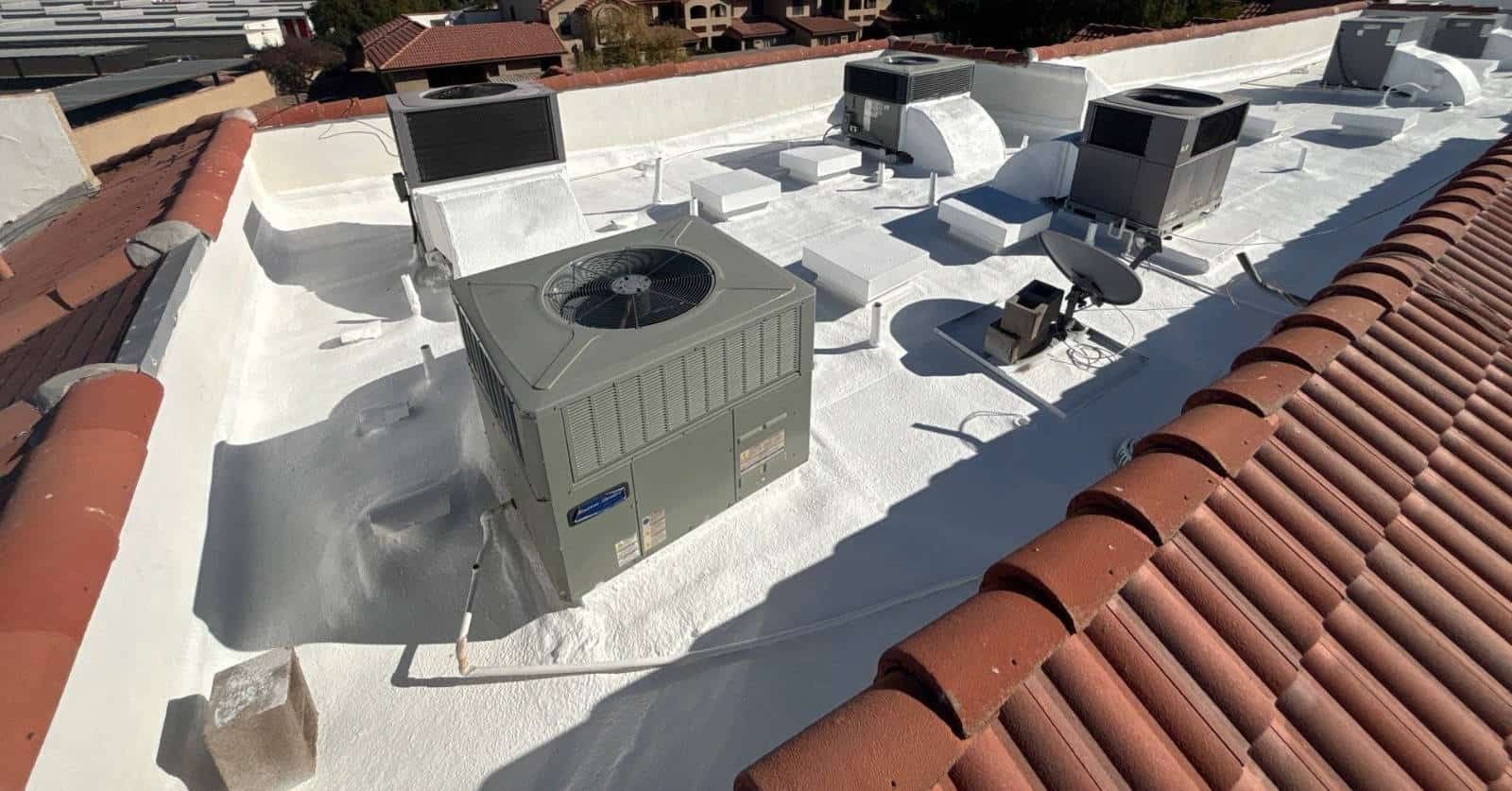
How do you repair a roof on an apartment community?
Repairing an apartment roof starts with inspecting every building, not only the one with the leak. We map the roof types, find each problem, trace leaks to their source, and rank the repairs by urgency. Then we schedule the work around residents, make the repairs, and send you a photo report for each building.
That building-by-building approach matters on a large property. A ceiling stain in one unit is often a symptom of a drain, flashing or coating problem that affects the whole roof section. Fixing only the spot above the stain usually means another work order next month. If you want the bigger picture of what we offer apartment owners, start with our multi-family roofing services overview.
What roof problems show up most on Valley apartment buildings?
The most common problems on Valley apartment buildings are worn foam coatings, failed flashing around rooftop equipment, clogged drains that let water pond, and cracked or slipped tile on mansards and pitched sections. Monsoon wind adds lifted shingles and displaced tile. Heat and UV speed up every one of these.
Flat foam sections and rooftop equipment
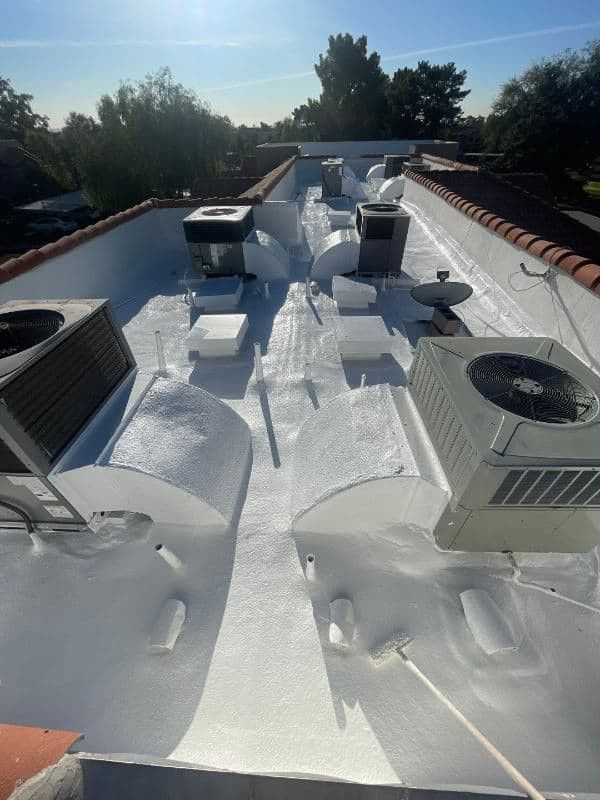
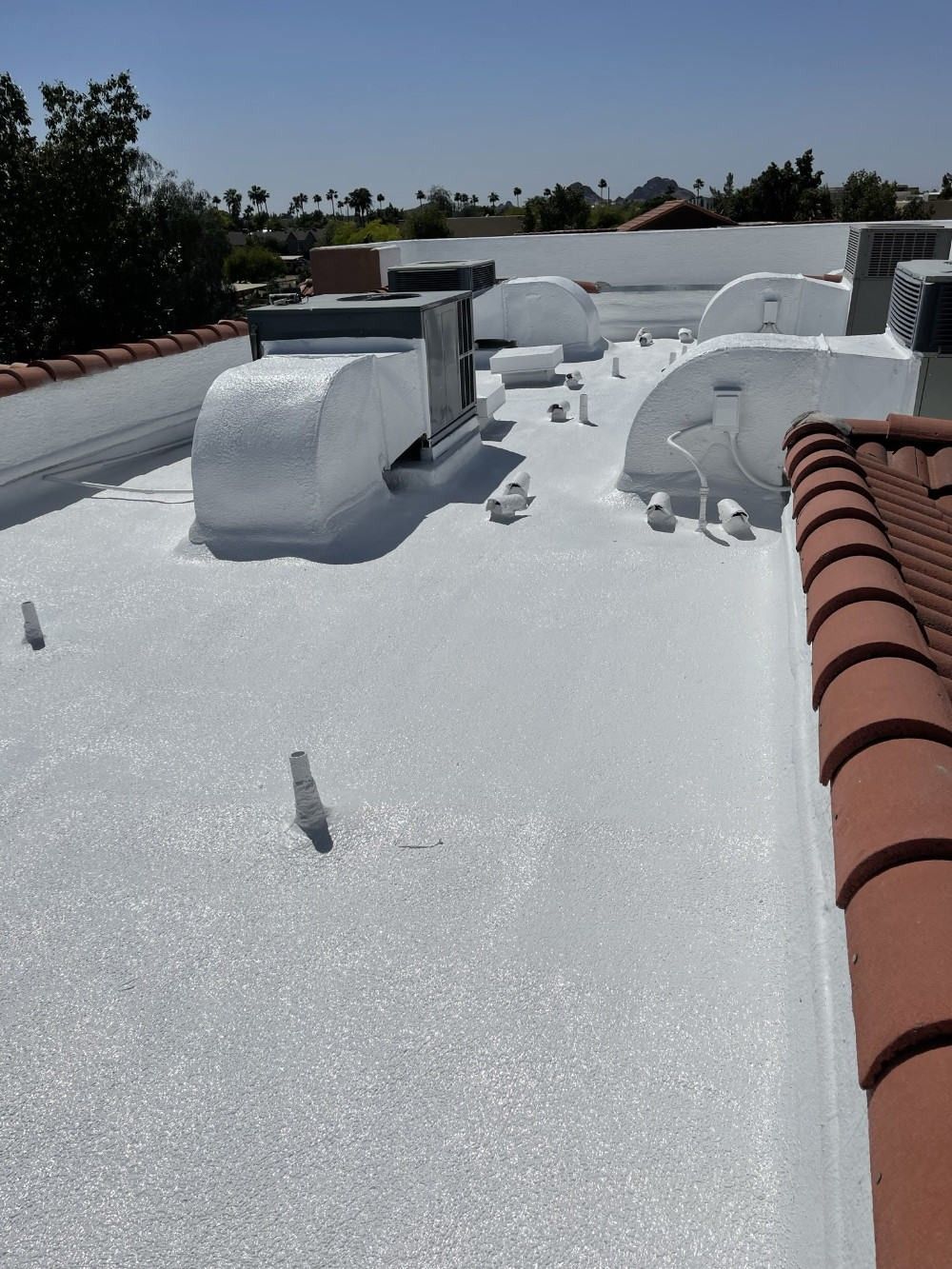
Many apartment buildings have a flat foam roof over the center, carrying a condenser and duct run for each unit. When the coating wears thin, the foam starts to soak up water and break down. Seals around equipment curbs, pipe penetrations and duct supports crack as the roof heats and cools each day. Our crews handle foam and flat roof repair on these sections, including recoating worn areas.
Tile mansards and pitched sections
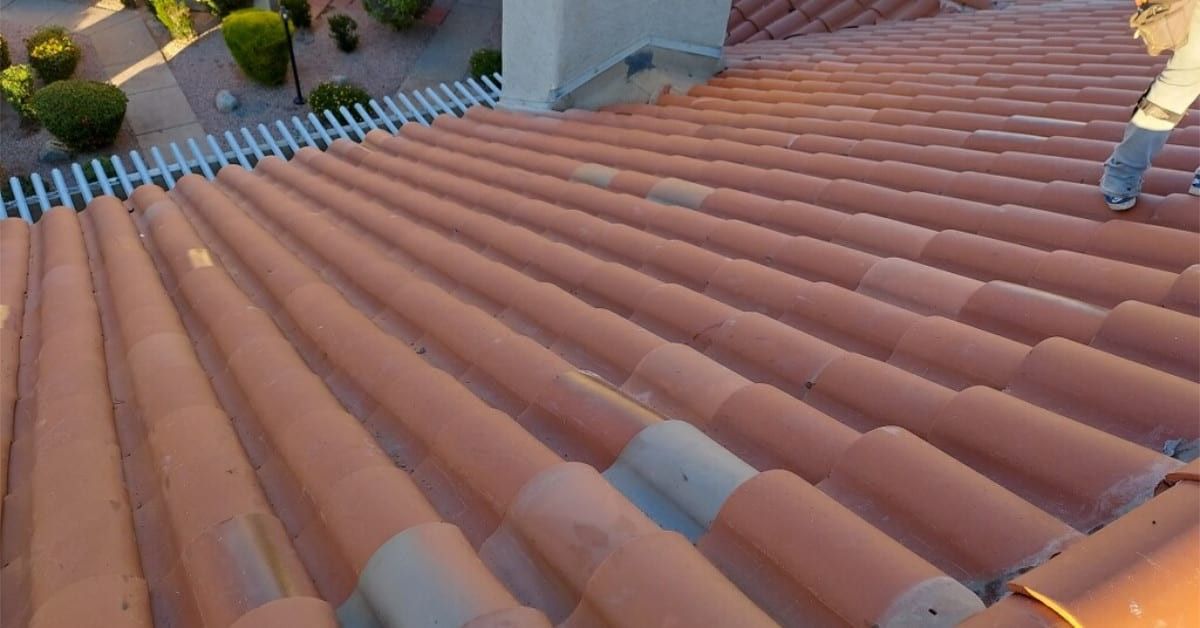
Tile around the edges of a building often looks fine from the ground. The weak point is usually the underlayment below, which dries out and cracks under the tile long before the tile wears out. We lift tile, replace the failed underlayment in that area, and relay the tile. Pitched sections get the same care we bring to any concrete and clay tile roof repair.
Drains, scuppers and ponding
Dust, leaves and debris collect in roof drains and scuppers. When a monsoon storm drops heavy rain in a short time, a blocked drain turns a flat roof into a shallow pool. Standing water finds every weak seam. Clearing drains and correcting low spots is one of the cheapest repairs on an apartment roof. Our monsoon checklist for apartment buildings covers drains and the other storm-season checks.
How do you find the source of a leak that shows up in a different unit?
We find the source by starting on the roof above the stain and working uphill and upstream. Water often enters at a flashing, a cracked seal or a drain several feet away, then runs along the deck or a framing member before it drips. We check every penetration and seam in that path before deciding where to repair.
On an apartment building, that path can cross a firewall or a shared ceiling space. The stain might appear in a second-floor unit while the opening sits over the unit next door. We note the unit numbers in our report so your maintenance team knows which interiors may need drywall work after the roof is fixed.
How should owners rank roof repairs across several buildings?
Owners should rank repairs by how soon each problem can cause water damage inside a unit. Active leaks and open flashing come first. Worn coatings and cracked underlayment come next, ideally before monsoon season. Cosmetic items and slow wear can wait for the next budget cycle, as long as someone checks them.
| Priority | Typical items | Suggested timing |
|---|---|---|
| Fix now | Active leaks, missing flashing, blocked drains, storm openings | As soon as scheduling allows |
| Fix this season | Thin foam coating, cracked seals, slipped tile, worn underlayment | Before the next monsoon season |
| Watch and budget | Faded surfaces, minor granule loss, aging but sound sections | Recheck at the next inspection |
This kind of list helps an asset manager defend a repair budget. It also shows which buildings are close to needing a full apartment roof replacement plan instead of more patching.
What should residents be told before roof repair work starts?
Residents should know which building we will be on, which days, the working hours, and whether any parking spaces or walkways will be blocked. They should also know that they can stay home. A short notice a few days ahead cuts down on calls to your office and keeps people away from the work area.
We give you the dates and the areas we need, and your team sends the notice through whatever channel residents already use. If a unit needs an interior check, we ask you to schedule that access with the resident rather than knocking on doors ourselves.
When does it make sense to stop repairing an apartment roof?
It makes sense to stop repairing when the same building keeps generating leak calls, when repairs cover a large share of the roof, or when the foam or underlayment has failed across most of a section. At that point you are paying for labor on a roof that is wearing out faster than you can patch it.
Our team will tell you when we think a building has reached that point, and why. Our blog post on what multi-family roof inspections should catch explains the warning signs. If storm damage is involved, read how we help with a roof damage insurance claim before you decide.
Where do you repair apartment roofs in Metro Phoenix?
We repair apartment roofs across Metro Phoenix from our Mesa office. A large share of our multi-family repair work is in Phoenix, Mesa and Glendale, and around the many rental communities near Arizona State University. See how we work with apartment owners in Tempe and nearby cities.
Call (480) 427-7600, Monday to Friday from 8:00am to 4:00pm, to schedule an inspection of your buildings. Icon Roofing holds Arizona ROC# 333889 CR-42.