
What roof damage does homeowners insurance usually cover?
Most homeowners policies cover roof damage from sudden events, especially high winds, hail and other weather such as lightning strikes or falling limbs. Insurers usually do not pay for normal wear, old age or lack of maintenance. Your coverage depends on the roof’s age, the type of damage and your specific policy wording.
In the Valley, most roof claims trace back to monsoon season, which the National Weather Service in Phoenix sets as June 15 to September 30. Strong outflow winds lift and tear shingles, blow debris across tile roofs and drop branches on the roof structure. Hail shows up some years and can bruise or puncture shingles and crack tiles. Wind-driven rain then finds any opening the storm created.
Knowing what your policy covers before you file sets realistic expectations for the process and the payout. If you are not sure the damage came from the storm, an inspection can help sort storm damage from wear. Icon Roofing’s storm damage roof repair team sees both every summer.
How do you file a roof damage insurance claim?
To file a roof damage claim, document the damage, stop further leaks, review your policy and call your insurance company’s claims department with the date of loss and type of damage. Then get a licensed roofer’s inspection, have that roofer attend the adjuster’s visit, complete approved repairs and submit paid invoices to close the claim.
Step 1: Document the damage right away
Take photos and videos as soon as it is safe. Shoot the roof from the ground and from several angles, plus any water stains, wet insulation or drips inside. Photograph debris in the yard, like shingle pieces or broken tile. Do not climb onto a damaged roof yourself. Write down the date and time of the storm.
Step 2: Prevent further damage
If water is coming in, a temporary tarp can protect the house until repairs begin. Your policy likely expects you to take reasonable steps to limit further damage. Keep every receipt for tarping or other temporary materials, since those costs are often reimbursed as part of the claim.
Step 3: Review your policy before you call
Read the parts of your policy that cover the roof. Find your deductible, whether you have actual cash value or replacement cost coverage, any exclusions and the deadline for reporting a loss. A few minutes here helps you ask better questions on the first call.
Step 4: File with the claims department
Call your insurance carrier’s claims department directly. Your agent can guide you, but agents do not handle claims. You will be asked for the date of loss and the type of damage, such as wind or hail. Mention any temporary repairs you made and that you have receipts. Write down your claim number.
Step 5: Get a licensed roofer to inspect
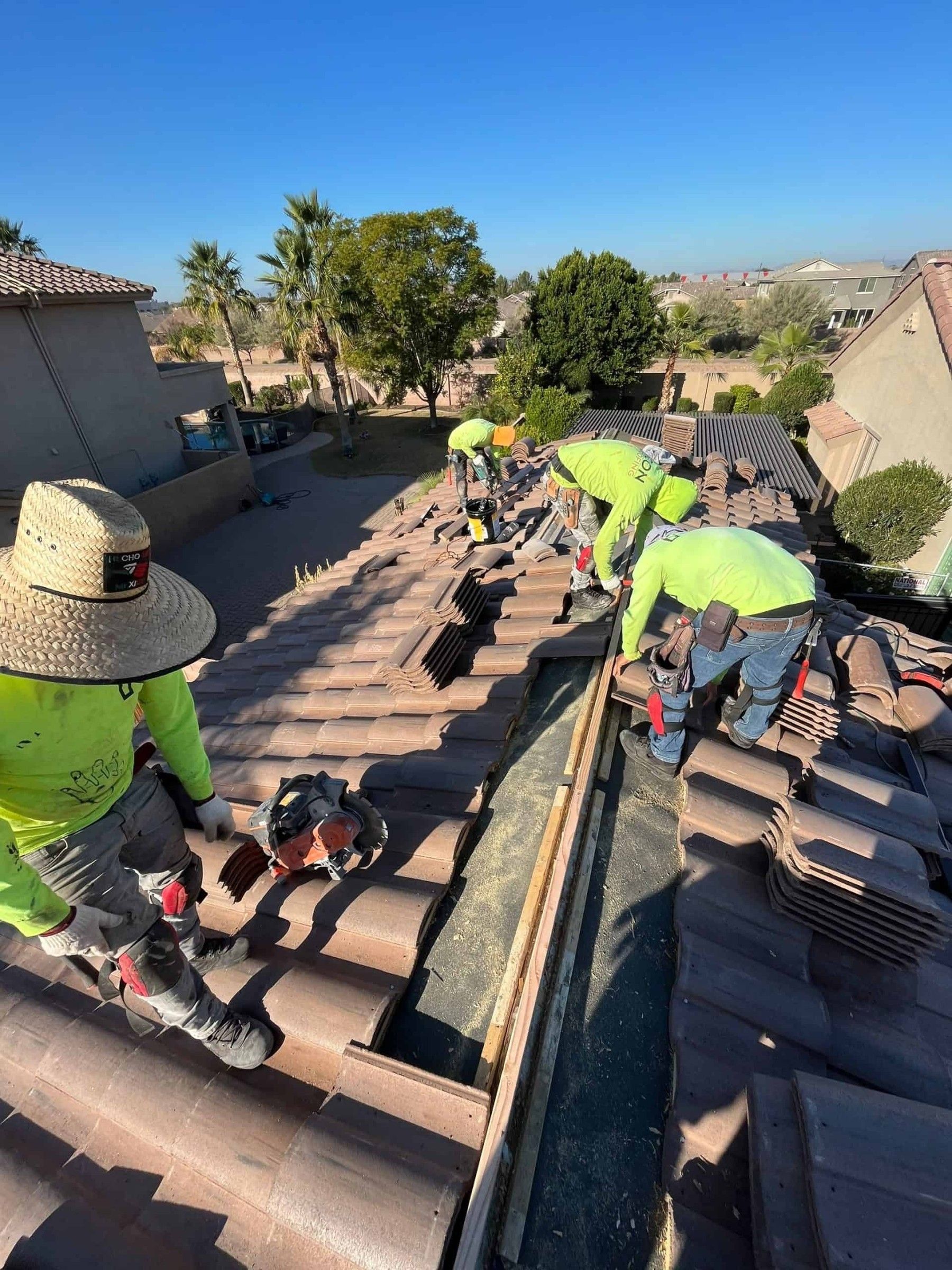
Before the adjuster arrives, have a licensed roofing contractor inspect the roof and write up the damage with photos. A storm damage inspection for your home gives you a detailed record you can share with your insurer.
Step 6: Meet the adjuster with your roofer
The insurer assigns an adjuster who schedules a visit to inspect the damage. Tell your contractor when that visit is. Having your roofer on the roof with the adjuster helps make sure every damaged area is recorded in the estimate. Give the adjuster your photos and the contractor’s report, and ask questions about anything you do not understand.
Step 7: Complete repairs and close the claim
Once the claim is approved, schedule the work with your contractor and make sure it matches the approved scope. After the repairs, submit the paid invoices and any other paperwork your insurer asks for. That is often how you collect the remaining payment. Before the claim closes, confirm you have received everything you are owed.
What is the difference between ACV and RCV coverage?
Actual cash value (ACV) coverage pays what your damaged roof was worth at the time of the loss, after depreciation. Replacement cost value (RCV) coverage pays what it costs to repair or replace the roof at today’s prices, without subtracting depreciation. The type you have has a big effect on your payout.
| Coverage type | What it pays | What to expect |
|---|---|---|
| Actual cash value (ACV) | The roof’s current value after depreciation | The payout may be less than the cost of a full repair or replacement |
| Replacement cost value (RCV) | The cost to repair or replace at current prices | Fuller coverage, often with a higher premium, and part of the payment may be held until the work is done |
On an older roof, the gap between the two can be large. That is why it pays to know which type you have before a storm, not after.
What questions should you ask your insurance company?
Ask your insurer what type of policy you have, how much your deductible is, whether you have Ordinance and Law coverage, what exclusions apply, what the deadline is for completing repairs and how the Loss Settlement Provision pays out. Clear answers help you plan for any out-of-pocket costs.
Use this list on your first call or with your adjuster:
- What type of policy do I have: ACV, RCV or something else?
- How much is my deductible?
- Do I have Ordinance and Law coverage, which helps pay to bring the roof up to current building codes?
- Are there any exclusions or caps that apply to this damage?
- What is the deadline for completing repairs?
- Can you explain the Loss Settlement Provision and how I will be paid?
The adjuster uses estimating software to price the repairs. If a number looks low, ask how it was calculated and which items are included.
How does Icon Roofing help with your roof claim?
Icon Roofing helps with your roof claim by inspecting the roof, documenting the damage with photos and a written report, meeting your adjuster on the roof and providing a clear repair estimate that lines up with the adjuster’s assessment. The goal is a claim that covers all the damage the storm caused.
When you choose a contractor for an insurance claim, look for three things. First, a valid Arizona license, which you can check through the Registrar of Contractors. Second, a local reputation, since a Valley roofer knows how monsoon damage shows up on tile, shingle and foam roofs. Third, real experience with insurance claims. Icon Roofing holds Arizona ROC# 333889 CR-42 and is a GAF Master Elite contractor. You can read more about why Icon Roofing earned GAF Master Elite status.
If your insurer pays less than the repair costs, or denies the claim outright, you still have options. The page on what to do after a roof claim denial walks through reinspections, supplements and the appraisal clause.
Where can you get the homeowner claim checklist?
You can download the free PDF guide “Steps to Filing a Homeowner Claim” from this page. It puts the steps above into a printable checklist, so you can keep track of photos, receipts, claim numbers and adjuster details in one place while you work through the claim.
Keep the checklist with your policy documents. Then call Icon Roofing at (480) 427-7600, Monday to Friday, 8:00am to 4:00pm, to schedule an inspection. For roofing questions beyond insurance, the roofing FAQ page covers repair, replacement and pricing.