
What roofs do Chandler homes have?
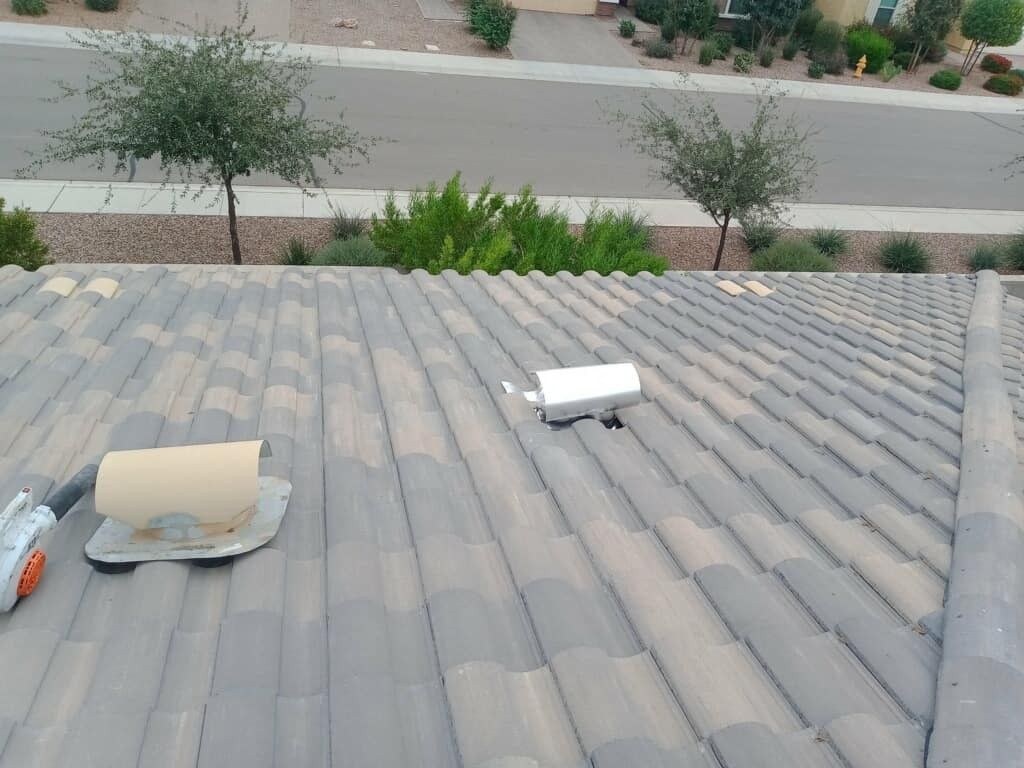
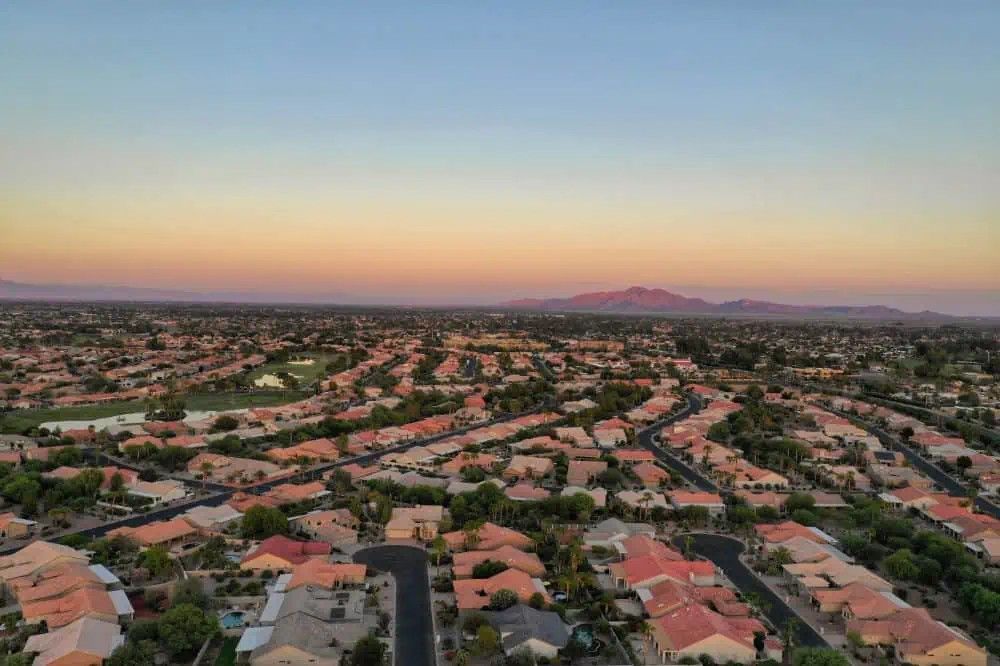
Most Chandler homes have concrete tile or architectural shingle roofs. The city grew quickly from the 1980s through the 2000s as farmland turned into subdivisions, so many roofs are now decades old. Tile dominates in master-planned areas like Ocotillo and Fulton Ranch, while shingle shows up on many homes in older central and west Chandler neighborhoods.
Chandler started as a farm town, and you can still see that history in the street grid and in the downtown buildings around the old town square. The residential growth came later and in waves. Neighborhoods like Clemente Ranch and Pecos Ranch filled in during those growth years. Ocotillo, built around a series of lakes in south Chandler, filled in through the 1990s and 2000s with larger tile-roofed homes. Andersen Springs and Fulton Ranch added more tile and some shingle.
That timing matters. A lot of Chandler roofs installed in that boom are now reaching the point where the underlayment under the tile, or the shingles themselves, need attention.
Should you reroof or replace a Chandler tile roof?
For most Chandler tile roofs, a reroof that keeps the tile and replaces the underlayment is the right call. The tile usually still has years left, but the felt beneath it dries out, cracks and leaks at valleys and vents. Full replacement with new tile makes sense when much of the original tile is broken or no longer made.
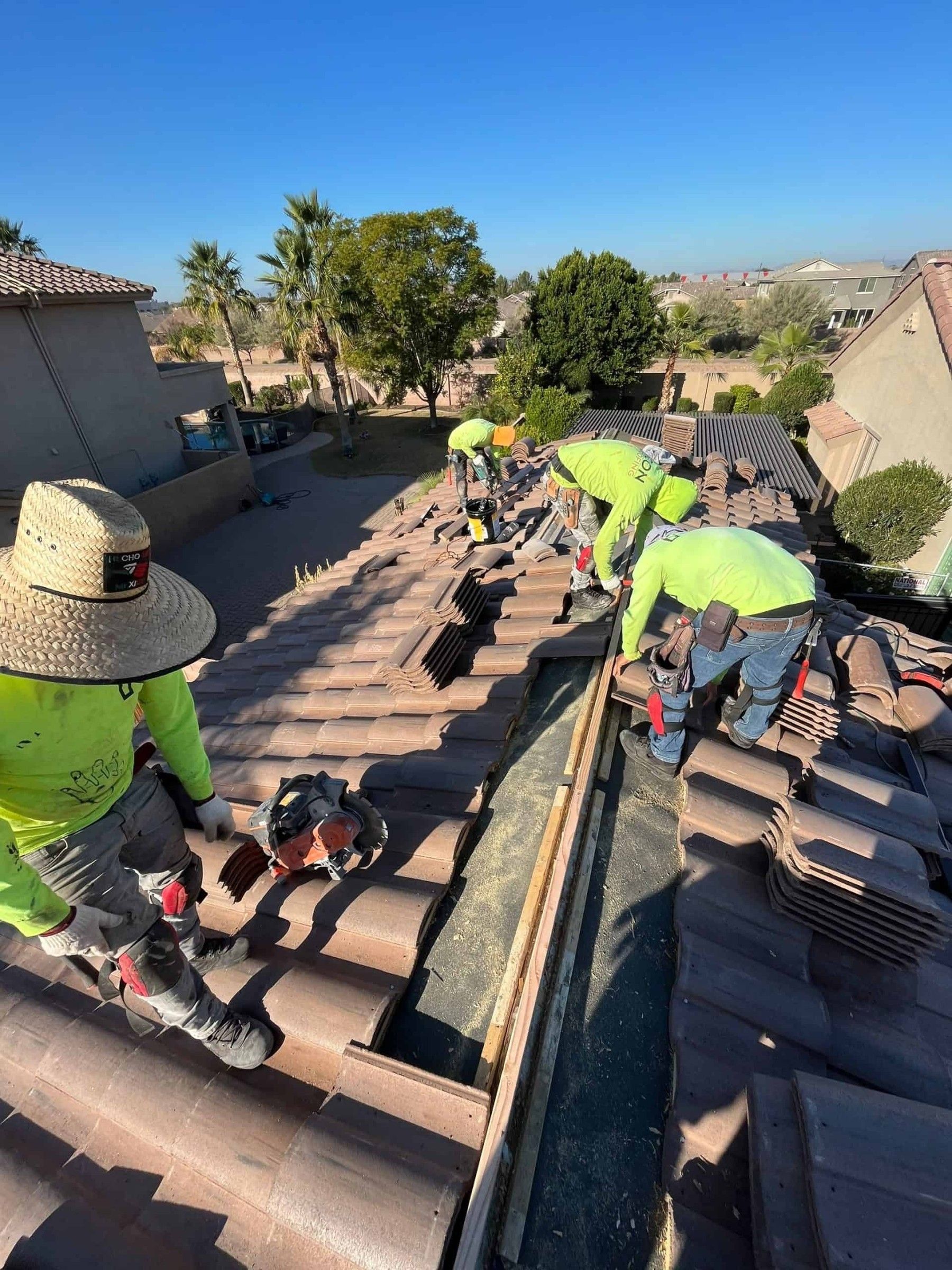
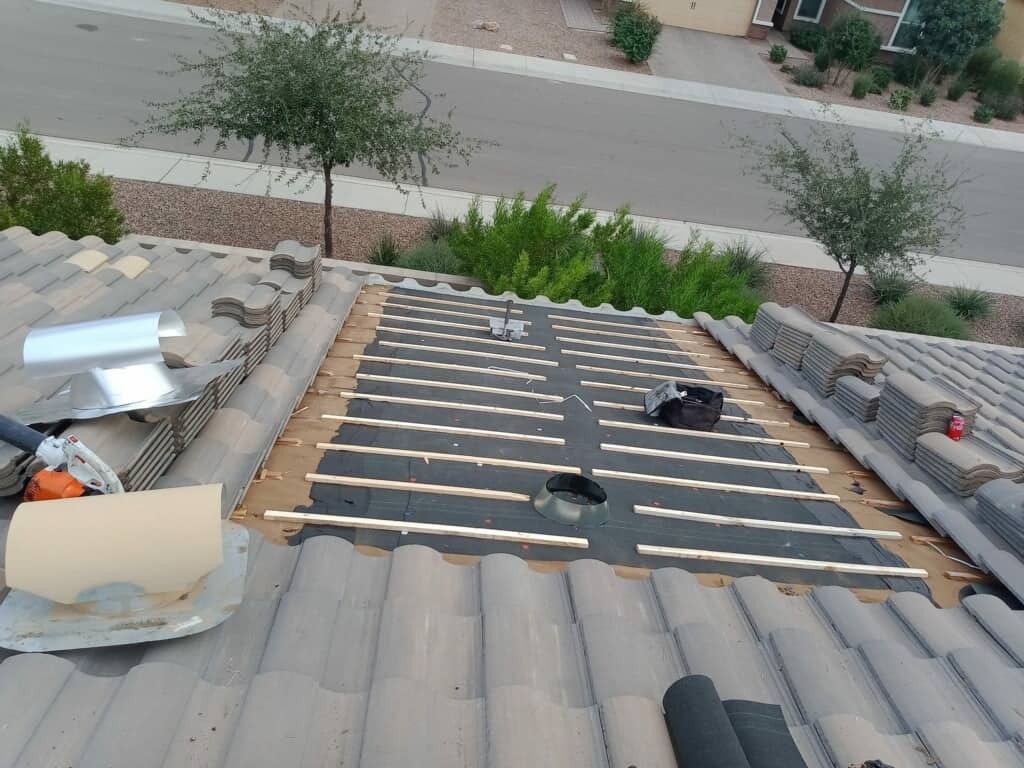
We see the same pattern across Chandler. The roof looks good from the street, but there are ceiling stains in a back bedroom or near the laundry vent. When we lift the tile, the underlayment crumbles in our hands. Here is how we approach a tile roof replacement on a Chandler home:
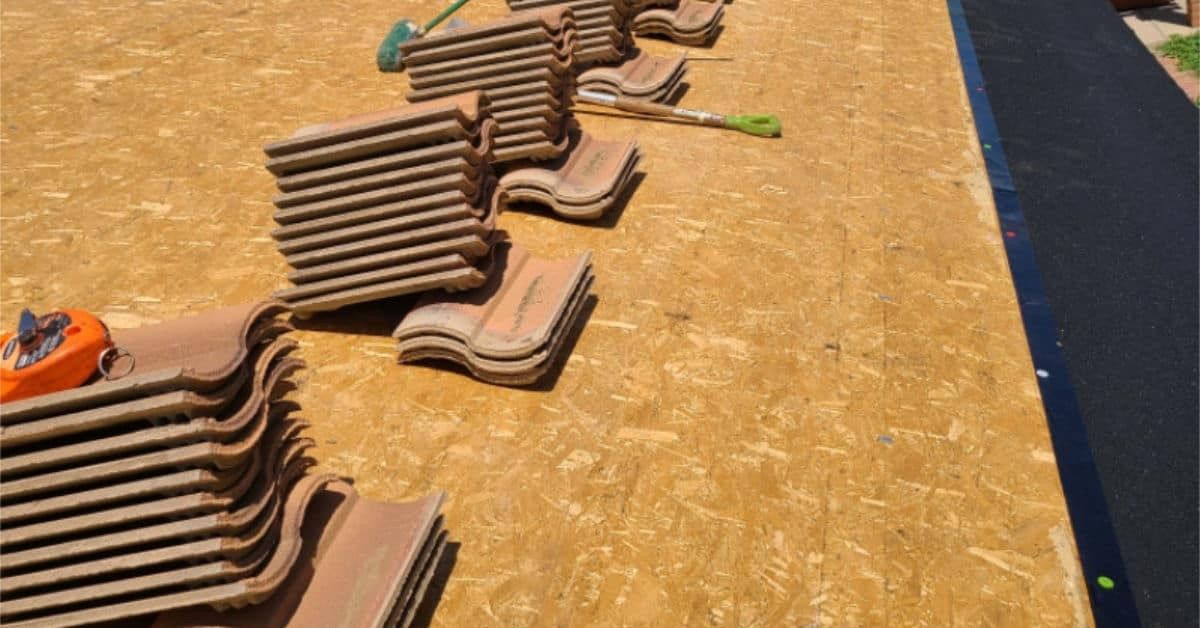
- Remove and stack the existing tile, sorting good pieces from broken ones.
- Tear off old underlayment and check every sheet of decking.
- Replace rotted decking, install new underlayment, and fasten new battens.
- Relay the tile, replace flashing at walls and vents, and seal penetrations.
If you are weighing the two materials for a new roof, our comparison of tile and shingle roofs for Arizona homes covers weight, cost factors and lifespan.
How do monsoon storms hit Chandler?
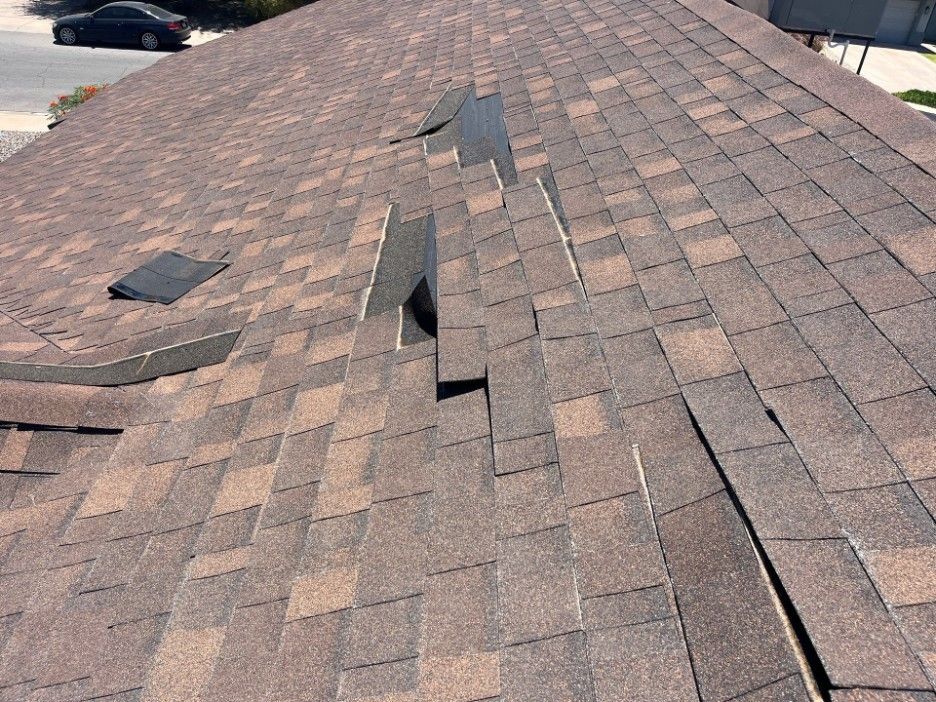
Chandler gets the full force of monsoon season, roughly June 15 to September 30. Outflow winds sweep across the flat terrain and the open land that still borders parts of south and east Chandler. Gusts can strip shingles, crack tile, and push rain sideways under flashing. Hail falls some years and can damage both tile and shingle roofs.
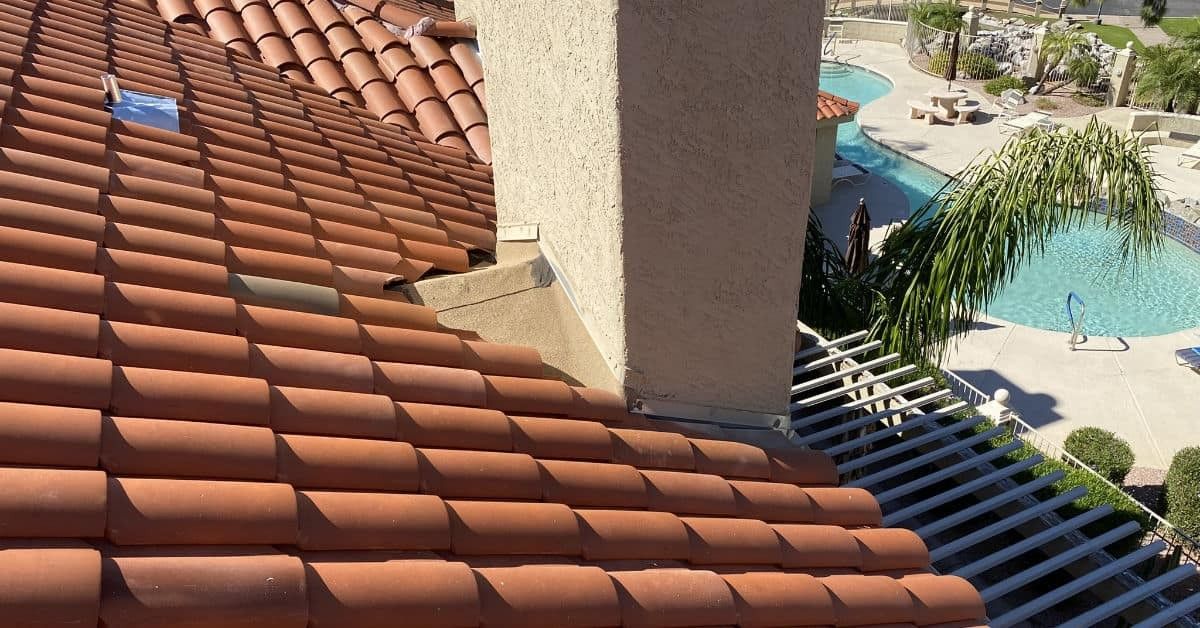
Wind-driven rain is the quiet problem. It does not need a missing tile to cause a leak. It can travel up and under flashing at a wall or chimney when the sealant has dried out. After a big storm, look at the high side of your roof that faced the wind and check ceilings below it.
When a storm does cause damage, repairing monsoon damage on Chandler roofs starts with photos and notes you can share with your insurer. If your claim is denied or underpaid, read about getting help with a roof insurance denial.
When is a shingle repair enough in Chandler?
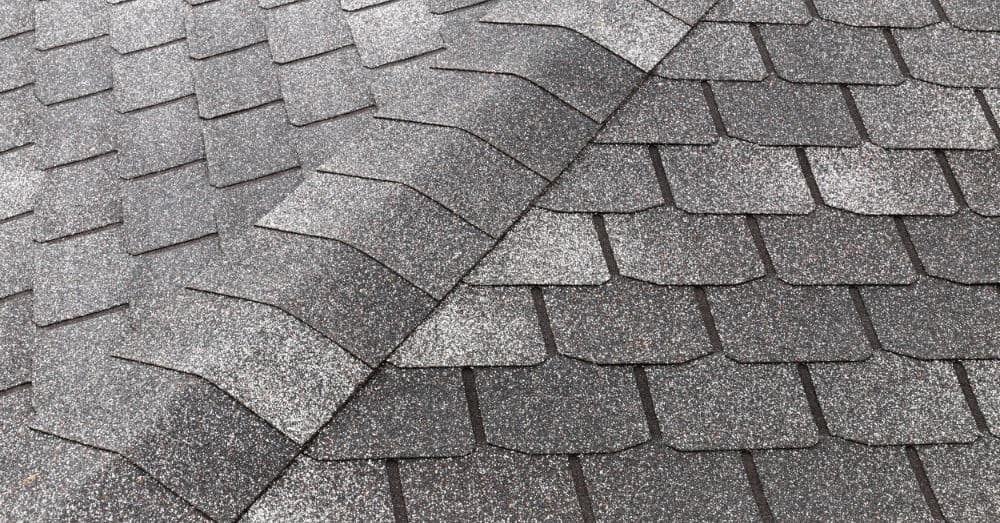
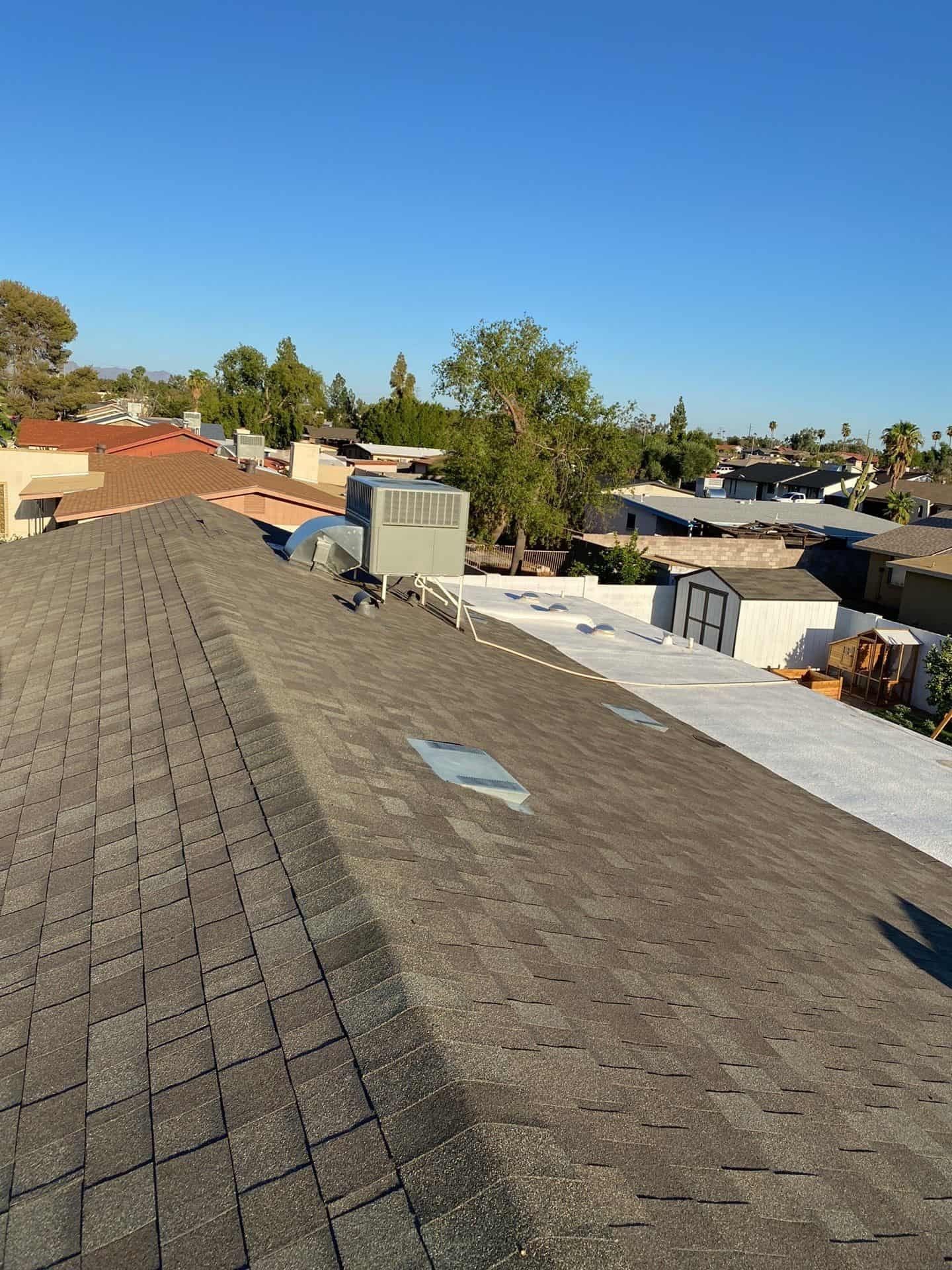
A shingle repair is enough when the damage is limited to a few areas and the rest of the roof still lies flat, keeps its granules and seals properly. A storm that tears off a strip of shingles on a 10-year-old roof is a good repair candidate. A roof where shingles are brittle and cracked everywhere needs replacing instead.
Chandler’s sun ages shingles from the top down. The south and west slopes usually wear out first. During a shingle roof repair in Chandler, we match the shingle as closely as we can, replace damaged underlayment beneath it, and reseal nearby vents and flashing. If we find that the roof is near the end of its life, we will tell you so you do not pay twice.
How should Ocotillo and other lakeside homes care for their roofs?
Homes near Ocotillo’s lakes, golf courses and heavily watered yards deal with more moisture at the roof edge than most Chandler homes. Sprinklers that hit the walls, dense trees and humid evening air keep fascia, eaves and the lowest rows of decking damp. Check those edges once a year and trim branches back from the roof.
The roof itself rarely fails in the middle. It fails at the edges and the joints. On lakeside lots we look closely at:
- Fascia boards and rafter tails that have soaked up irrigation overspray
- The first few feet of decking at the eaves, where water collects under tile
- Gutters and downspouts, which fill with leaves from mature landscaping
- Patio roofs and covered decks that tie into the main roof
None of this means a lakeside home is a problem. It means the edges deserve more attention during routine upkeep, and that small soft spots are cheaper to fix early.
What should Chandler HOA boards and property managers plan for?
Chandler has many HOA-managed neighborhoods, condos, townhomes and apartment communities, and their roofs tend to age together. A board that inspects every building at once can plan repairs and reroofs over several budget years. Many HOAs in Chandler also require approval of roof color and material, so plan for that review too.
Icon Roofing can walk an entire community and give you a building-by-building report with photos. That helps you sort what needs work this year from what can wait. A professional roof inspection for your property is the first step, whether you own one house or manage fifty units. We also serve nearby communities, including neighbors in Gilbert and homes across the freeway in Ahwatukee.