
How do roofs differ between north and south Peoria?
Peoria’s roofs change as you drive north. South of the Loop 101 and around Old Town Peoria, you find older homes with shingle, flat and foam roofs, plus some early tile. North of there, master-planned communities like Fletcher Heights, Westwing Mountain, Terramar and Vistancia are mostly concrete tile, built during the West Valley’s big growth years.
That split shapes the work we do. In south Peoria, we spend more time on worn shingles, foam coatings and flat roof drainage. In north Peoria, most calls trace back to tile underlayment and flashing.
Peoria also has large 55+ communities, including Westbrook Village and Ventana Lakes, where many homes combine pitched roofs with low-slope areas over patios and additions.
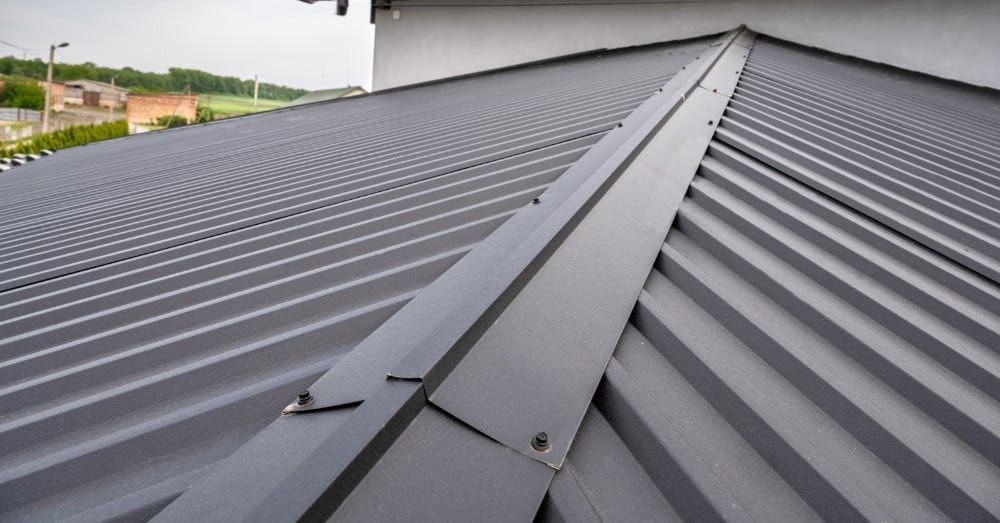
Newer areas near Lake Pleasant Parkway add another layer. Some recent homes mix concrete tile with standing seam metal over entries and patios, and a few use metal for the whole roof. Each material needs its own flashing details where it meets the next, and those joints are worth checking on any inspection.
What fails first on a Peoria concrete tile roof?
The underlayment fails first. Concrete tiles can last for decades, but the felt or synthetic layer underneath dries out and cracks much sooner in Peoria’s heat. Once it fails at the eaves, valleys or around pipe vents, water that gets past the tiles reaches the deck. The tiles above may look perfect.
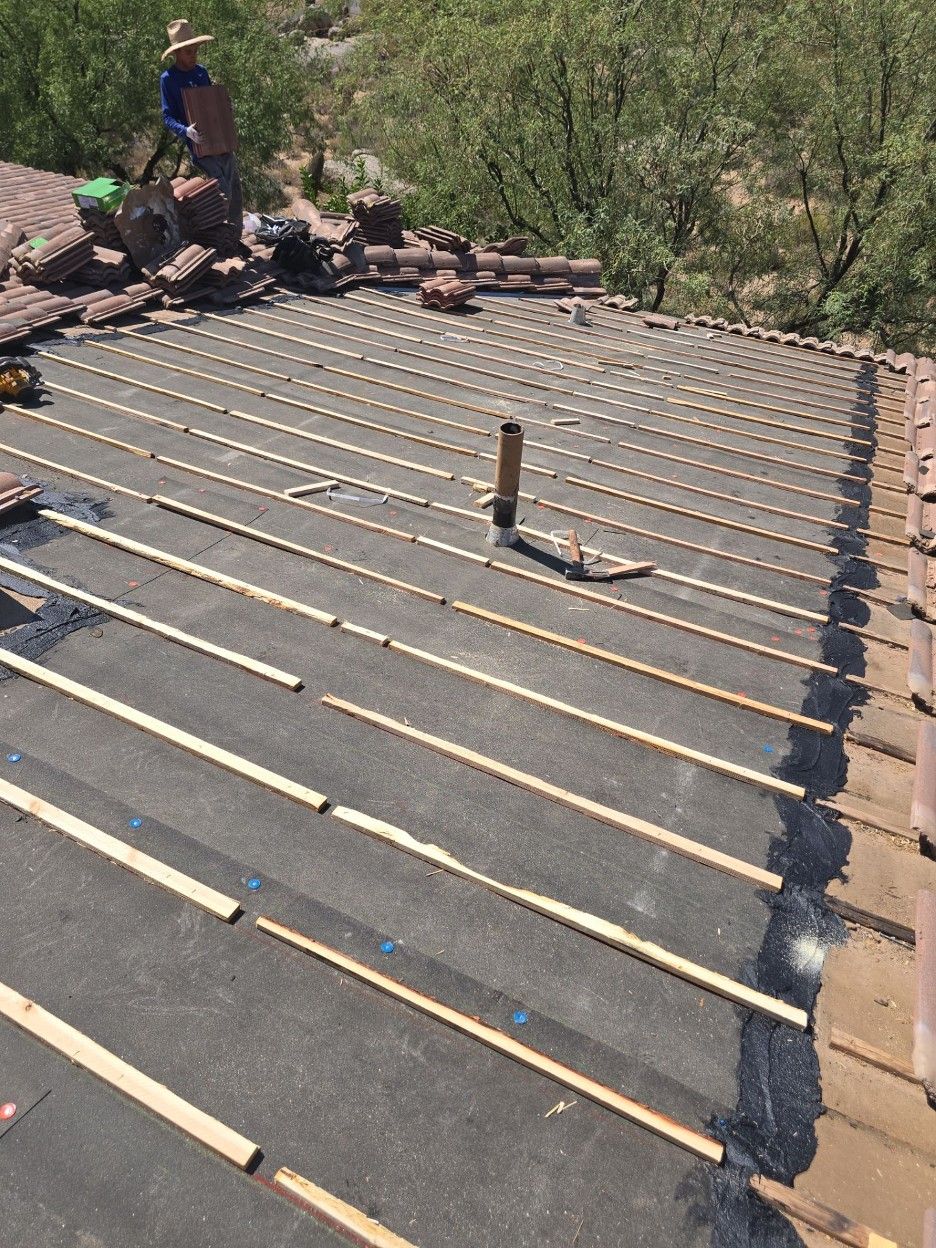
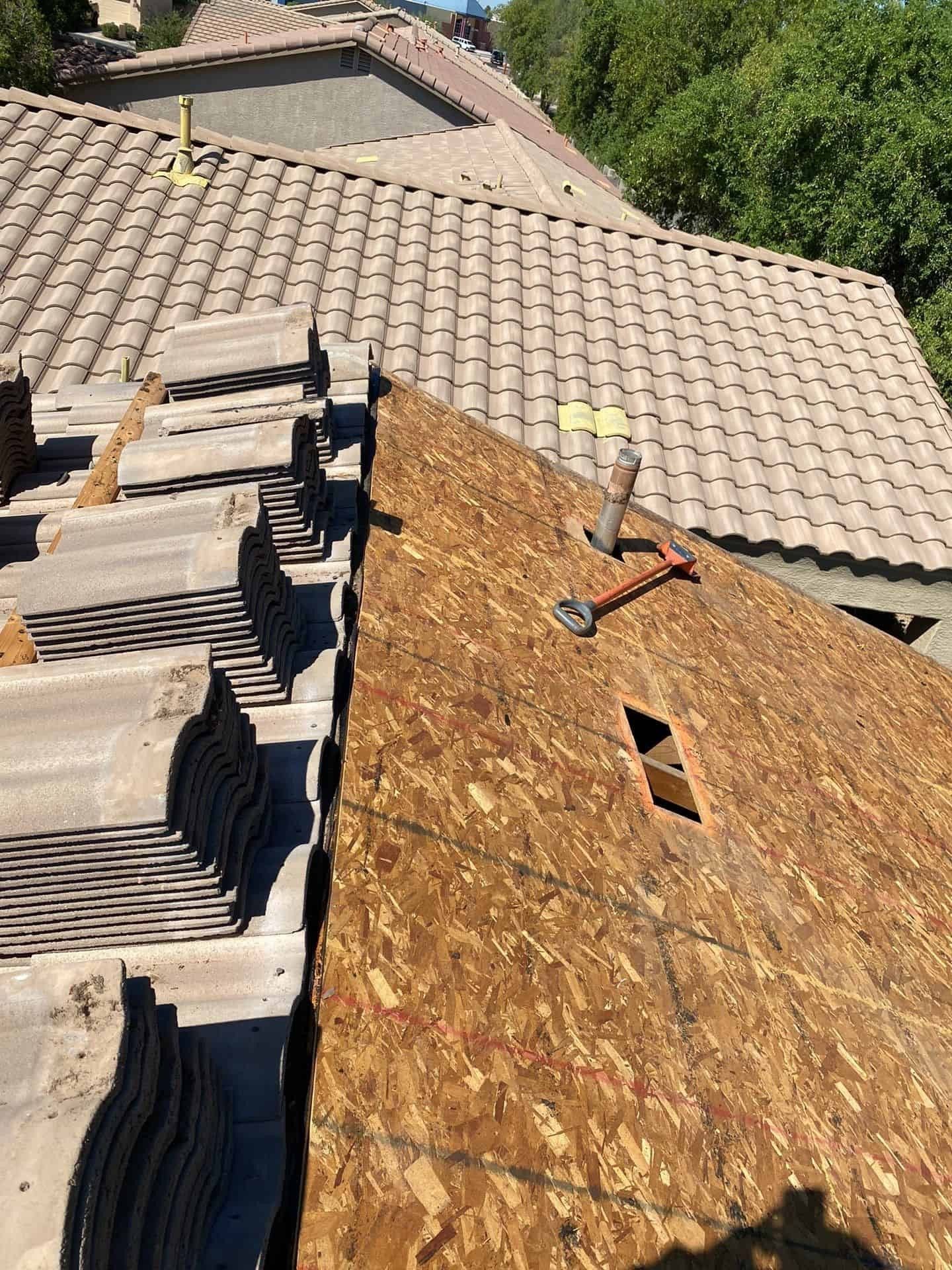
One of our Peoria project photos shows a tear-off in progress, with the decking exposed on one side while the remaining tiles wait to come off. That is a lift and relay: we remove the tiles, replace the underlayment and battens, then reinstall the good tiles and swap out any broken ones.
Other common tile issues in Peoria:
- Cracked tiles from foot traffic during solar or HVAC work
- Bird stops missing at the eaves, letting pigeons nest under the tiles
- Mortar at ridges and hips breaking loose
- Valley metal clogged with leaves and debris
If only one or two of these show up, a targeted repair is usually enough. When we find several of them on every slope, a lift and relay tends to cost less over time than chasing leaks one storm at a time.
When does a Peoria foam or flat roof need a recoat?
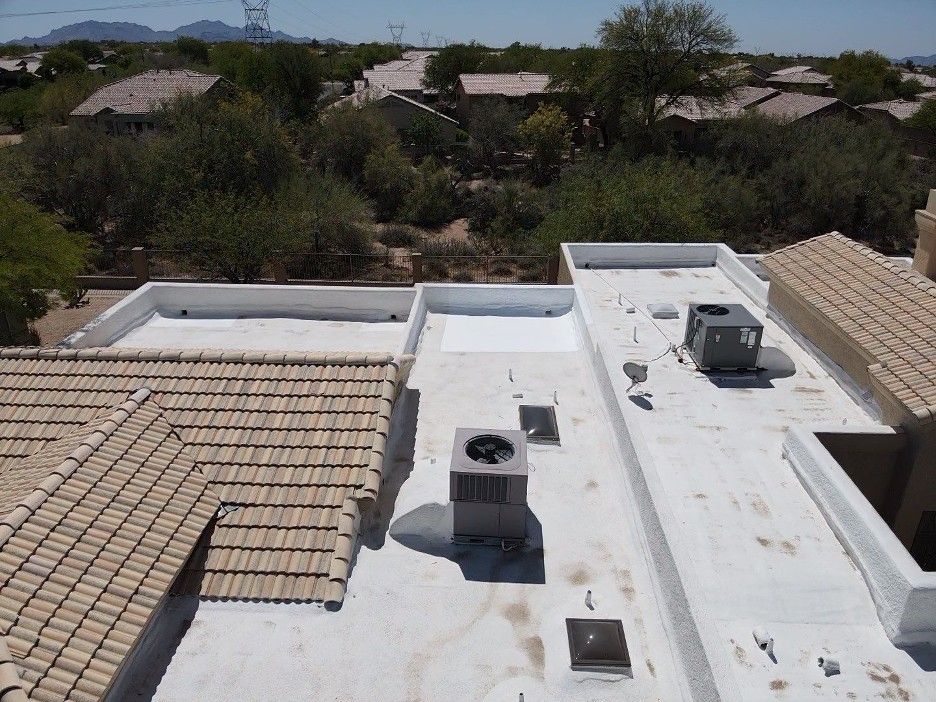
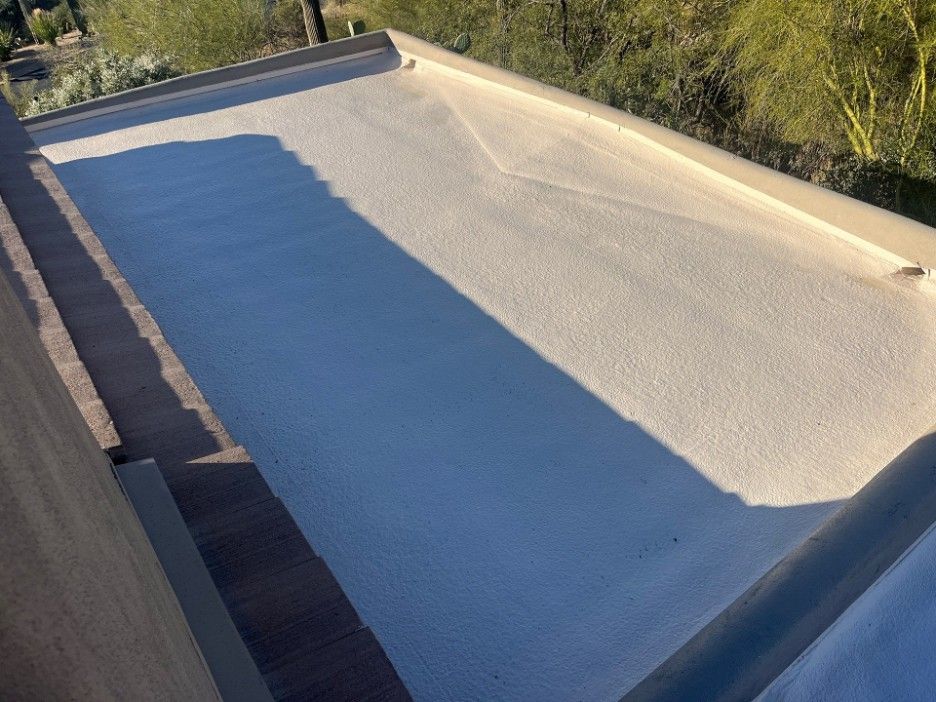
A foam roof needs a recoat when the top coating wears thin, chalks off or starts to show the tan foam underneath. The coating protects the foam from UV light. Once it is gone, the sun breaks down the foam quickly. Recoating on time is the cheapest way to keep a Peoria foam roof working.
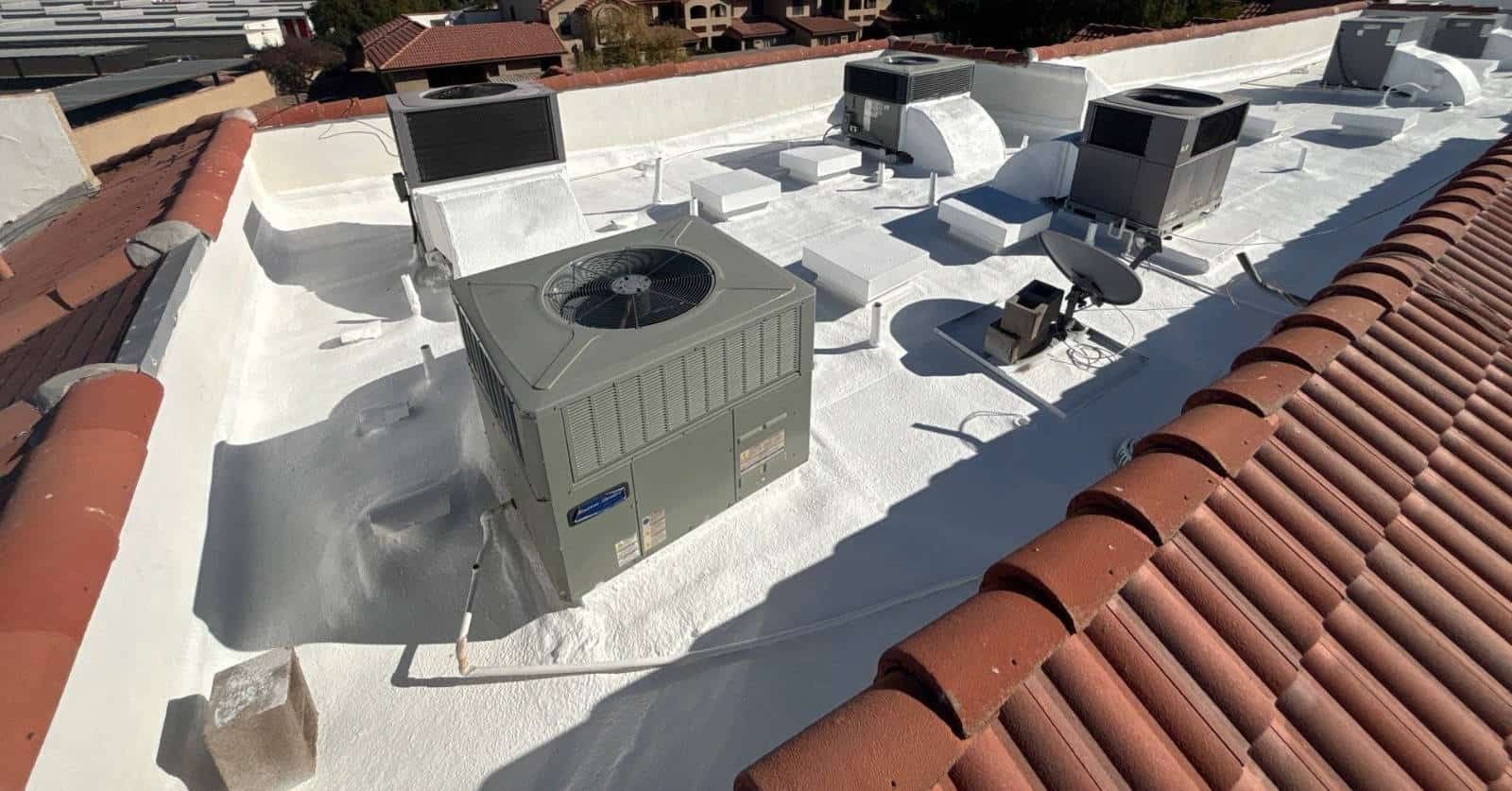
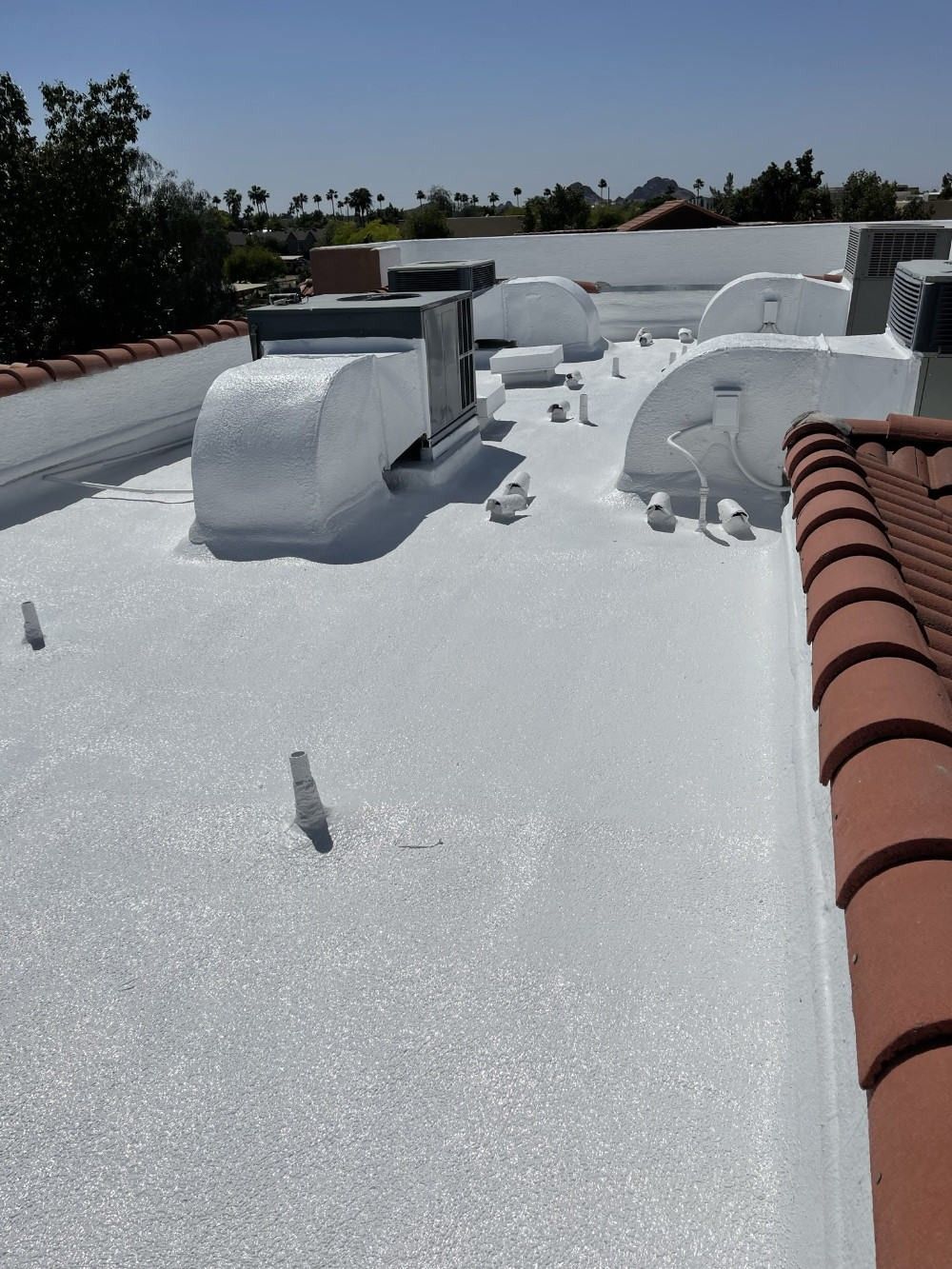
Older homes in south Peoria and low-slope additions in the 55+ communities are where we see this most. If the foam is still dry and solid, repairing and recoating a Peoria foam roof brings it back. If water has soaked into the foam or the deck, or an old built-up roof is cracking all over, a new flat foam roof for your Peoria home adds insulation and removes the seams where most flat roof leaks begin.
| Sign | What it usually means |
|---|---|
| Chalky or faded coating | Recoat soon |
| Small blisters or bird pecks | Spot repair and recoat |
| Soft or spongy areas | Wet foam, repair or replace that section |
| Water stains inside the home | Leak has reached the deck, inspect now |
How do you work with Peoria HOAs and multi-family properties?
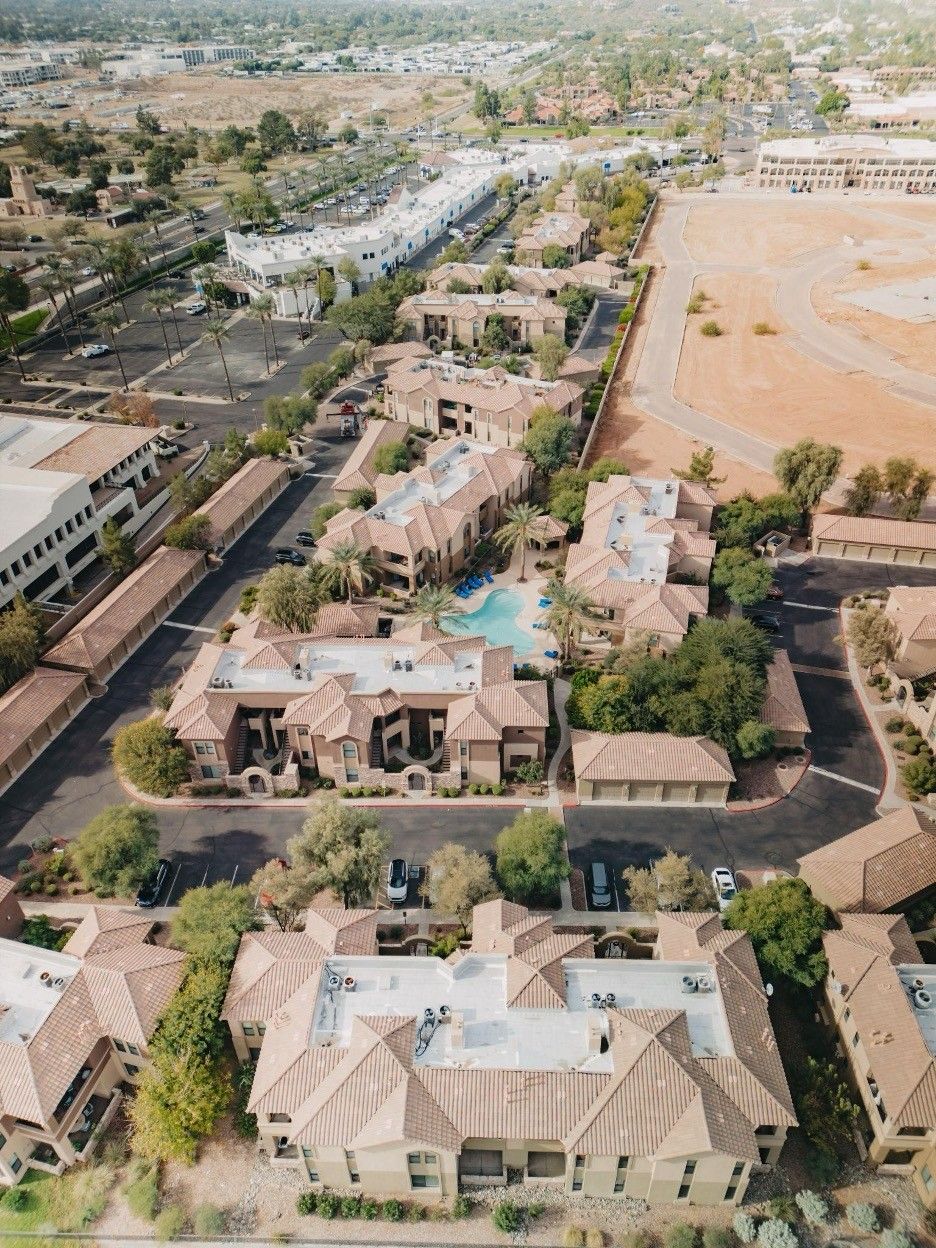
We work directly with property managers and HOA boards across Peoria. For apartment complexes, condos and townhome communities, we inspect each building, document conditions with photos and give you a written plan that ranks repairs by urgency. That lets the board budget in phases instead of facing one large bill.
We can also return after monsoon season to recheck the buildings that took the worst of the weather.
Shared buildings need clear communication. We coordinate access, parking and resident notices with your management company before crews arrive. Our multi-family roof repair crews handle tile, foam and shingle on the same property when a community has more than one roof type. For associations that need help with design rules and owner approvals, our page on how we roof HOA communities in Peoria explains how we plan that work.
What should Peoria homeowners check after a monsoon storm?
Check the yard, the ceilings and the roof edges from the ground. Look for broken tile pieces, shingle tabs, lifted metal edges or debris piled on a flat roof. Inside, look for new stains near exterior walls, skylights and vents. North Peoria’s open terrain lets storm gusts build speed before they reach homes.
If you see damage, call us before the next storm. We schedule storm repairs first-come, first-served during monsoon season. A Peoria roof inspection after a storm gives you photos and a written report, which helps if you file a claim. If your insurer has already said no, read our page on what to do when a roof claim is denied.
How do I schedule a Peoria roof estimate?
Call Icon Roofing at (480) 427-7600 to book a free estimate. A roof advisor will inspect your roof, take photos of every concern and explain your repair and replacement options in plain terms. You get a written estimate before any work begins, with materials and warranty spelled out.
We serve the whole West Valley, including roof work next door in Sun City. As a GAF Master Elite contractor, we can offer GAF’s Golden Pledge limited warranty on shingle systems when the system qualifies. You can reach the office Monday to Friday between 8:00am and 4:00pm.