
What roofs are typical in Fountain Hills?
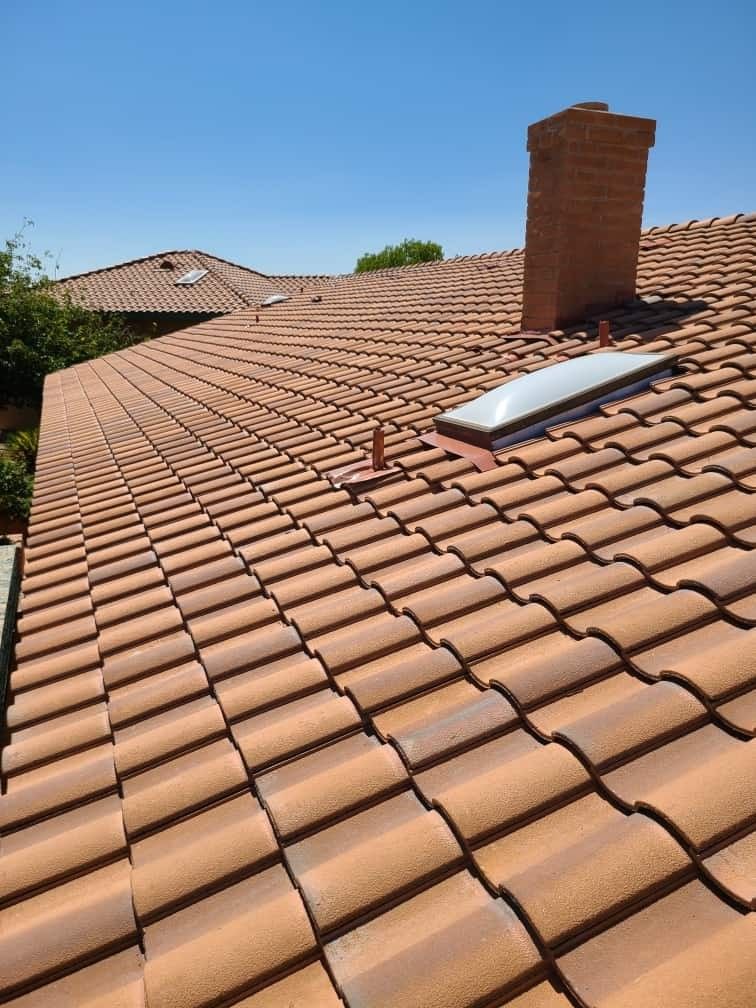
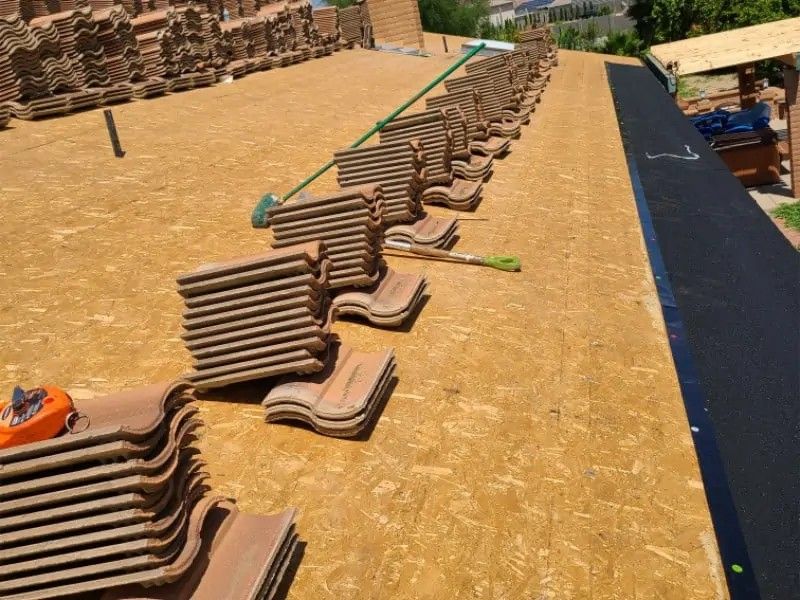
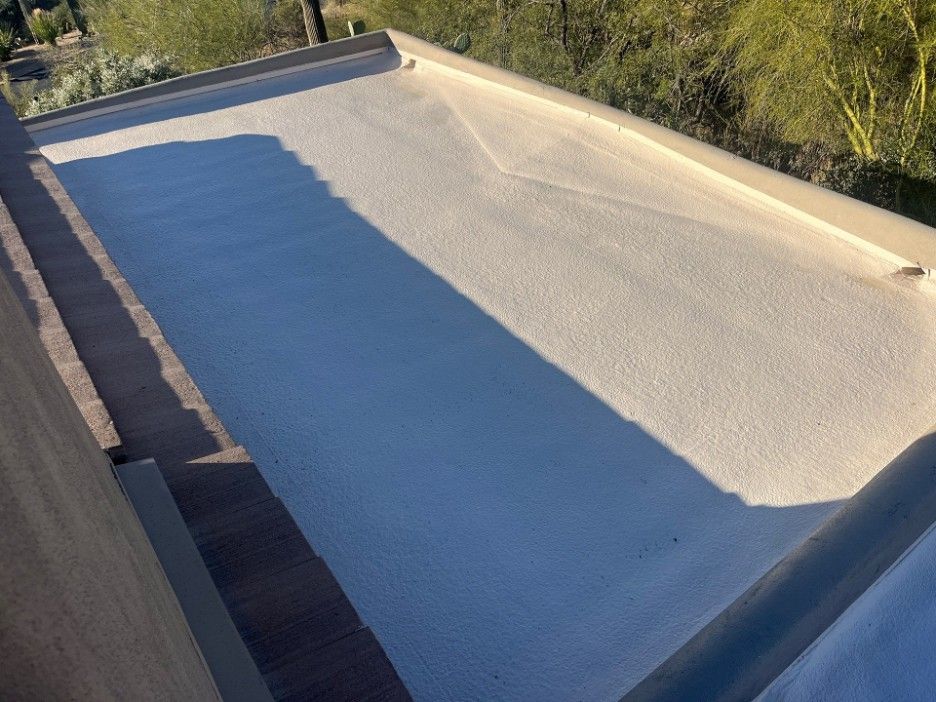
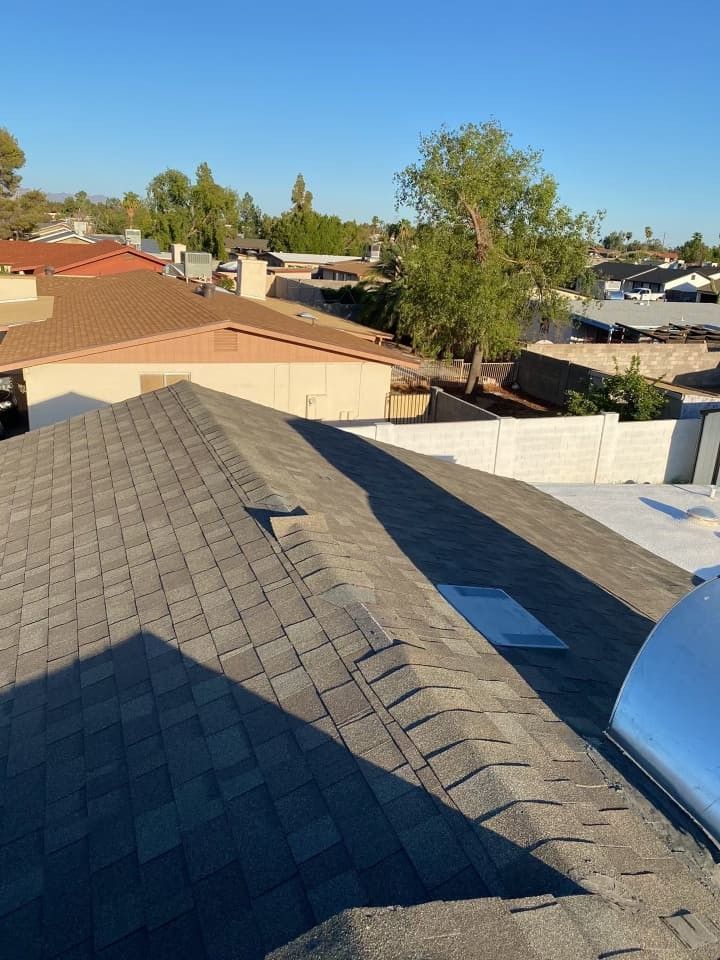
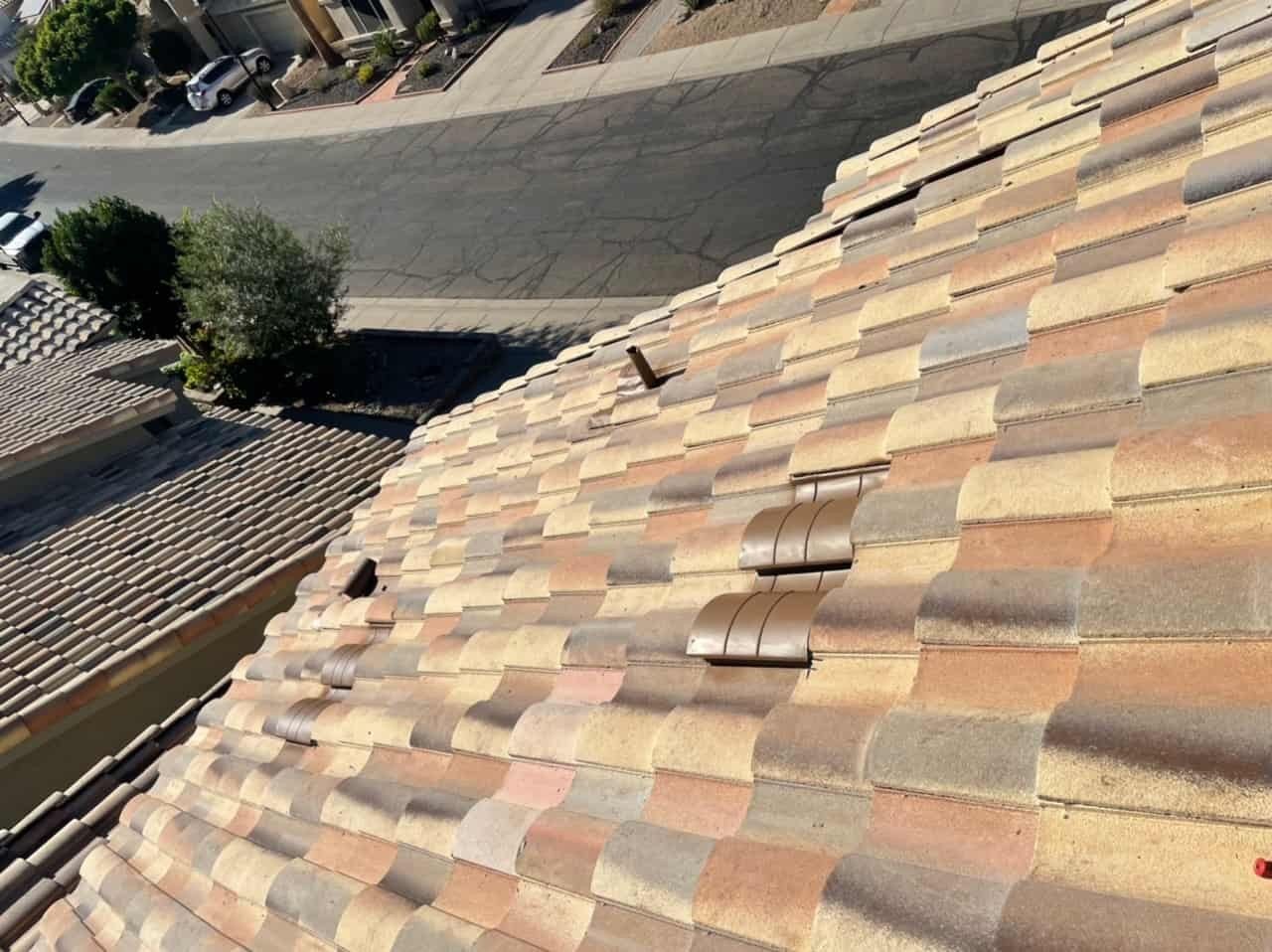
Concrete and clay tile cover most homes in Fountain Hills. Much of the town was built from the 1970s on, with neighborhoods climbing the hills below the McDowell Mountains. You will also find flat foam roof sections over patios and courtyards, and some shingle roofs on older homes near the town center and Fountain Park.
The hills shape everything about roofing here. Homes sit at different heights, face different directions and catch wind in different ways. Two houses on the same street can need very different repairs.
Golf communities like FireRock and SunRidge Canyon add HOA rules on color and material. Many hillside custom homes add complex roof lines with many hips, valleys and transitions to flat sections.
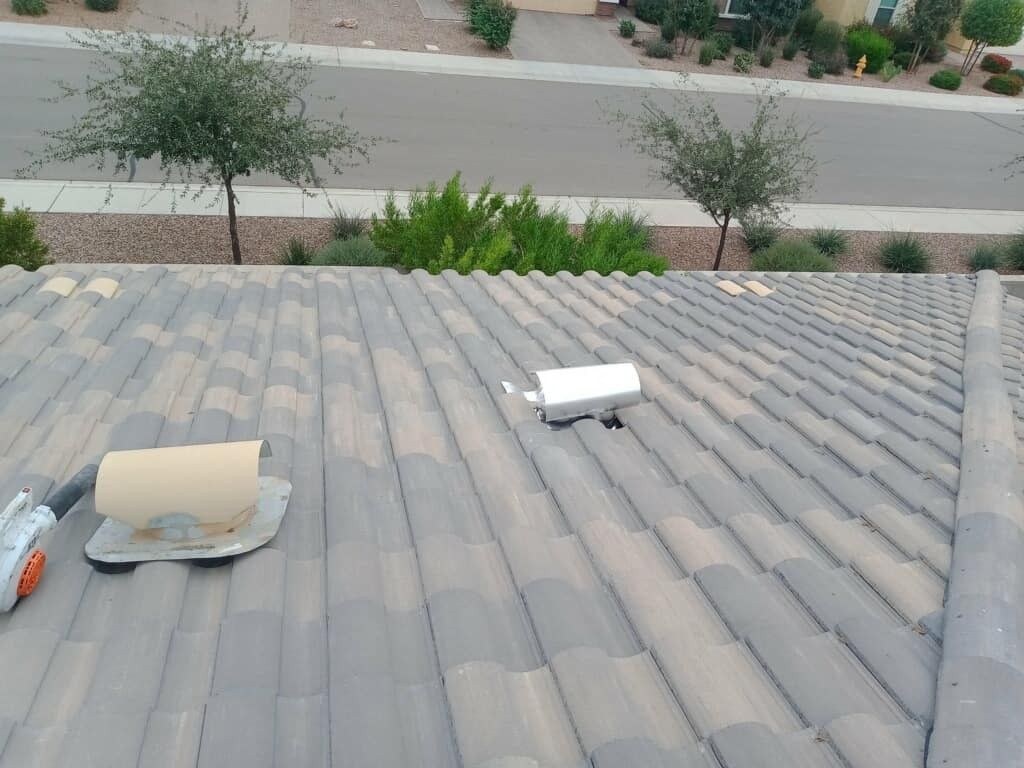
Where a flat foam section meets a tile slope, the flashing at that joint is one of the most common leak points we find in town. Foam sections also need their coating renewed from time to time, since sun exposure on a south-facing hillside wears it faster.
How does hillside living change roof repair in Fountain Hills?
Hillside homes need more planning before work starts. Steep drives, retaining walls and tight setbacks limit where we can stage tile and set ladders. Wind hits upper slopes harder. And neighbors uphill can see your whole roof, so mismatched patches stand out more than they would on flat ground.
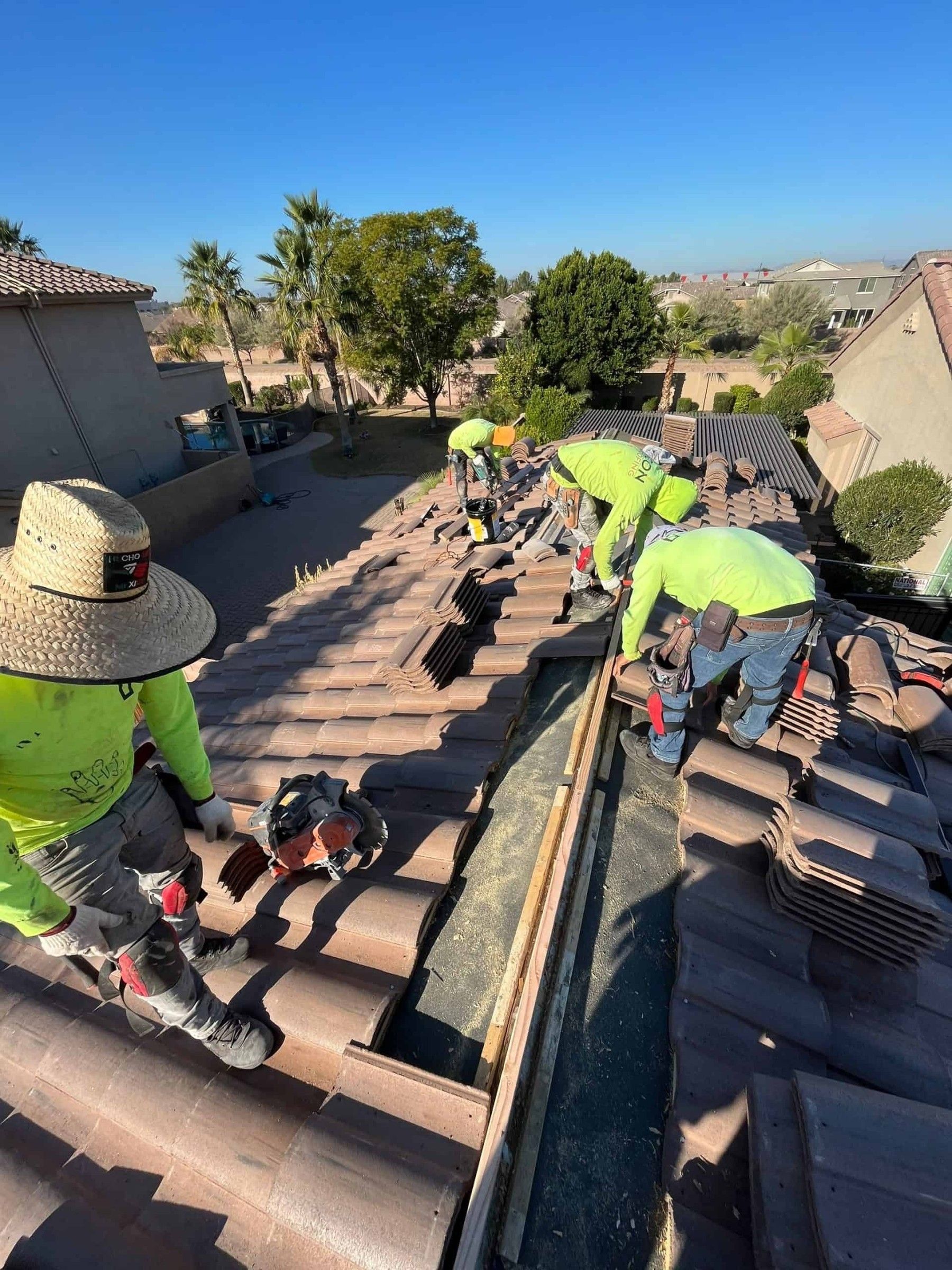
We walk the property first and decide where materials go, how debris comes down and how to protect landscaping, pavers and pools. On some homes we hand-carry tile from the street. Talking through access up front keeps the job on schedule and avoids surprises on install day.
Visibility from above changes repair choices too. When a tile is no longer made, we often move original tiles from a hidden slope to the side neighbors see, then fill the hidden area with the closest new match.
Why does wind cause so much tile damage in Fountain Hills?
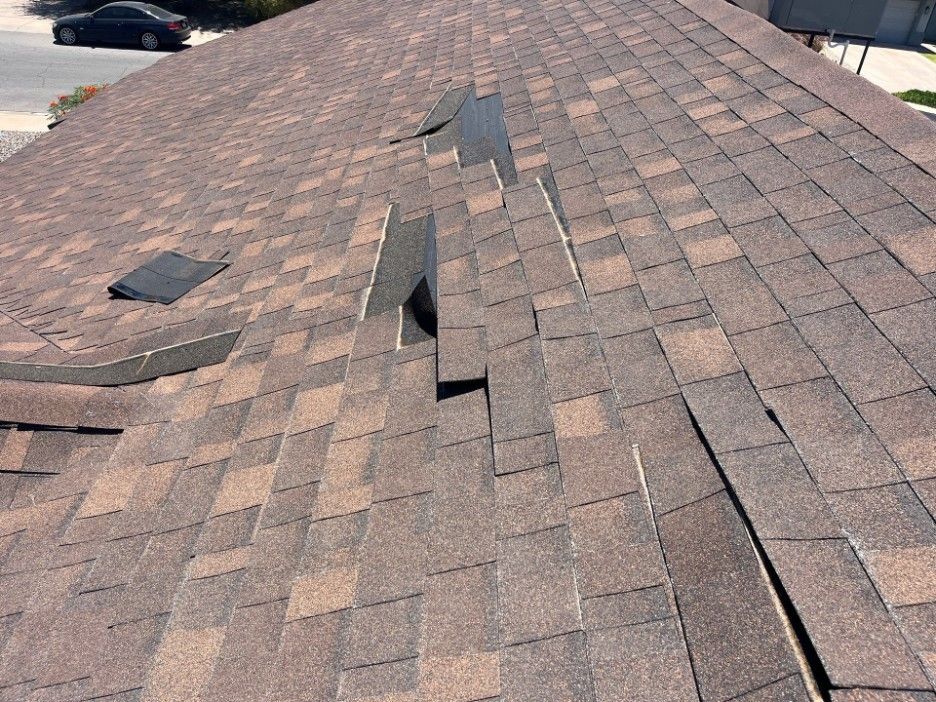
Monsoon gusts move up and over the hills, and homes on ridges and upper slopes take the full force. Tiles that were set without enough fasteners or adhesive can lift and drop, cracking themselves and the row below. Ridge and hip tiles set in mortar break loose when the mortar ages and cracks.
The National Weather Service Phoenix monsoon page lists the season as June 15 to September 30. After a big storm, look for tile pieces in the yard, gaps in the rows or ridge caps that sit crooked. Our storm damage repair service in Fountain Hills replaces broken tiles, resets loose ones and fastens them more securely so they hold better next time.
If you are filing a claim, we photograph the damage and write up the scope for your insurer.
When should a Fountain Hills tile roof get new underlayment?
A tile roof needs new underlayment when the layer beneath the tiles has dried, cracked or torn across most of the roof. Tiles can look fine long after that happens. Leaks at valleys, eaves and around vents and skylights are the most common sign. Lifting tiles during an inspection is the only reliable check.
When only a few spots are failing, tile roof repair for Fountain Hills homes replaces the underlayment and flashing in those areas. When the problem is widespread, a lift and relay removes the tiles, installs new underlayment and battens and puts your tiles back. Our tile reroofing service handles both lift and relay jobs and full new tile.
| What we see | Typical next step |
|---|---|
| Cracked or slipped tiles, sound underlayment | Replace or reset tiles |
| One leaking valley or vent | Spot underlayment and flashing repair |
| Brittle underlayment on several slopes | Lift and relay |
| Broken or faded tile throughout | New tile and underlayment |
How do HOAs in Fountain Hills affect your roof choices?
Many Fountain Hills HOAs, especially in golf and gated communities, require approval of roof color, tile profile and material before a reroof. FireRock, SunRidge Canyon, Eagle Mountain and CopperWynd each have their own process. Ask for your HOA’s rules before choosing materials, and allow time for review in your schedule.
We give you product names, colors and samples to include with your request. If you plan a lift and relay with your existing tile, approval is often simpler because the look does not change.
Some owners use a reroof to change the look of an older home, for example moving from a faded red S-tile to a flatter profile in a muted desert tone. That kind of change usually needs a full review. Bring photos of homes nearby with the look you like. Showing that the color already exists in your neighborhood can help the request move faster.
If your HOA also manages shared buildings such as a clubhouse or guard gate, we can inspect and roof those too.
How do I book a roof inspection in Fountain Hills?
Call Icon Roofing at (480) 427-7600 to schedule a free estimate. A roof advisor will look at access, check the tile and underlayment, inspect any flat sections and photograph every issue. You get a written estimate that lists the work, materials and warranty, plus photos you can share with your HOA.
A Fountain Hills roof inspection in spring gives us time to fix loose tiles and worn flashing before monsoon season. For a checklist of what to do before storms arrive, read how to prepare your roof for monsoon season. We also serve homeowners in Scottsdale, just west over the McDowells, from our Mesa office, which is open weekdays 8:00am to 4:00pm.