
What is included in a multi-family roof maintenance program?
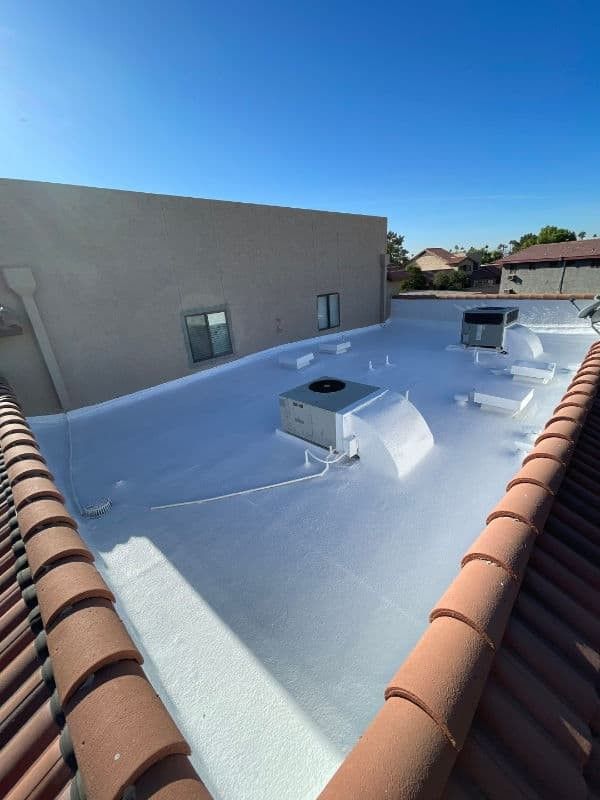
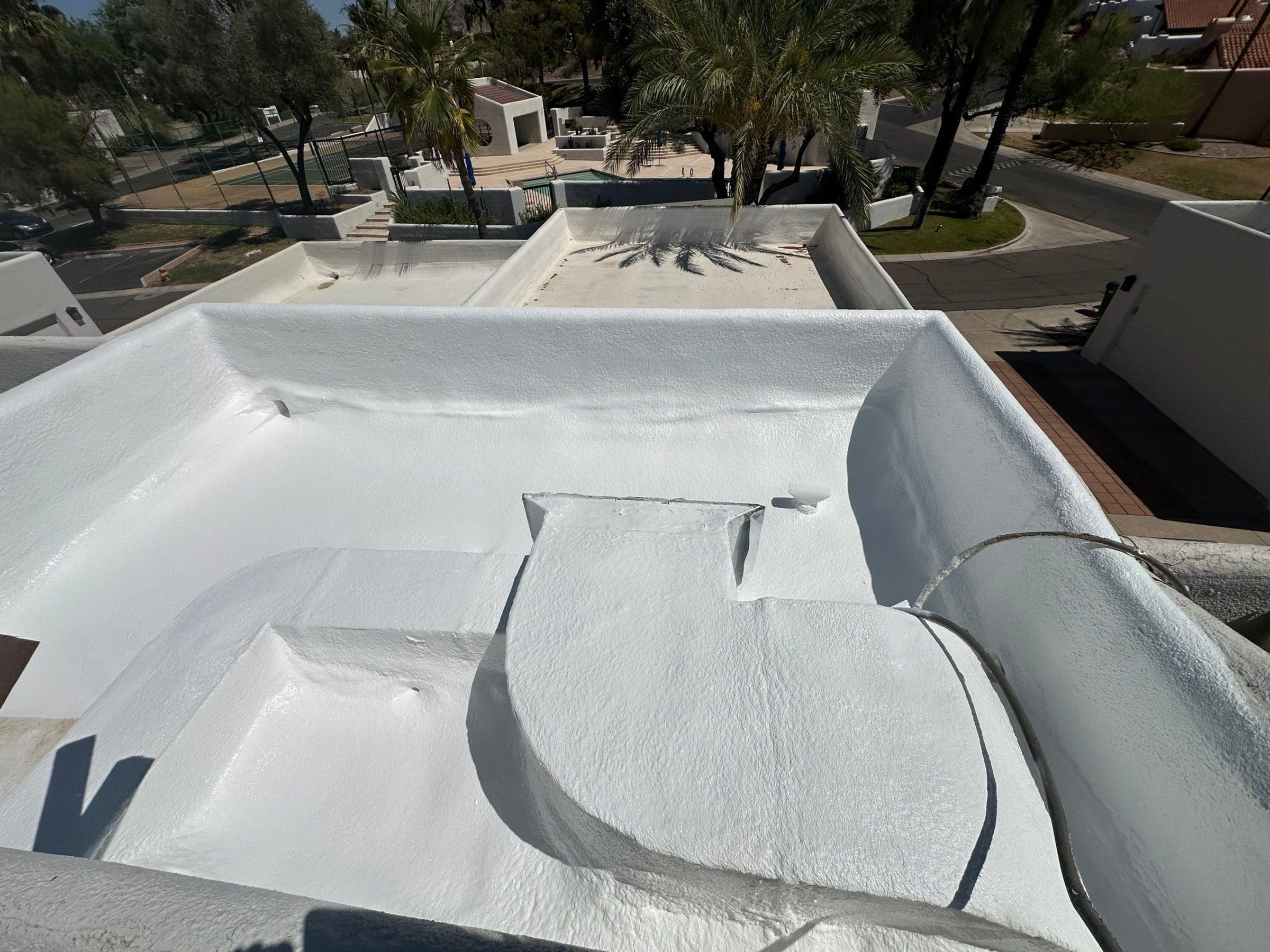
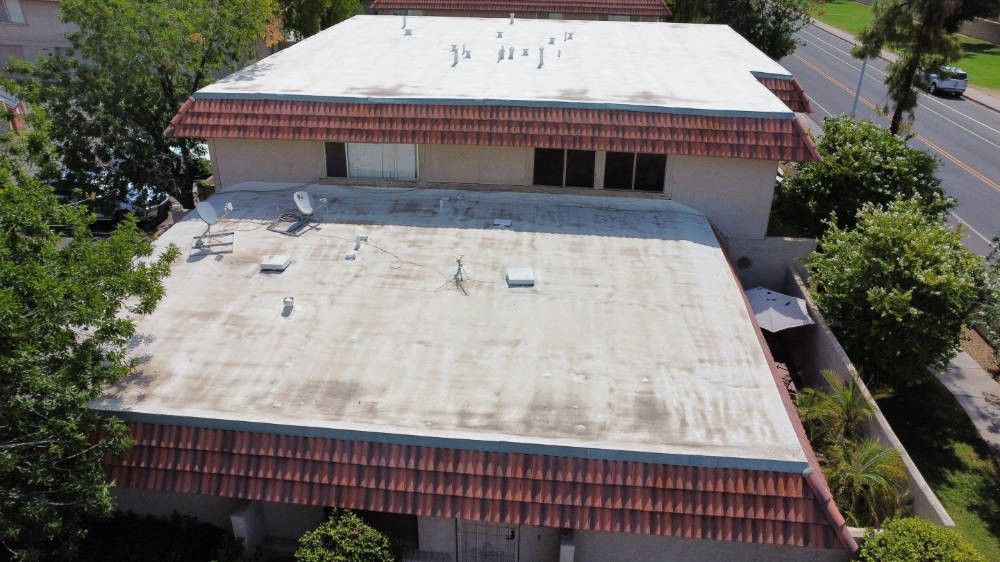
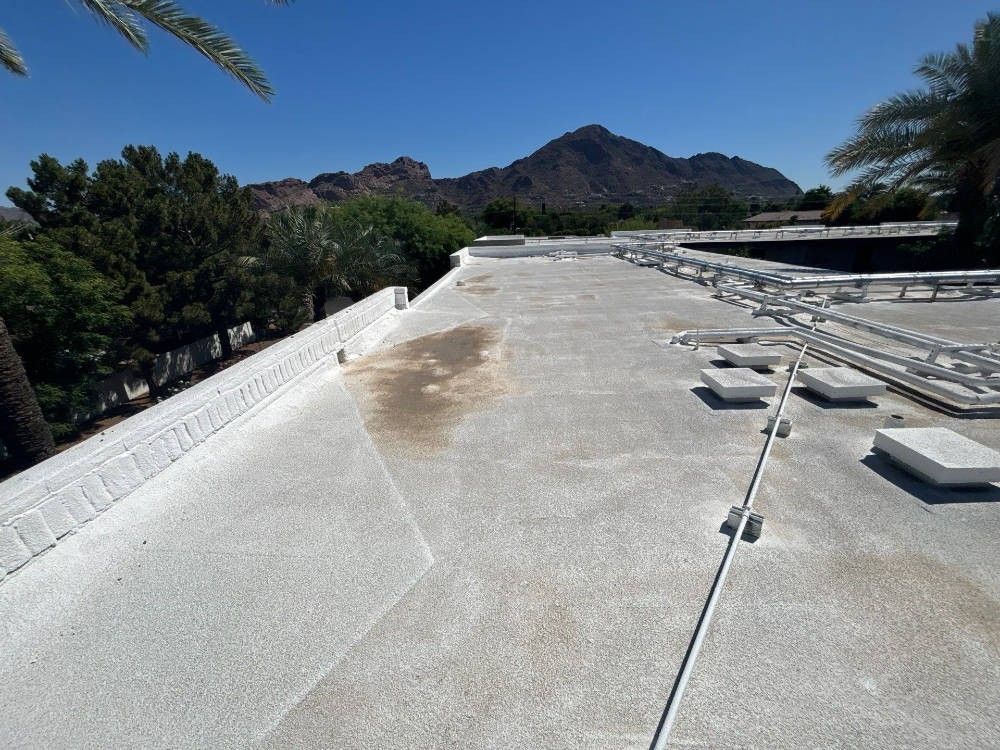
A multi-family roof maintenance program is a set of scheduled visits where a roofer inspects, cleans and makes small repairs to every roof on a property. Typical tasks include clearing drains, resealing flashing, securing vents and equipment, replacing broken tile or shingles, and tracking the condition of foam coatings so recoats can be planned ahead.
Tasks we commonly handle on each visit:
- Clear debris from drains, scuppers, gutters, valleys and the roof surface.
- Reseal vulnerable areas around flashing, pipe penetrations and equipment curbs where seals have cracked.
- Replace broken pieces such as cracked tile or missing shingles.
- Secure protrusions like exhaust caps, turbine vents and loose duct supports.
- Note wear such as granule loss, thin coating or slipped tile so you can forecast a repair or a roof replacement for your apartment buildings.
Each property gets a plan that fits its roofs, so the list changes from one community to the next. Our overview of multi-family roofing covers the repair and replacement work that follows when maintenance finds bigger issues.
How often should apartment and condo roofs be inspected in Arizona?
Apartment and condo roofs in Arizona should be inspected at least twice a year and after any severe storm. That matches the guidance in the NRCA homeowner resources. In the Valley, the timing matters: one visit in spring before monsoon season, and one in fall after the storms end.
| Visit | Timing | Main focus |
|---|---|---|
| Spring | Before June 15 | Clear drains, reseal flashing, secure equipment, fix small openings |
| Fall | After September 30 | Check for storm damage, remove debris, log coating wear |
| After severe storms | As needed | Look for lifted roofing, displaced tile and damaged curbs |
Older roofs, or buildings with a history of leaks, may benefit from more frequent checks. A formal baseline inspection of your multi-family roofs is a good starting point before a program begins.
What should a spring visit before monsoon season cover?
A spring visit should make the roof ready for heavy rain and high wind. The National Weather Service sets monsoon season from June 15 to September 30. Before it starts, every drain should flow freely, every seal should be intact, and nothing on the roof should be loose enough for a gust to lift.
In practice that means clearing a winter’s worth of dust and leaves, checking each condenser stand and duct support, and resealing any penetrations that cracked in the heat. Our post on getting a Phoenix roof ready for monsoons lists the same checks for a single home.
What should a fall visit after monsoon season cover?
A fall visit should find and fix what the storms did. We look for lifted or missing shingles, cracked or shifted tile, torn coating on foam roofs, and debris that collected in valleys and drains. We also check interior reports from your maintenance team so we can match ceiling stains to spots on the roof.
Fall is also a good time to plan. With the storms over and cooler months ahead, it is easier to schedule larger repairs or a recoat before the next summer heat sets in.
When does a foam roof need a recoat?
A foam roof needs a recoat when its protective coating has worn thin enough that the foam beneath starts to show, or when the surface is cracking, blistering or chalking heavily. The coating shields the foam from UV. Without it, the sun breaks the foam down and water starts to get in.
Timing varies with sun exposure, foot traffic and the original coating, so we measure condition at each visit instead of guessing from the calendar. When a recoat is coming due, we give you a heads-up a budget year ahead. If damage goes past the coating, our crews handle spray foam roof repair before recoating.
Why do roof drains and scuppers matter so much on flat roofs?
Drains and scuppers matter because they are the only way water leaves a flat roof. When dust, leaves or a lost tennis ball blocks one, water backs up during a heavy storm and sits on the roof. Standing water finds weak seams, adds weight, and breaks down coatings faster than sun alone.
Clearing drains takes minutes and prevents some of the most expensive leaks we see. It is the first task on every visit. We also look at the path water takes to each drain. Low spots, sagging insulation boards or a buildup of old coating can stop water from reaching the drain at all, and those spots get flagged for repair before the storms arrive.
Does skipping maintenance affect a roof warranty?
Skipping maintenance can affect a warranty. Many material and workmanship warranties do not cover damage caused by neglect, such as leaks from clogged drains or seals that were never resealed. Keeping dated records of each visit shows that the roof was cared for if a claim ever comes up.
Our maintenance records give you that history. For more upkeep ideas, see our multi-family roof care tips.
Where do you offer multi-family maintenance programs?
We offer maintenance programs across Metro Phoenix from our office in Mesa. Many of the communities we maintain are in Phoenix, Mesa and Scottsdale, where large apartment and condo properties carry flat foam roofs and tile mansards. See how we support apartment and condo owners in Phoenix.
Icon Roofing is a GAF Master Elite contractor and an Arizona Association of Community Managers Affiliate Partner. Call (480) 427-7600, Monday to Friday from 8:00am to 4:00pm, to set up a baseline inspection.