
When does a commercial roof need to be replaced?
A commercial roof needs replacement when repairs no longer keep it dry or no longer make financial sense. Common signs include leaks that keep moving, large wet or soft areas, worn membranes, bare foam, rusted metal panels and standing water that stays after storms. Most owners decide after an inspection shows how much of the roof is failing.
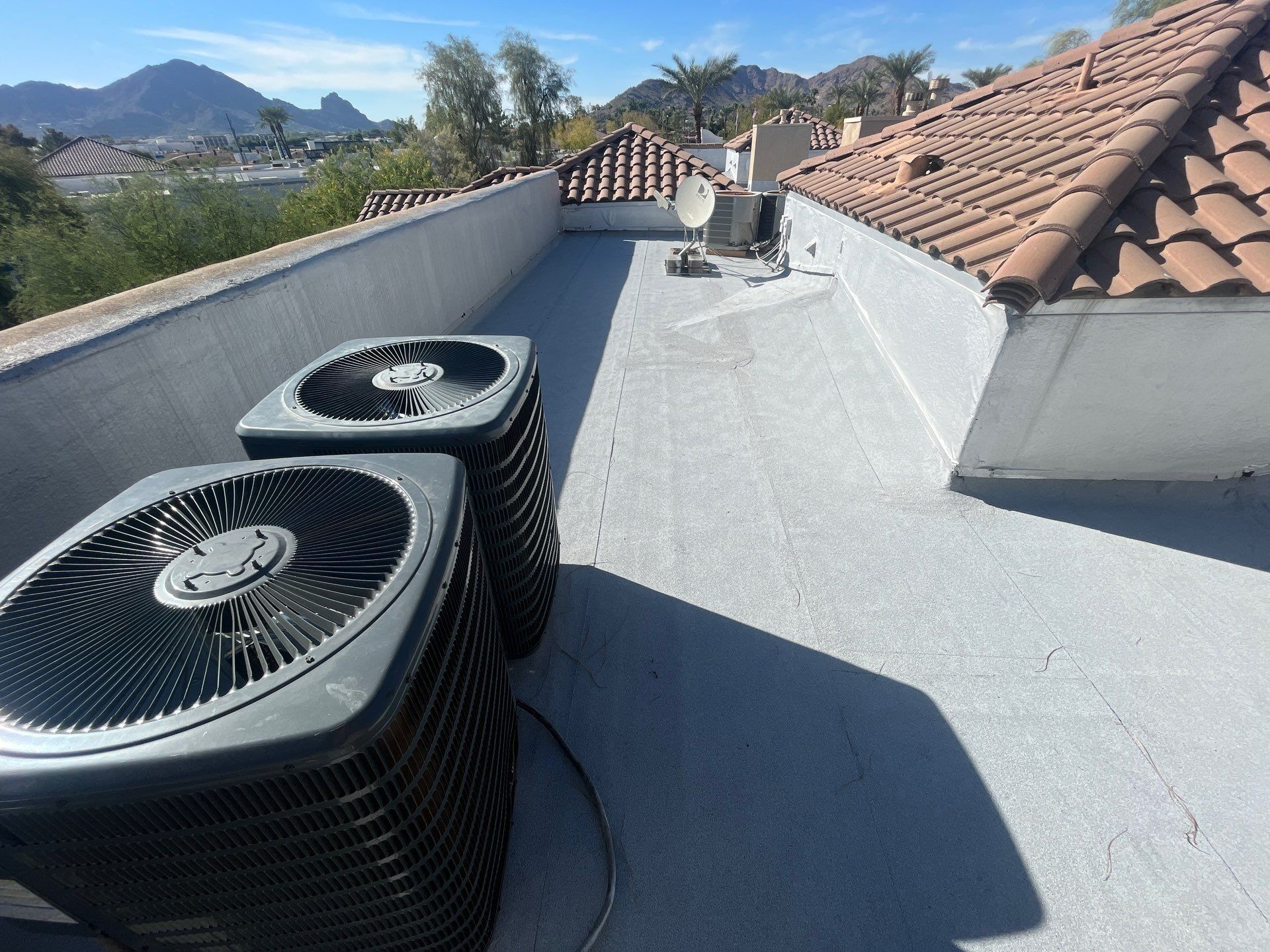
Arizona is hard on commercial roofs. Daily heat swings make materials expand and contract, UV breaks down coatings and membranes, and monsoon storms test every seam. Other warning signs include:
- Damage from hail, golf balls, birds or falling branches
- Cracked, brittle or curling roof surfaces
- Water damage to ceiling tiles, insulation or the deck below
- Insurance or lender requirements tied to roof condition
If you are not sure yet, start with a commercial roof inspection and photo report.
Should you repair, recoat or replace a commercial roof?
Repair when the damage is limited to a few spots. Recoat when the roof is sound and dry but the surface is worn, which is common on foam, metal and some membranes. Replace when water has reached the insulation or deck across large areas, or when the roof needs constant repairs. The table below shows the trade-offs.
| Option | When it fits | What it involves |
|---|---|---|
| Repair | Damage in a few spots, roof otherwise sound | Fix seams, flashing, punctures or panels in place |
| Recoat | Dry, well-bonded roof with a worn surface | Clean, repair spots, apply a new protective coating |
| Replace | Wet or failed areas across the roof, damaged deck | Tear off, repair deck, install a new system |
When a repair is the right call, our commercial roof repair crew can handle it. We will tell you honestly which option fits your building.
Which roof system should replace your old commercial roof?
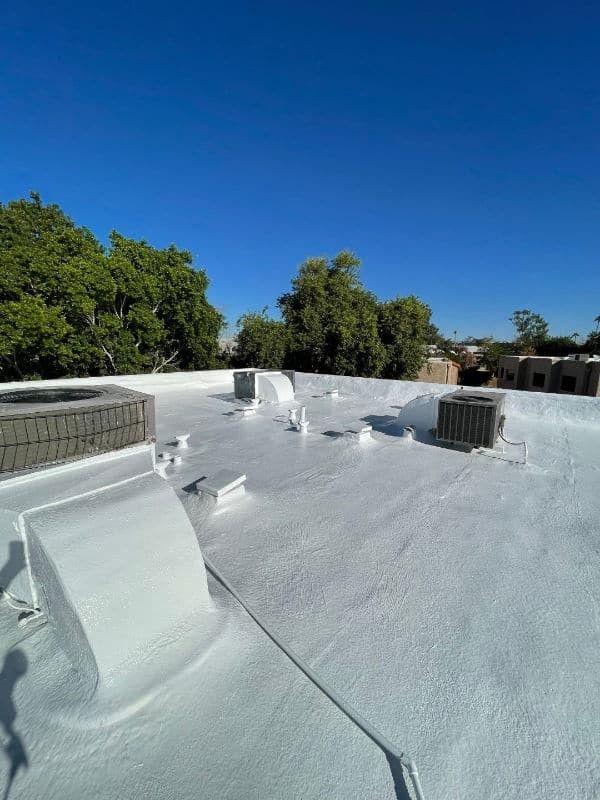
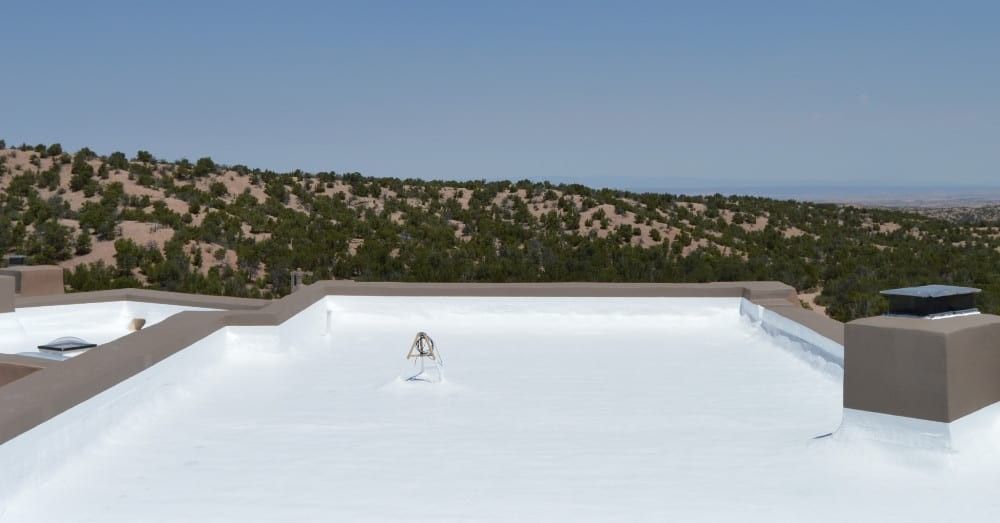
The right replacement system depends on your building’s structure, slope, rooftop equipment, foot traffic and how long you plan to own it. Spray foam with a coating suits many flat roofs in the Valley because it insulates and sheds water. Modified bitumen, single-ply membranes and metal each fit other buildings well.
A quick guide to the main choices:
- Spray foam (SPF): Sprayed in place to build slope toward drains, then coated. Needs a recoat on a schedule.
- Modified bitumen: Layered asphalt sheets with good resistance to foot traffic around equipment.
- Single-ply (TPO, PVC, EPDM): One membrane with welded or glued seams over insulation.
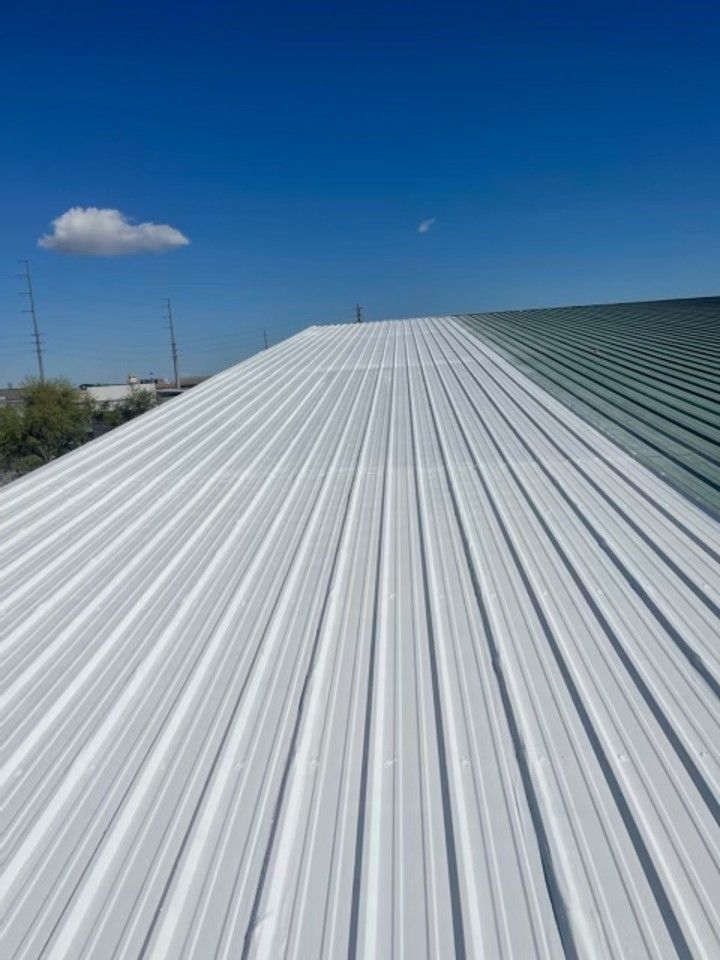
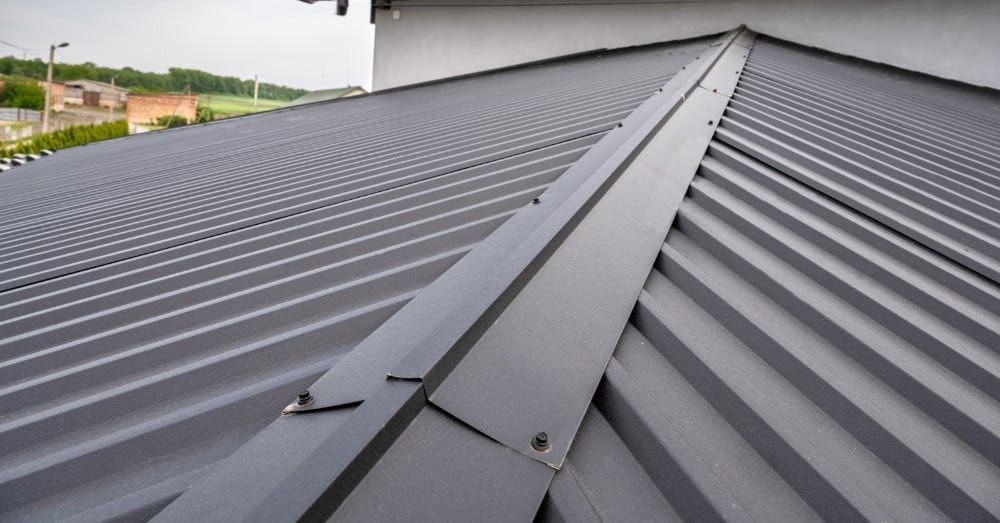
- Metal: Long service life when fasteners, seams and coatings are maintained. Our metal roof replacement work covers the same panel and fastener details.
- Tile and shingle: Common on mansards, office buildings and mixed-use properties with sloped sections.
What happens during a commercial roof replacement?
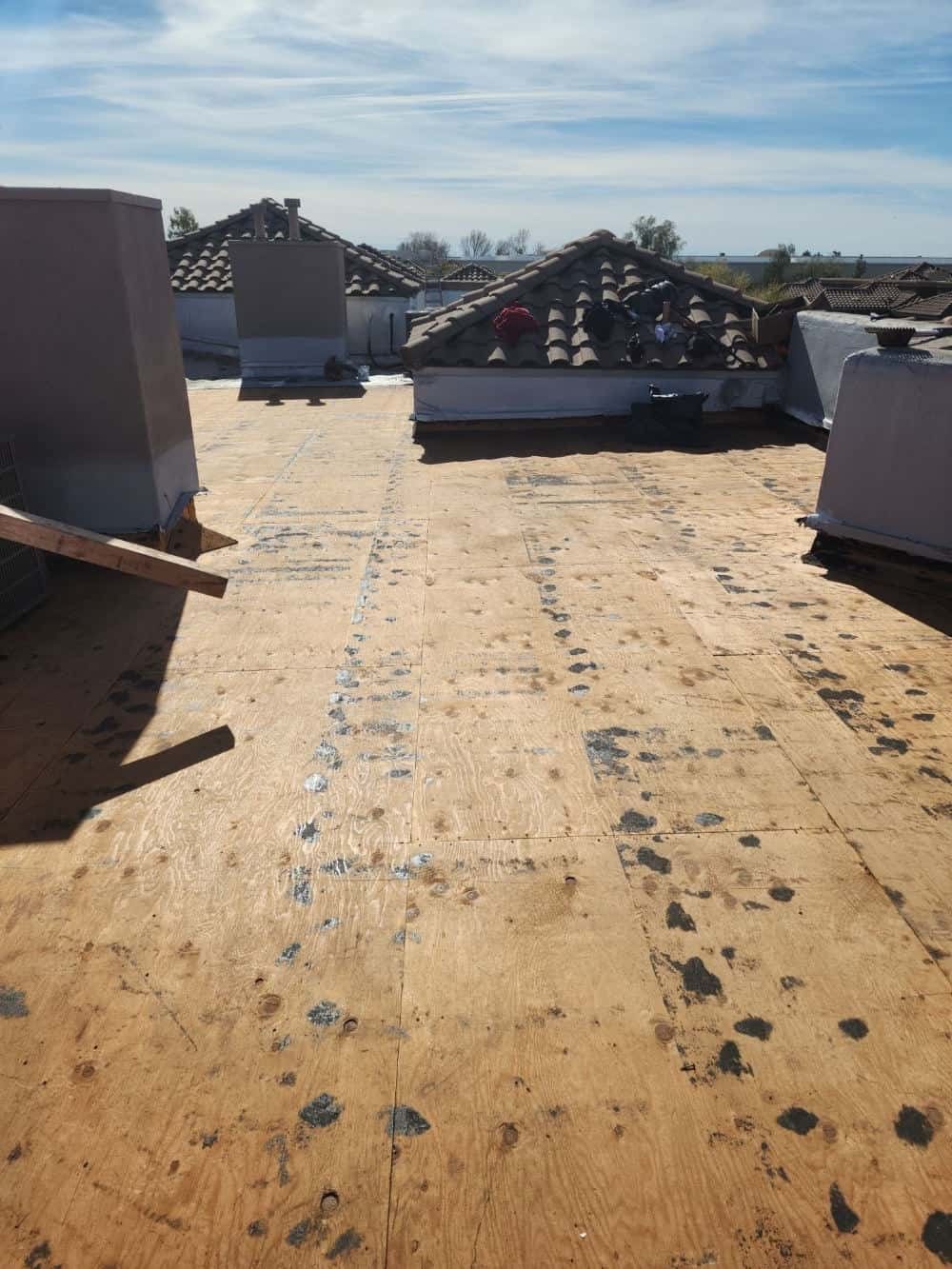
During a commercial roof replacement, we remove the old roof in planned sections, inspect and repair the deck, correct drainage problems, install insulation where the system calls for it, and then install the new roof and flashing. Each section is sealed before we leave for the day. We finish with a walk of the roof and a closeout file.
Drainage gets special attention. Ponding water shortens the life of any flat roof, so we look at slope, drains and scuppers before the new roof goes on. On foam roofs, we can add foam thickness to build slope where water sits.
Weather shapes the schedule too. We watch forecasts closely during monsoon season and avoid opening large sections when storms are likely. If your property mixes retail on the ground floor with apartments above, our phased roof replacement for apartment buildings explains how we handle residents as well as tenants.
How do you limit downtime and tenant disruption?
We limit disruption by planning the work in phases with your facility manager before we start. Together we set work zones, delivery times, staging and parking, safe walkways and the order of sections. Tenants get notice before work reaches their space, and we keep the building weather-tight every day.
On busy properties in Phoenix commercial districts, Scottsdale and Glendale, this planning matters as much as the roof itself. Tell us about loading docks, medical or food service tenants, equipment that cannot be shut down, and customer hours. We build the schedule around them.
How should you budget for a commercial roof replacement?
Budget for a commercial roof replacement by starting with an inspection, then comparing the cost of a new roof with the repairs you would likely need over the next few years. A written proposal with a clear scope makes it easier to set reserves, get owner approval and compare bids on equal terms.
We list what is included, what depends on conditions found during tear-off, such as damaged decking, and how we will handle it. If you need to spread out the cost, you can explore financing for a roof project. Our article on how long a roof lasts in Arizona can also help you plan future budgets.
What documentation comes with a new commercial roof?
A new commercial roof from Icon Roofing comes with before and after photos, a summary of the scope we completed, and your written warranty documents for craftsmanship and materials. This file supports insurance renewals, refinancing, a future sale and any warranty claim, and gives your maintenance team a starting point.
Icon Roofing is a GAF Master Elite contractor licensed under Arizona ROC# 333889 CR-42. Every job follows The Icon Way: competitive pricing, quality materials, a satisfaction guarantee and warranties on craftsmanship and materials. To see how we handle other property types, visit our commercial roofing hub, or call (480) 427-7600, Monday to Friday, 8:00am to 4:00pm, for a free estimate.