
When does a foam roof need to be replaced?
A foam roof needs replacing when the foam itself has failed, not just the coating. Signs include large areas of cracked or crumbling foam, leaks from several places, repairs and recoats that keep failing, decking showing through worn foam, ponding in several spots, and mold or mildew that keeps coming back.
Here is what each sign usually means:
- Cracking, crumbling or missing foam. Once large sections are compromised, patches cannot restore the roof.
- Leaks in multiple locations. The roof is no longer sealing as a whole.
- Failed repairs or recoats. The problems run deeper than the surface.
- Deck visible through the foam. The foam has worn too thin to repair.
- Consistent ponding. The roof has lost its slope, and water sits where it should drain.
- Persistent mold or mildew. Moisture is trapped in or under the foam.
We look at repairs first and only recommend replacement when repairs will not stop the leaks. If your roof only has a few problem spots, our foam roof repair and recoat service may be the better fit.
What causes foam roofs to fail in Arizona?
Foam roofs in Arizona fail mostly because the coating wears out and the sun starts breaking down the foam beneath it. Missed recoats are the most common cause. Ponding water, bird damage, foot traffic around rooftop units, and moisture trapped in the foam from old leaks speed things up. Monsoon storms then push water into every weak spot.
Spray polyurethane foam is a strong, insulating material, but it needs its elastomeric coating to survive the Arizona sun. Recoating extends that protection for a while. It cannot bring back foam that is wet, crumbling or worn through.
What are the risks of putting off a foam roof replacement?
Delaying a needed foam roof replacement lets water damage spread into the deck, the ceiling and the insulation. Each patch on a failing roof buys less time than the last. Wet foam also loses much of its insulating value, so cooling bills can climb. Trapped moisture can lead to mold, which affects indoor air.
Waiting also tends to grow the job. A roof replaced on time may only need foam removed and new foam sprayed. A roof left too long often needs decking replaced as well. We help you plan the timing, so you replace before the damage spreads but not before the roof is actually done.
What does a foam roof replacement involve?
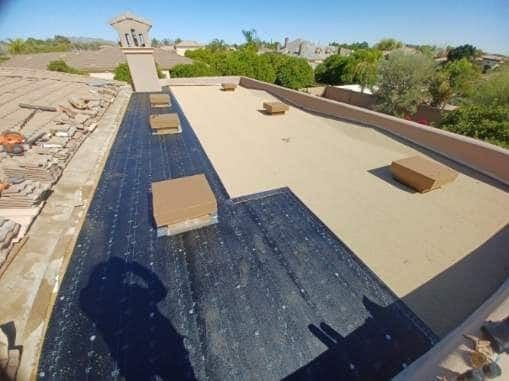
A foam roof replacement involves inspecting the roof, removing wet or failed foam, repairing the deck, spraying new polyurethane foam, and applying a protective coating. During spraying, we build up low areas so water drains to scuppers and drains instead of ponding. The job ends with a drainage check, cleanup and a walk-through.
Whether the old foam comes off depends on its condition. Dry, well-bonded foam can sometimes stay and be built over. Wet or loose foam must come off. Edges, parapet walls, scuppers and rooftop equipment curbs get extra attention, since they are common leak points.
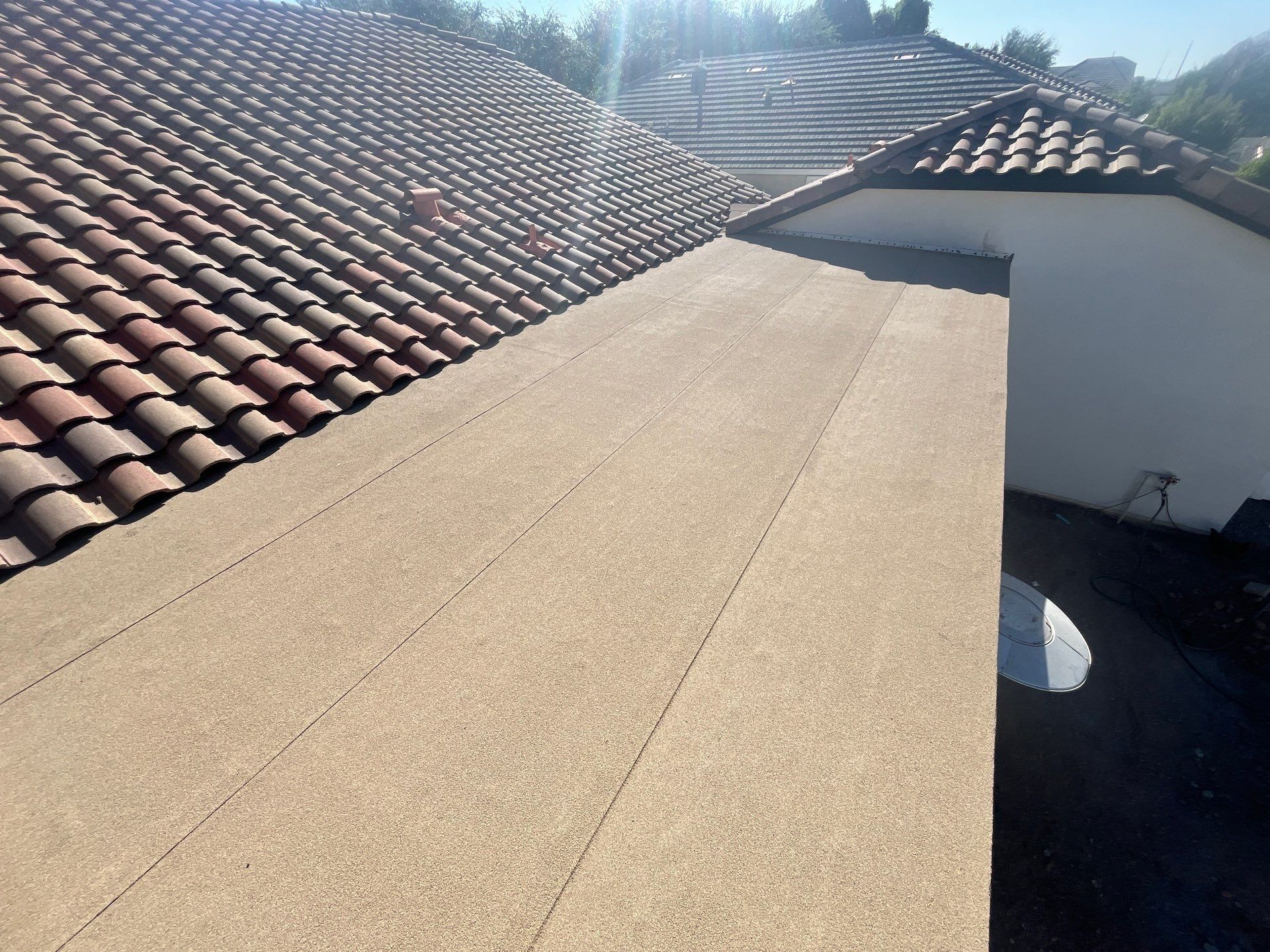
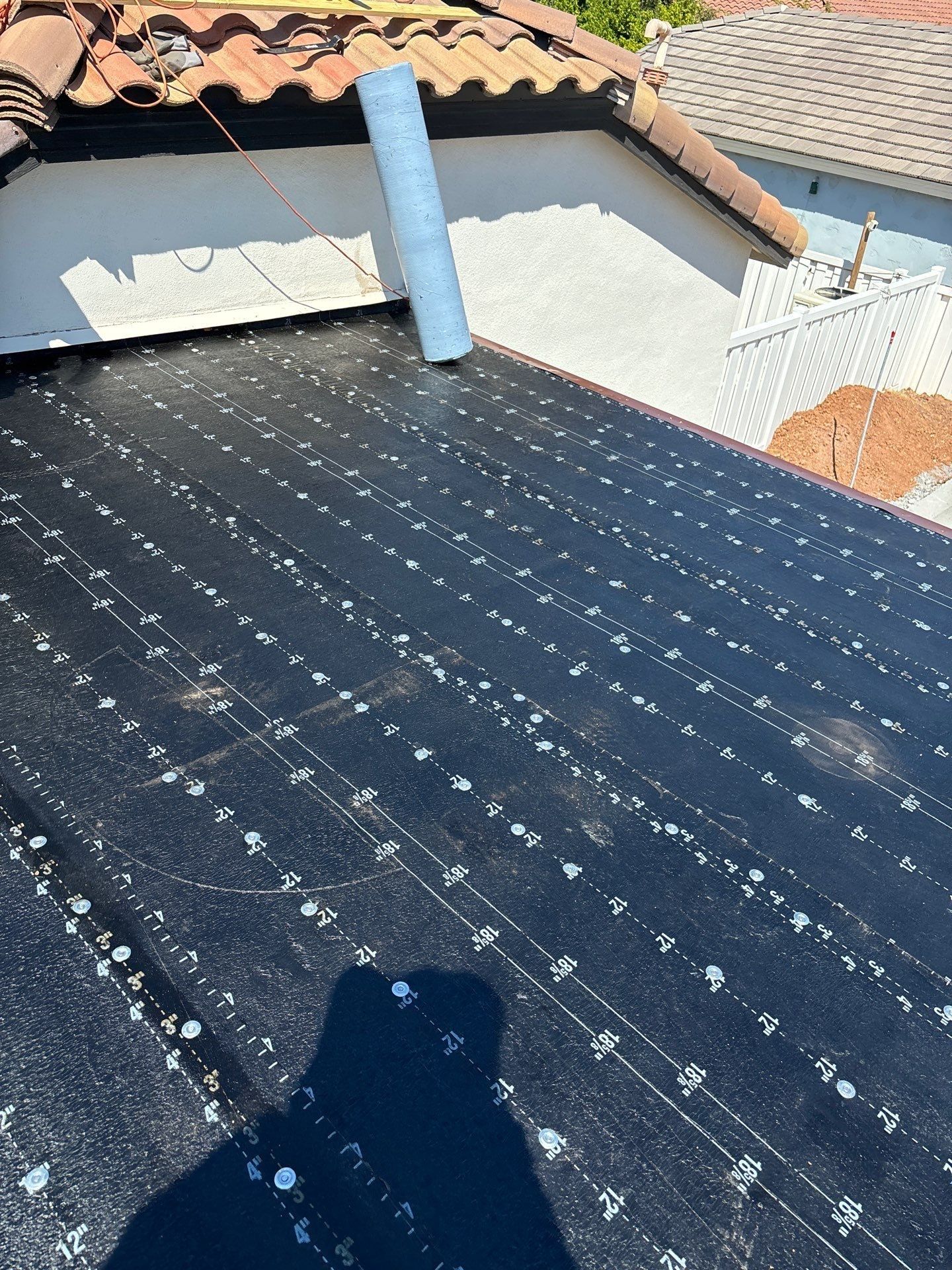
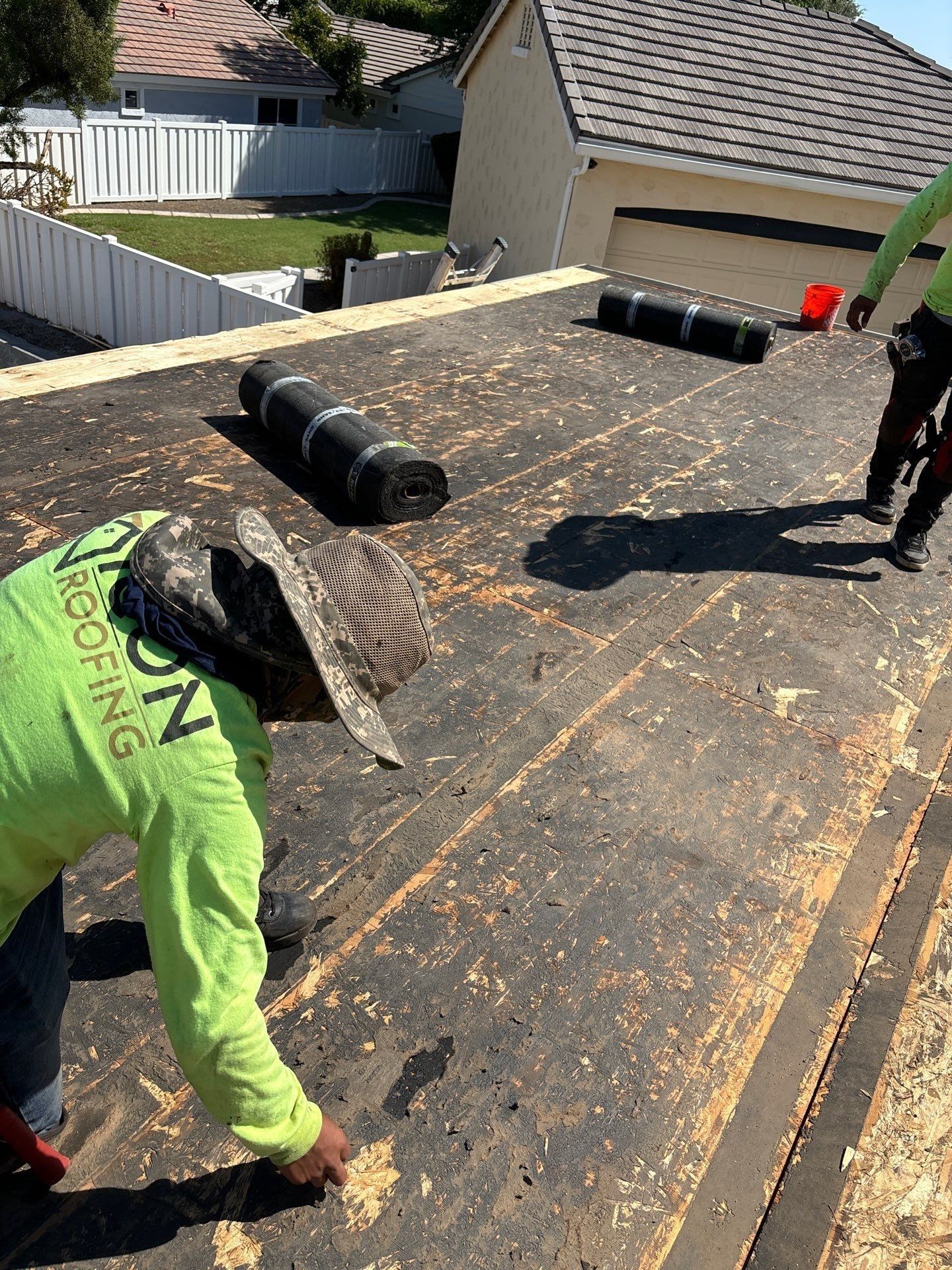
For an example of a full flat roof job, see our Agritopia flat roof replacement in Gilbert. It shows the decking, underlayment and finished roof stage by stage.
Is foam the right material for your flat roof?
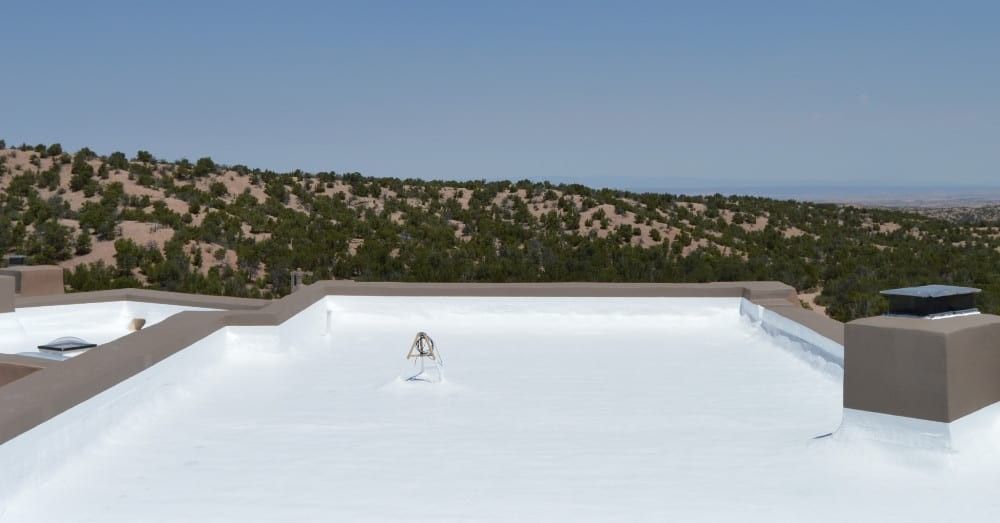
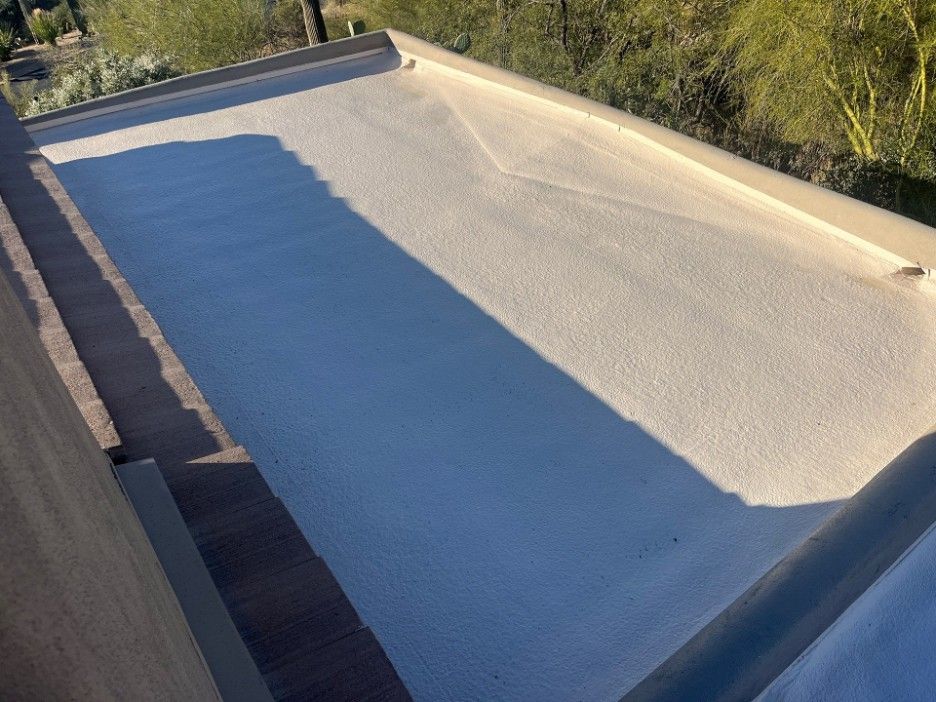
Foam is a good fit for most flat roofs in Arizona. It sprays on as one continuous layer with no seams, seals tightly around pipes and AC curbs, adds insulation on top of the deck, and can be built up in low spots to fix drainage. The trade-off is that it needs regular recoats to stay protected from the sun.
Some homeowners choose a different flat roof system, such as a roll-applied membrane, when a recoat schedule does not suit them or the roof has a lot of foot traffic. We can explain how each option handles heat, ponding and upkeep on your roof, and price both, so you can compare them in writing.
How long does a foam roof replacement take?
Most residential foam roof replacements take a few days on site, depending on the roof size, how much old foam has to come off, and how much decking needs repair. Foam and coatings need dry weather to go on and time to cure, so rain and monsoon humidity can move the schedule.
Spring and fall are the easiest seasons for foam work. If your roof is near the end of its life, try to schedule before monsoon season starts on June 15.
How do you keep a new foam roof in good shape?
Keep a new foam roof in good shape by recoating it on the schedule its coating maker sets, keeping foot traffic off it, clearing drains and scuppers, and having it inspected every year or two and after big storms. Fix bird pecks, cracks and blisters early, before water gets into the foam.
Ask service technicians who work on rooftop AC units to stay on walk paths, since boots and dropped tools damage the coating. We walk you through upkeep when the new roof is finished.
How can you pay for a foam roof replacement?
You can pay for a foam roof replacement with savings, financing or, when a storm caused the damage, an insurance claim. Wisetack financing through Icon Roofing lets you check your options online first. Age and missed recoats are not usually covered by insurance, while sudden storm damage often is.
See our page on spreading roof costs with Wisetack. Many Valley homes pair a flat foam section with a tile roof or tile mansard. If yours has worn underlayment too, we can quote replacing the tile roof sections at the same time.
Where does Icon Roofing replace foam roofs?
We replace foam and flat roofs across Metro Phoenix. They are common in older Phoenix and Tempe neighborhoods, in Glendale and Peoria, and in Sun City, where many homes have low-slope roofs or flat sections. Our office is in Mesa, and our crews cover the West Valley too.
See our page on roof services for Sun City homes or flat roof work in Glendale, or return to all roof replacement services.