
Can a leaking metal roof be repaired?
Yes. Most leaking metal roofs can be repaired, because the panels themselves usually outlast the small parts that hold them together and keep them sealed. Leaks tend to start at loose fasteners, dried-out washers, open seams, or flashing and sealant around vents. Replacing those parts often stops the leak and adds years to the roof.
Metal roofs are known for lasting a long time, but they are not maintenance-free. Arizona heat, monsoon storms, foot traffic and age all take a toll. Catching problems early prevents leaks, protects the decking and framing underneath, and keeps manufacturer warranties intact where they still apply.
What fails on metal roofs in Arizona?
Fasteners and seams fail first on most metal roofs in Arizona. Panels expand and contract with the daily swing in temperature, which works exposed screws loose and stresses seams. The sun dries out rubber washers and sealant until they crack. Hail and branches dent or puncture panels, and rust starts wherever water sits or coatings wear off.
Here is what we find most often on metal roofs around Phoenix, Mesa and Scottsdale:
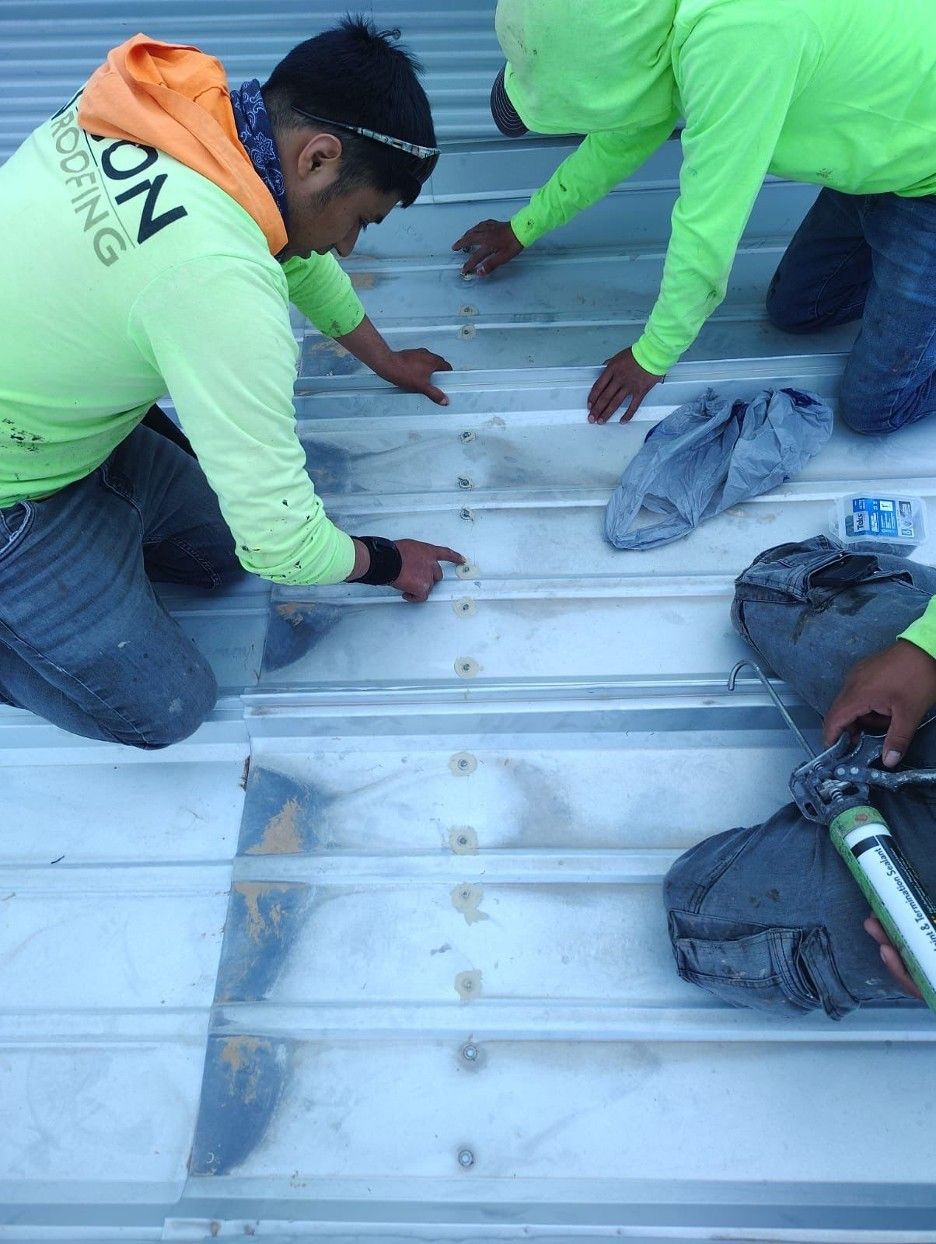
- Loose or missing fasteners. Screws back out over time. Each one leaves a hole where water can get in.
- Cracked washers. The neoprene washer under each screw head dries out in UV and stops sealing.
- Open seams and laps. Panel laps and seams pull apart, especially on low-slope roofs where water moves slowly.
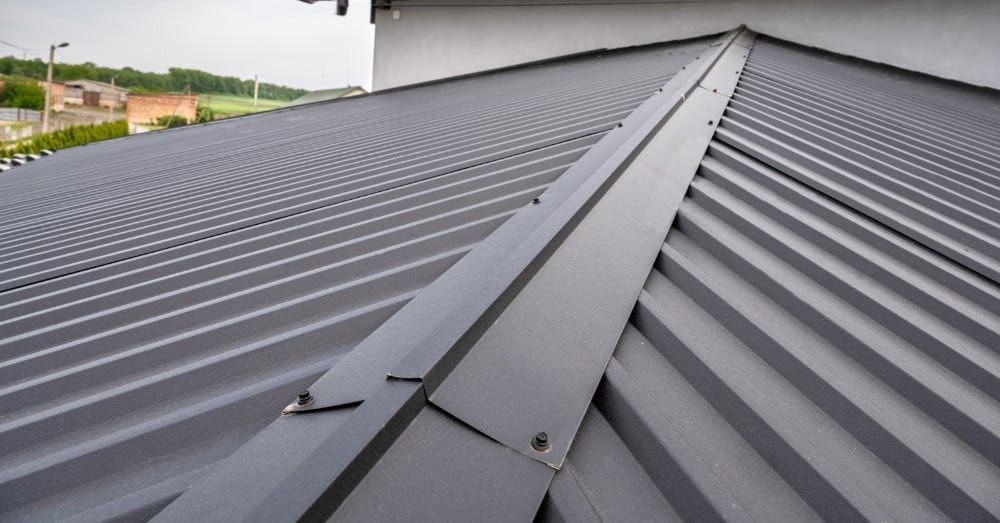
- Flashing and trim. Flashing at chimneys, skylights, vents and walls bends or loses its seal. Poorly installed trim can create water entry points.
- Rust. Corrosion shows up near edges, fasteners and low spots, and where two different metals touch.
- Dents and punctures. Hail, branches and foot traffic dent panels. Severe oil canning, a visible rippling in flat panels, may also need attention.
What are the signs your metal roof needs repair?
Water stains inside, screws that sit raised above the panel, rust spots, and gaps at seams or ridge caps are the most common signs. After a monsoon storm, look for dents, bent trim and debris on the roof. Sealant that is cracked or peeling around vents and skylights is another sign a repair is due.
You can check much of this from the ground or a ladder. Look for:
- Streaks of rust running down from screws or edges
- Lifted panel corners or edges along the eaves
- Sealant that has pulled away from flashing
- Light showing through gaps in an open patio cover or shed roof
What happens during a metal roof repair?
A metal roof repair starts with an inspection to find the cause of the leak, followed by a written estimate. The repair itself might include replacing fasteners, resealing seams and flashing, replacing damaged panels or trim, and cleaning and coating rusted areas. We finish by checking the repair and cleaning up.
We use fasteners, sealants and replacement metal that work with your existing roof. That matters on metal. A steel screw in an aluminum panel, or a sealant that is not made for metal, can create a new problem within a season or two. When a panel needs replacing, we match the profile, gauge and color as closely as possible. If the inspection shows the roof is near the end of its life, we explain your options for replacing the metal roof instead.
How long does a metal roof repair take?
Most metal roof repairs take one visit. Replacing fasteners across a roof, resealing seams on several runs, or replacing multiple panels can take longer, especially if a matching panel has to be ordered. Your estimate gives you the expected timeline. Weather and summer heat can affect start times, since metal roofs get very hot by midday.
We schedule metal work early in the day during summer. Our office is open Monday to Friday, 8:00am to 4:00pm, and books repair visits during those hours.
Can you repair a metal patio cover or shed roof?
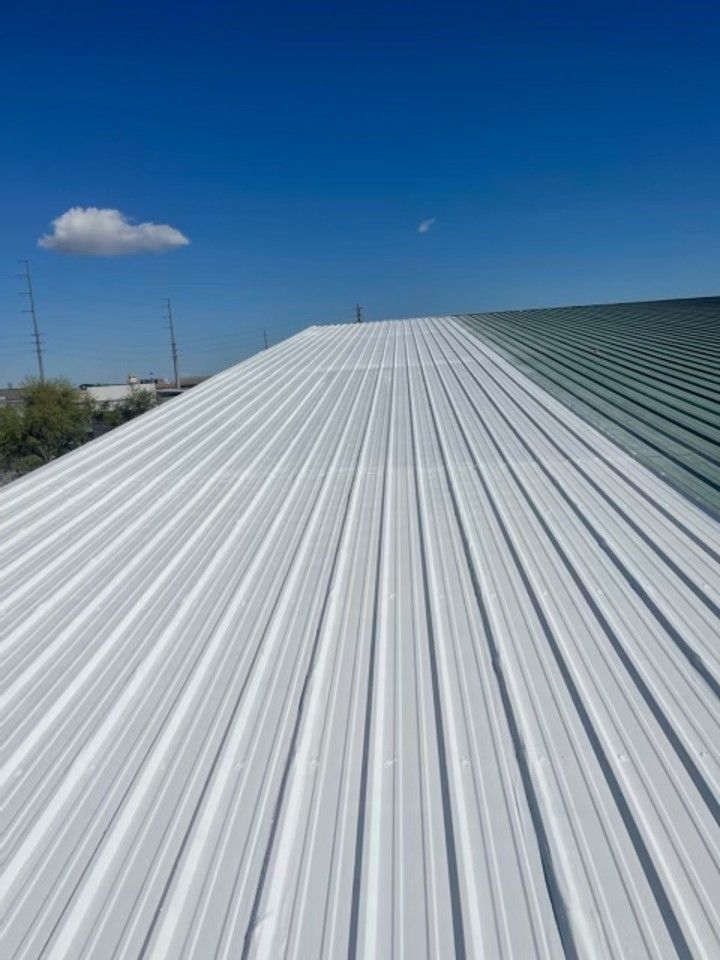
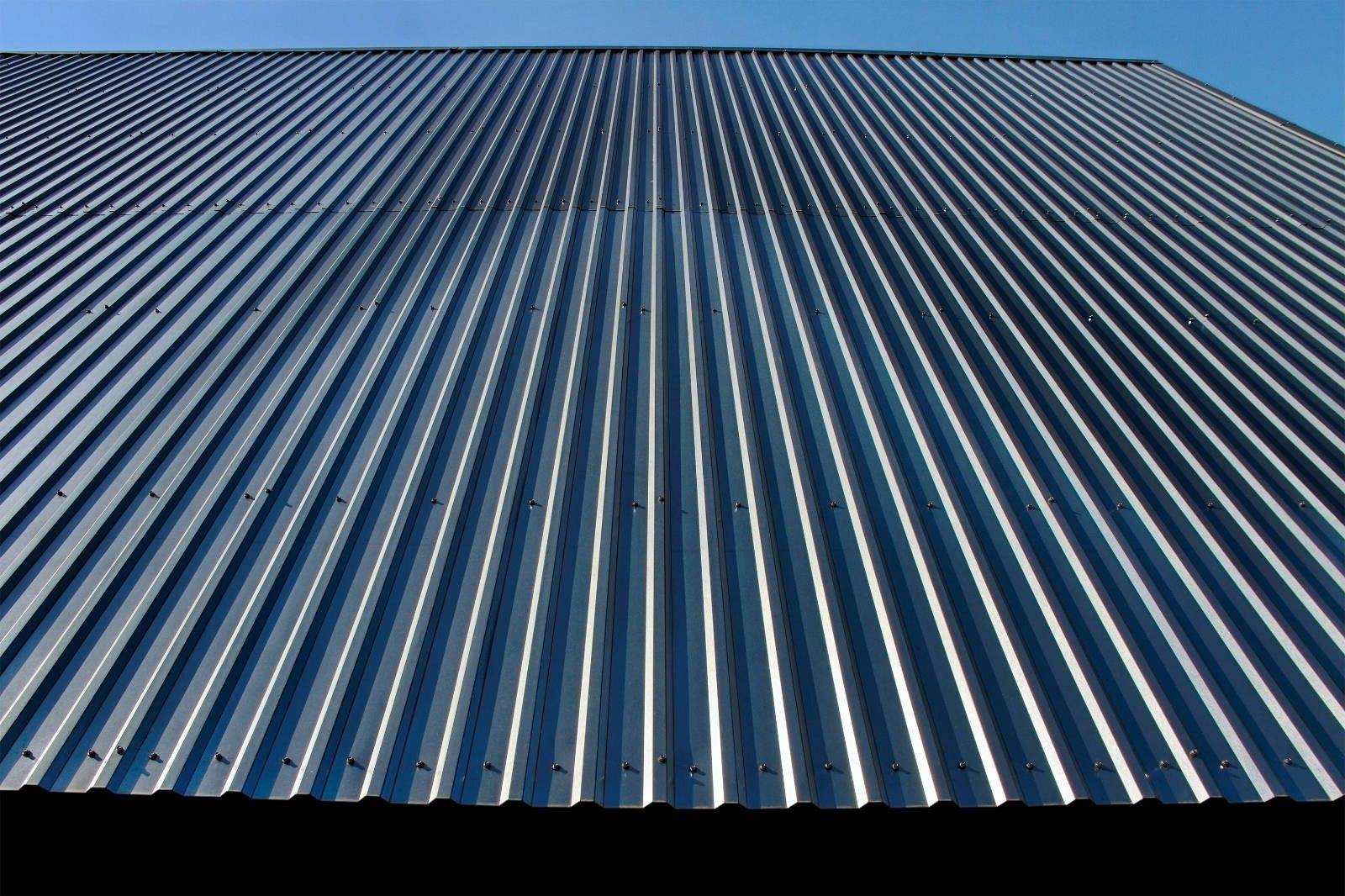
Yes. Icon Roofing repairs metal roofs on patio covers, sheds and other outbuildings as well as homes. These roofs often use exposed-fastener corrugated or ribbed panels, which see the same fastener, seam and rust problems as a house roof. Because they are lower and simpler, repairs are often quick.
Patio covers have their own weak spots. The joint where the cover meets the house wall is a common leak point, and the flashing there is often missing or poorly sealed. Low-slope covers also hold debris and water longer than a pitched roof. If water drips onto your patio or runs down the wall during a storm, the wall flashing is the first place we check.
How do you keep a metal roof from needing major repairs?
Regular inspections and a little upkeep prevent most major metal roof repairs. Have the roof checked about once a year and after severe storms. Keep gutters and drains clear, trim branches away from the roof, and reseal flashing before the old sealant fails. Fixing small problems early costs far less than replacing panels.
Monsoon season is the hardest stretch of the year on metal roofs, with downburst winds, wind-driven rain and occasional hail. If a storm has already dented or loosened panels, our crew handles metal and other storm damage repairs and can document the damage for an insurance claim. For damage you pay for yourself, see how roof financing works with Wisetack.
Where does Icon Roofing repair metal roofs?
We repair metal roofs across Metro Phoenix, including homes, patio covers and outbuildings in Phoenix, Mesa and Scottsdale. Metal is also common in the desert foothills of Cave Creek and Carefree, where homeowners choose it for its look and because it does not burn. Our office is in Mesa, and we work throughout the Valley.
See our page on roof repair and replacement in Cave Creek, or go back to the full list of roof repairs we handle.