
When does a tile roof need to be replaced?
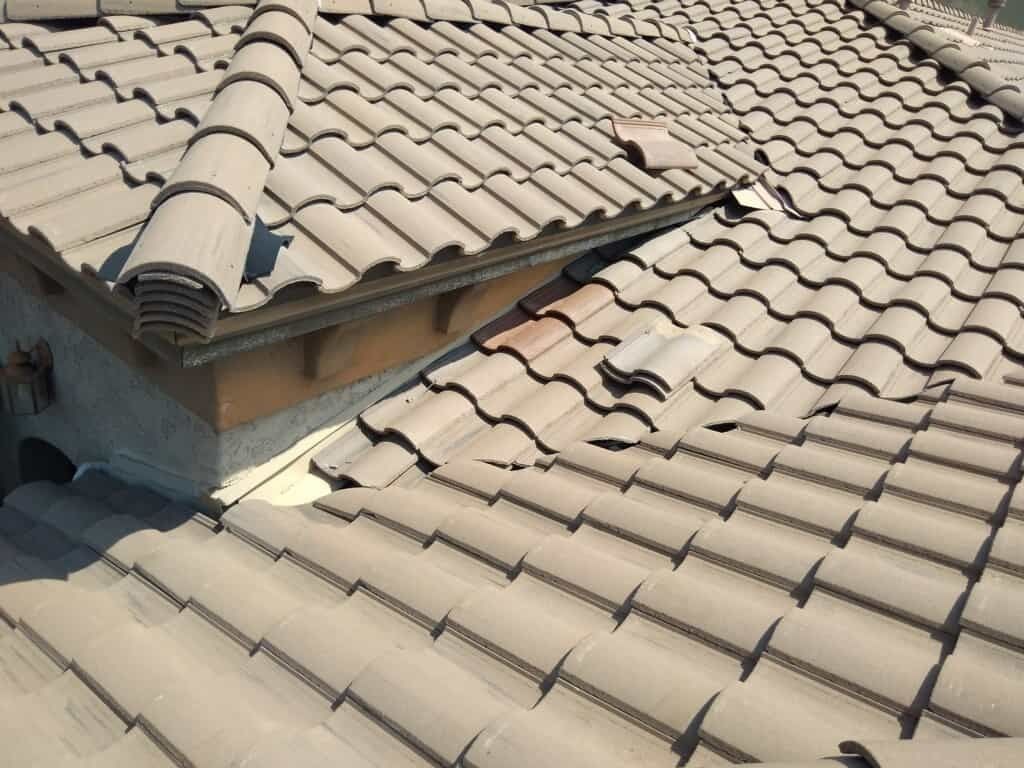
A tile roof needs replacing when the underlayment under the tiles has failed across most of the roof, when leaks keep returning in different spots, or when decking has started to rot. Cracked tiles, slipped tiles and worn flashing alone are usually repairs. Widespread underlayment failure is what turns a repair into a replacement.
Weigh these factors:
- Age of the underlayment. Older felt underlayment on Valley tile roofs dries out and tears with time.
- Spread of the damage. Leaks in several rooms, or underlayment failing on several slopes, point to replacement.
- Decking condition. Soft or rotted decking usually means water has been getting in for a while.
- Repair history. If you keep paying for underlayment patches, one full job is often the better value.
- Energy bills. Steadily rising cooling costs can point to roof or attic problems.
If the problem is limited to one area, our tile repair and lift-and-relay service may be all you need.
Why does tile underlayment fail before the tiles?
Tile underlayment fails first because it takes the heat and does the waterproofing work. Concrete and clay tiles shed most rain, but some water always runs underneath. The underlayment carries that water off the roof. Years of Arizona heat dry it out until it cracks and tears, while the tiles above can still look nearly new.
That is why a tile roof that looks fine from the street can still leak. It also means many tile roofs do not need new tile at all. They need what is under the tile replaced, and the same tile relaid.
Should you reuse your tile or install new tile?
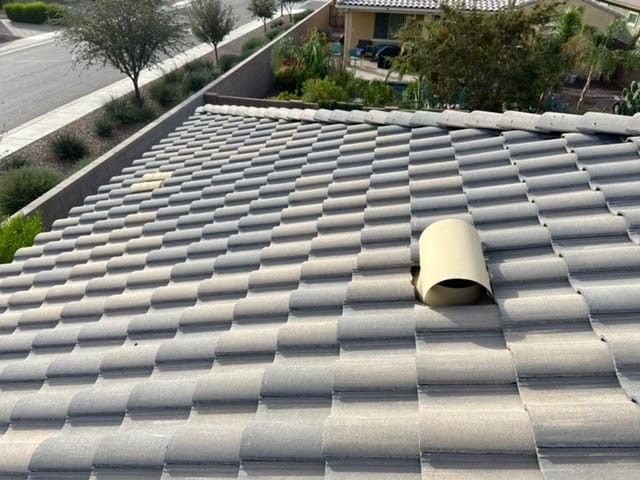
Reuse your tile if it is in good shape and you like how it looks. Concrete and clay tile can be lifted and relaid over new underlayment, which keeps the look of your home and lowers material costs. Choose new tile if your tile is badly worn or discontinued, or you want a new color or profile.
| Option | When it fits | What to expect |
|---|---|---|
| Reuse existing tile | Tile is sound and you like the look | New underlayment, battens and flashing. Broken pieces replaced with matching tile. |
| New concrete tile | Tile is worn, faded or discontinued | Full new roof surface, new color or profile, HOA approval often needed |
| New clay tile | You want the look and weight of clay | Framing check needed if switching from concrete |
Matching matters most when your tile profile is no longer made. In that case, a common approach is to move original tiles to the most visible slopes and put the closest new match on slopes you cannot see from the street.
What does a tile roof replacement involve?
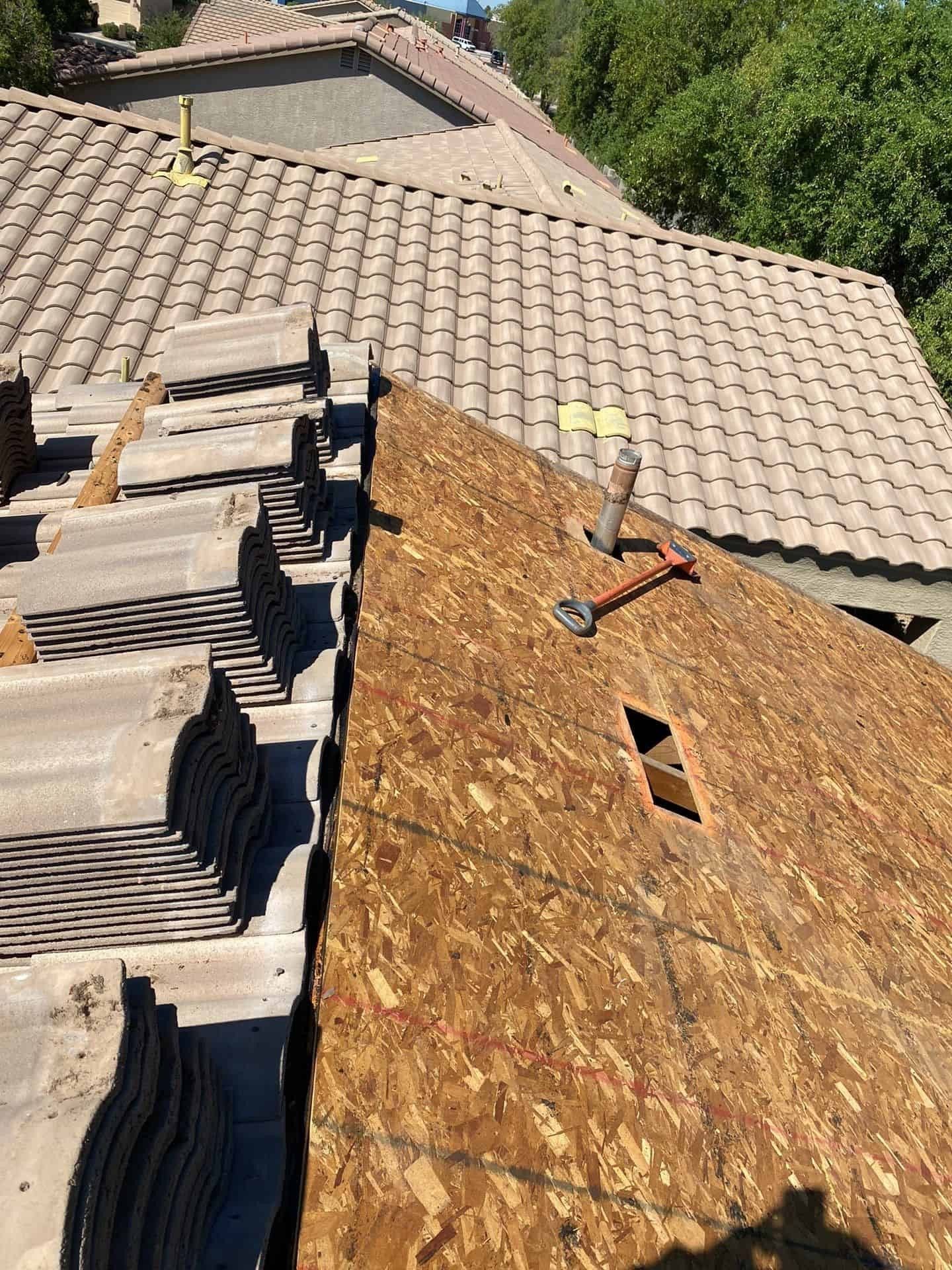
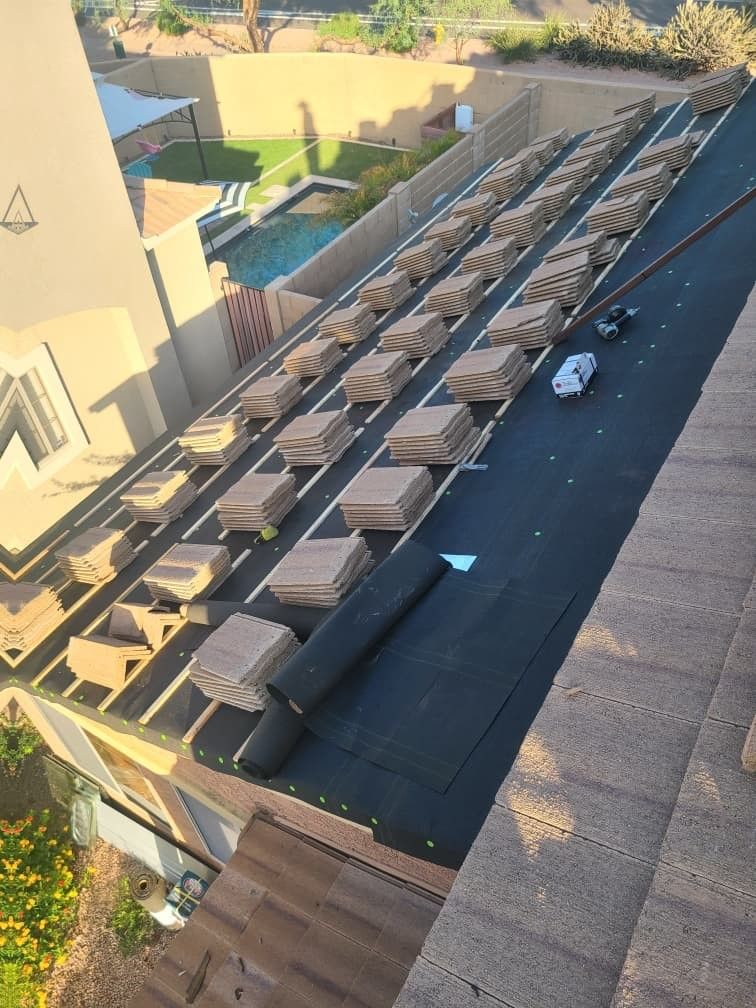
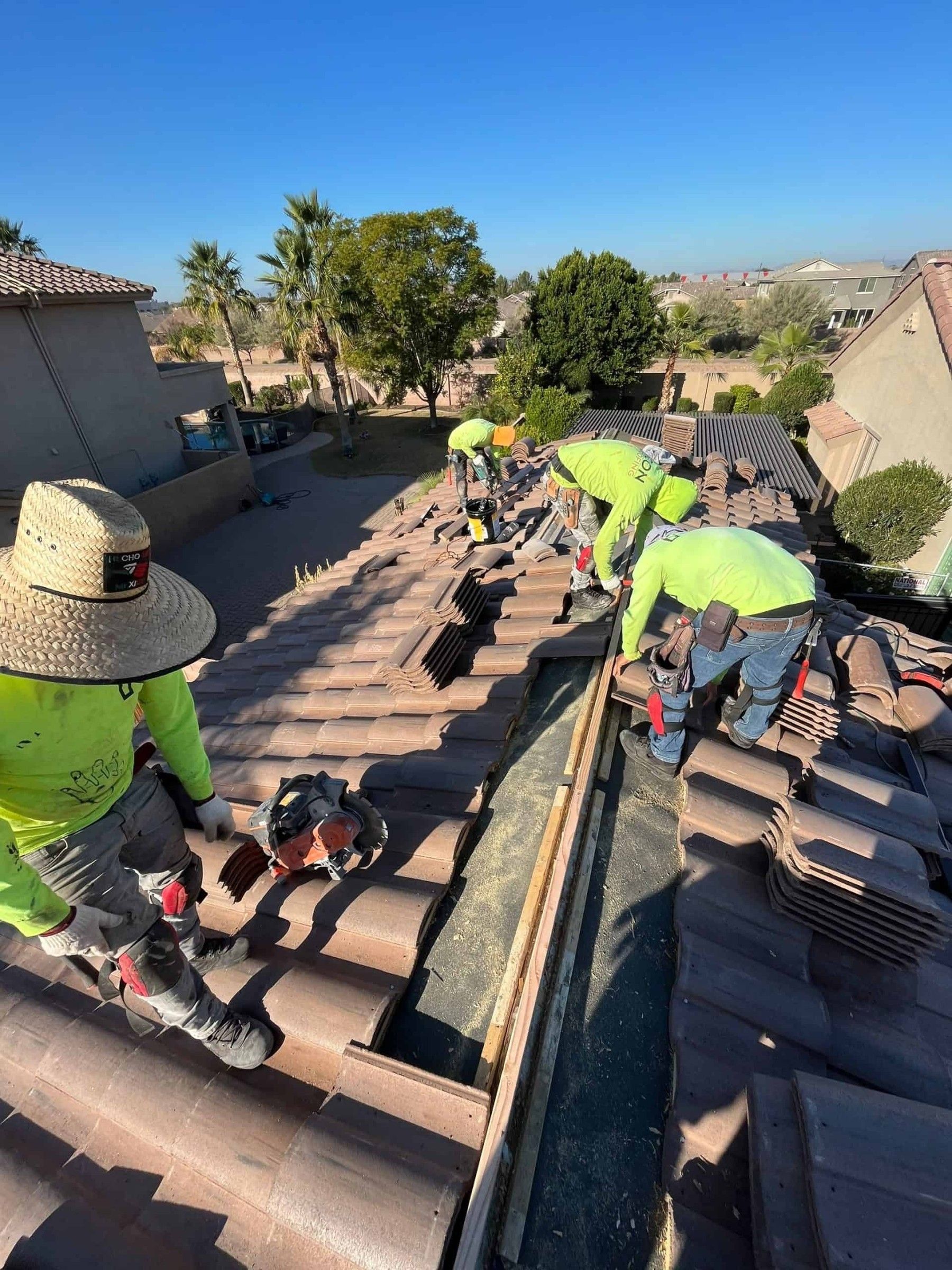
A tile roof replacement involves lifting and stacking every tile, tearing out the old underlayment and battens, repairing damaged decking, and installing new underlayment, battens and flashing. The tile is then relaid, broken pieces are replaced, and ridge and hip lines are reset. The job ends with cleanup and a final inspection.
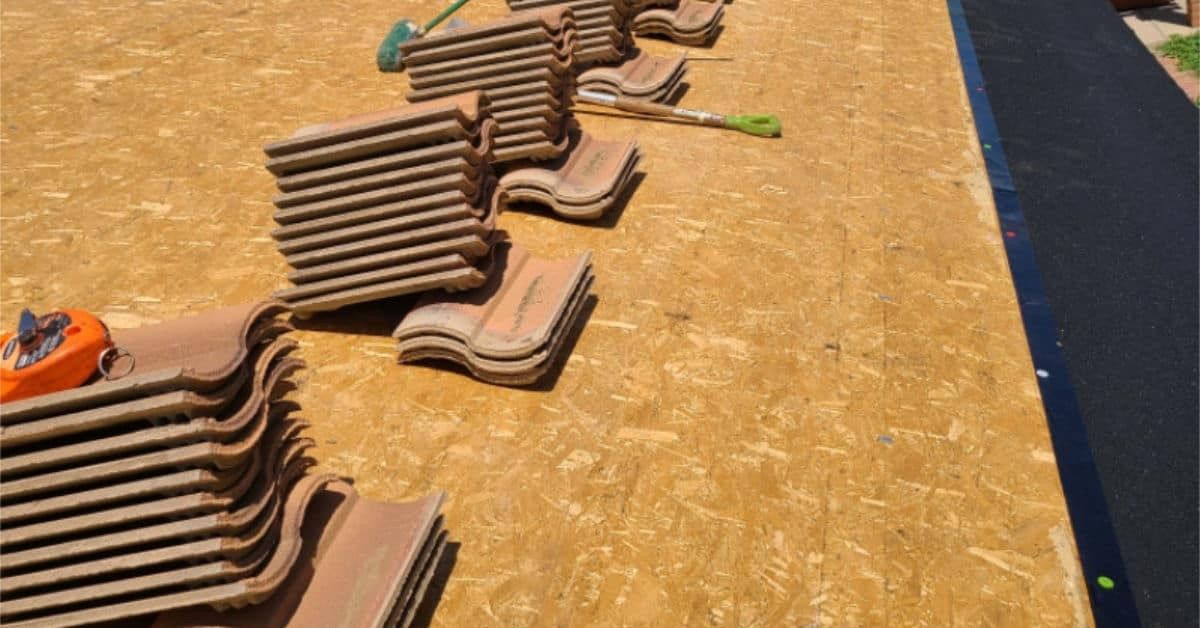
Tiles are stacked on the roof or staged in the yard while the crew works one section at a time. Valleys, skylights, chimneys and roof-to-wall joints get new flashing, since those are common leak points. Eave closures and bird stops are reset to keep birds and pests out of the tile.
How long does a tile roof replacement take?
Tile roof replacements take longer than shingle jobs because every tile is handled by hand. Expect several days or longer on site, and large, steep or complex roofs take the most time. Weather, decking repairs, tile orders and HOA approval all affect the schedule. Your estimate includes an expected timeline.
The crew works in sections, so most of the roof stays covered as work moves along. You can stay home during the job. Expect noise during working hours, and keep pets and children clear of the areas where tile is being staged.
What warranty comes with a tile roof replacement?
Every tile roof replacement follows the Icon Way, which includes warranties on our craftsmanship and on the materials we install. New underlayment and new tile also carry their own manufacturer warranties. We go over the specific coverage for your tile roof in your estimate, so you know what is covered and for how long before you sign.
One point that confuses many homeowners: the GAF Golden Pledge limited warranty you may have read about on our shingle pages applies to qualifying GAF shingle systems, not to tile roofs. Tile and tile underlayment warranties come from their own manufacturers. Ask us to show you the written terms for the products on your roof.
How can you pay for a tile roof replacement?
You can pay for a tile roof replacement with savings, financing or, when a storm caused the damage, an insurance claim. Icon Roofing offers financing through Wisetack, and you can prequalify online. Worn underlayment from age is not usually covered by insurance, while tiles cracked by hail or wind often are.
See how Wisetack payments work for a tile reroof. For a longer view of when each part of a roof wears out, read our article on the life cycle of a roof. Not sure what condition your underlayment is in? Start with a residential inspection with photos.
Where does Icon Roofing replace tile roofs?
We replace tile roofs across Metro Phoenix. Tile is the main roof type on many homes in Scottsdale, Paradise Valley, Fountain Hills and Gold Canyon, and it is common in Chandler and Mesa. Many neighborhoods were built in the same era, so tile roofs on the same street often reach underlayment replacement around the same time.
See our page on roofing for Paradise Valley homes or tile roof work in Fountain Hills, or go back to the main roof replacement page.