
How is townhouse roof repair different from repairing a detached home?
Townhouse roof repair differs because the roof is physically connected to the homes next door. A problem at a party wall or shared valley can affect two or more units, and repairs on one section can disturb the neighbor’s roofing. The repair has to work for the whole roof line, not just the owner who called.
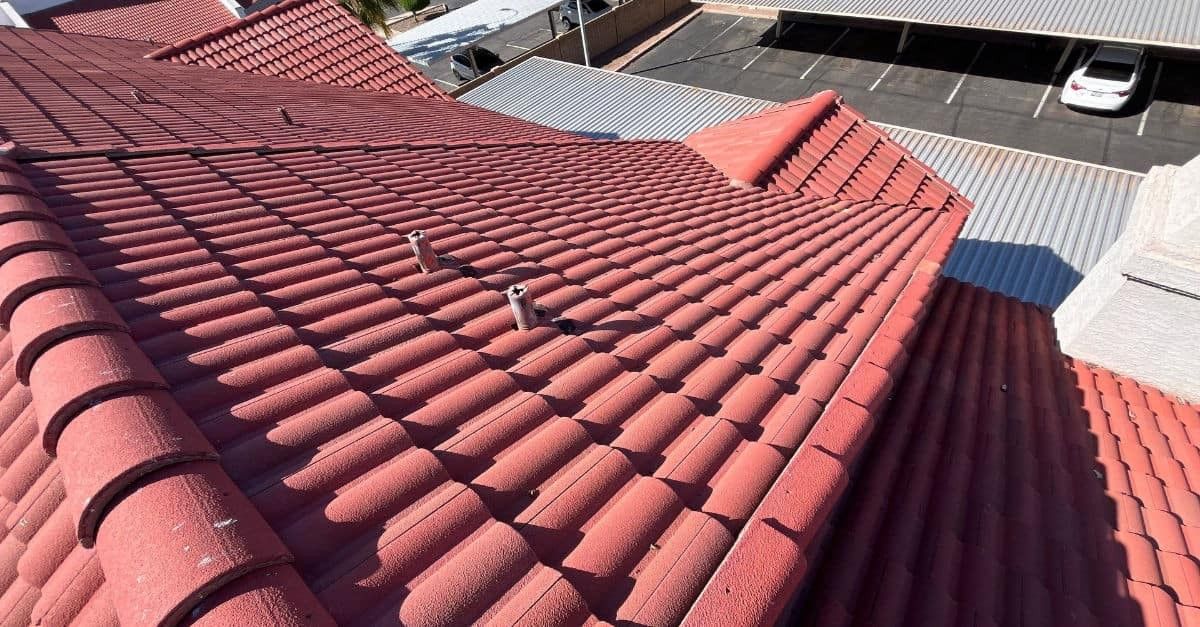
That means more people may be involved: the owner who reported the leak, the neighbors on either side, the HOA, and sometimes a property manager. It also means matching materials matters more, since the repaired area sits in a continuous run of roofing everyone can see. Townhome communities in the Valley also vary a lot in how the roofs are built. Some rows share one continuous roof with no visible break between units. Others have raised parapet walls that separate each home. Each design fails in its own way, so the first step is always to see how your row is put together.
For the full set of services we offer connected homes, see our roofing hub for multi-family buildings.
What happens where two townhome roofs meet at a party wall?
Where two townhome roofs meet at a party wall, the roofing has to seal against a raised wall or a shared ridge with flashing that sheds water to both sides. These joints move as the two homes heat and cool differently. Over time the flashing loosens, sealant cracks, and water runs down inside the wall cavity.
Party wall leaks are easy to misread. Water can show up on a ceiling several feet from the wall, or inside a closet on the other side. We open the roofing along the joint, check the underlayment and flashing on both sides, and rebuild the detail as one piece so neither unit is left with a weak edge.
Can one townhome owner repair just their section of a connected roof?
One owner can often repair their own section, as long as the problem sits fully within it and the HOA rules allow it. Problems at party walls, shared valleys or ridges usually need both neighbors involved. Check your CC&Rs to confirm who controls the roof, and get HOA approval before work starts if required.
| Situation | Typical approach |
|---|---|
| Damage in the middle of one owner’s section | That owner arranges the repair, with HOA approval if needed |
| Leak at a party wall or shared valley | Both owners coordinate, often through the HOA |
| Damage across several units after a storm | HOA or all affected owners handle it together |
| HOA maintains all roofs | The association schedules and pays for the repair |
Even when only one section is repaired, we check the neighboring joints and tell you what we see. That helps your neighbors plan, and it avoids a second visit a few months later.
How do you match tile or shingle across connected townhomes?
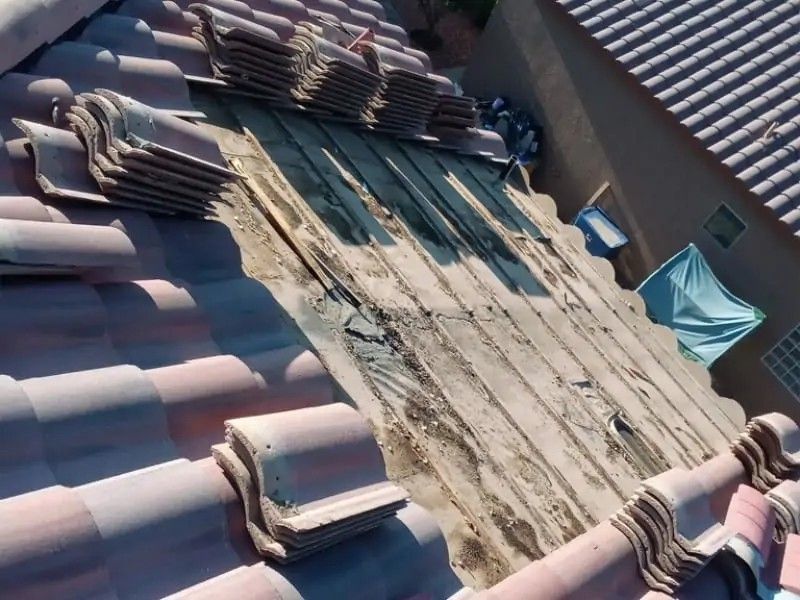
We match tile or shingle by identifying the existing product’s profile, color and texture before the repair. For tile, we reuse sound pieces and source matching replacements. For shingles, we match the product line and color as closely as possible. In almost all cases the new material blends with the neighboring units.
Sun fades both tile and shingle, so even an exact product can look brighter at first. Where that matters, we can move older matching pieces to the visible repair area and set new pieces in a less visible spot. Our crews handle tile roof repair on townhome rows and shingle repairs that blend with the neighbors.
What problems do Valley townhome roofs see most?
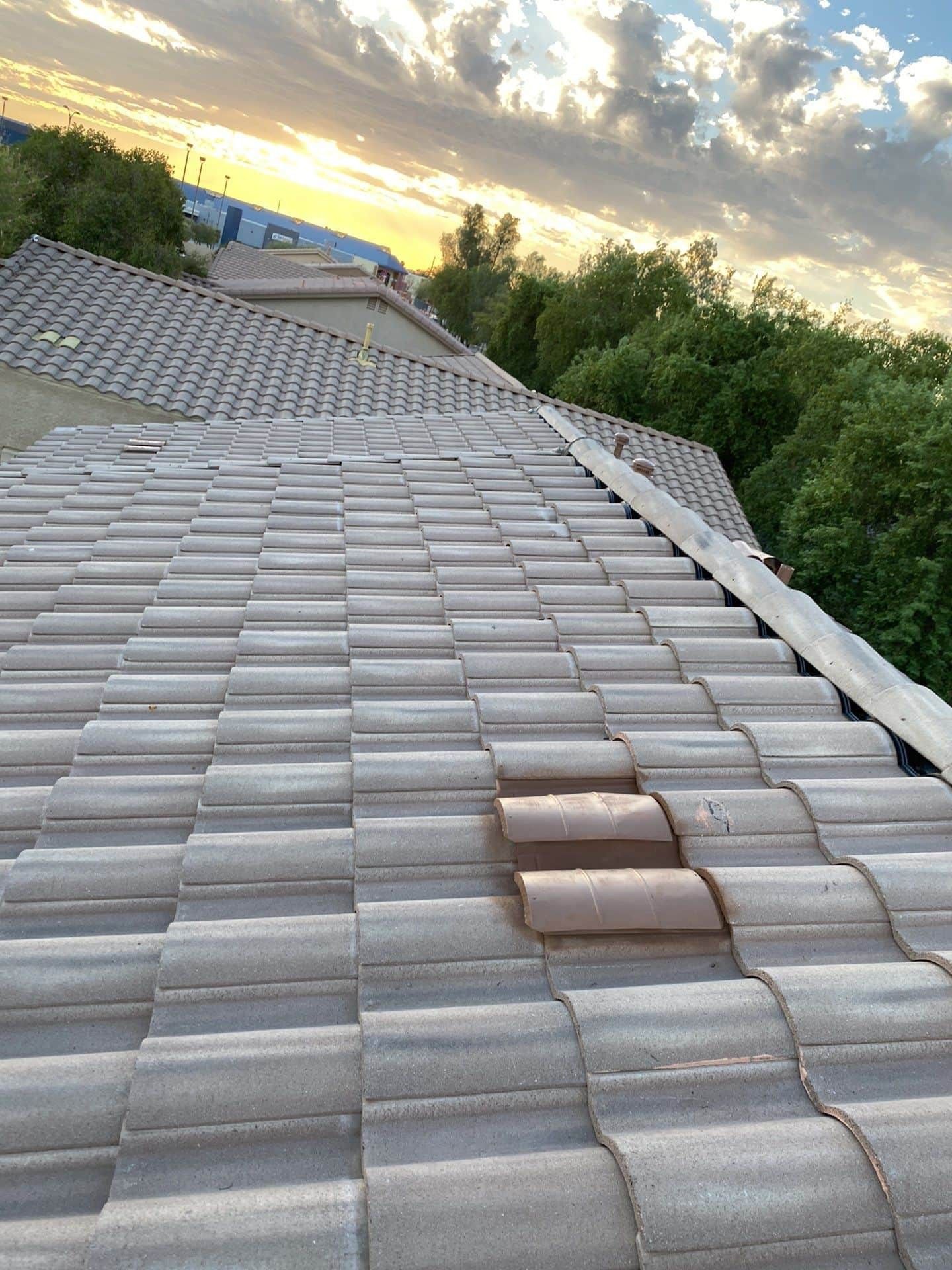
Valley townhome roofs most often see cracked or loose tile, underlayment that has dried out under the tile, curling or missing shingles, leaks and ponding on flat foam sections, and flashing that has broken down from UV around chimneys, vents and skylights. Monsoon wind and heavy rain usually reveal these problems.
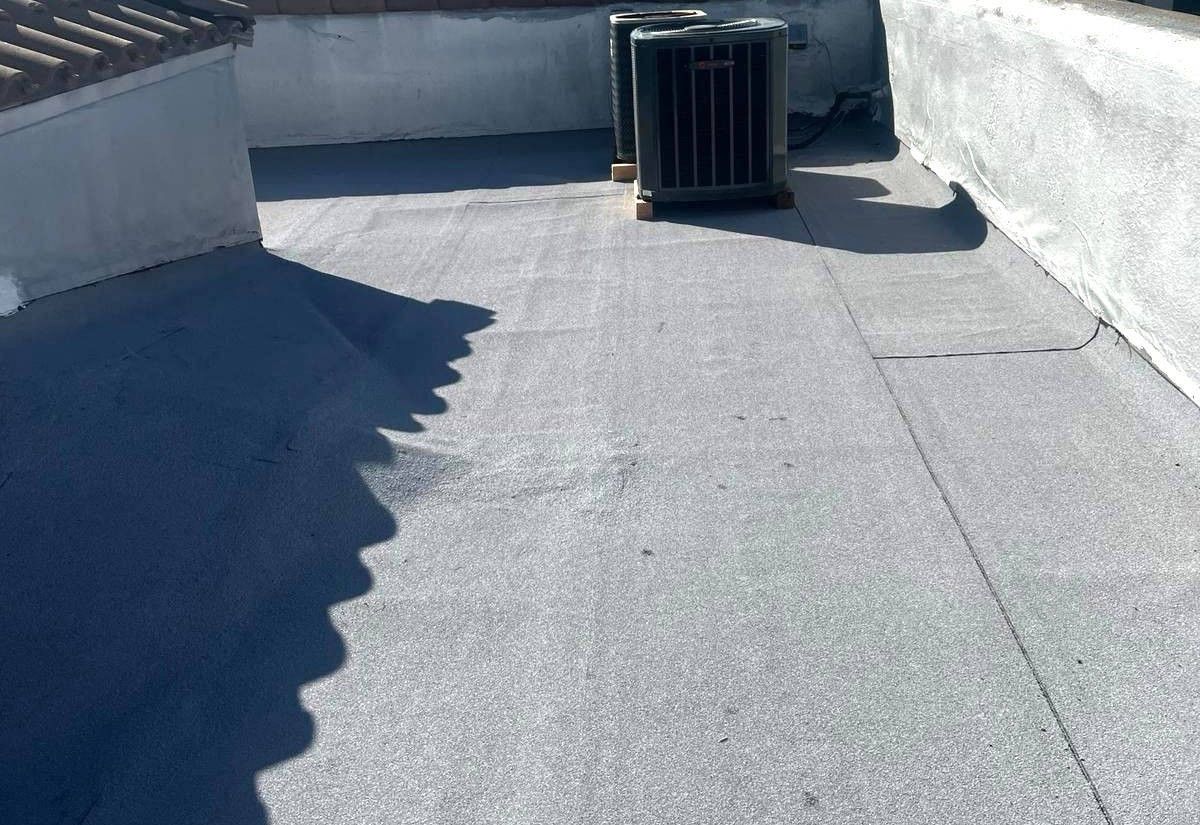
Older townhome communities often have a mix: tile on the street-facing slopes and a flat foam roof behind a parapet. Each needs its own repair method, and the joint between them is a common leak point.
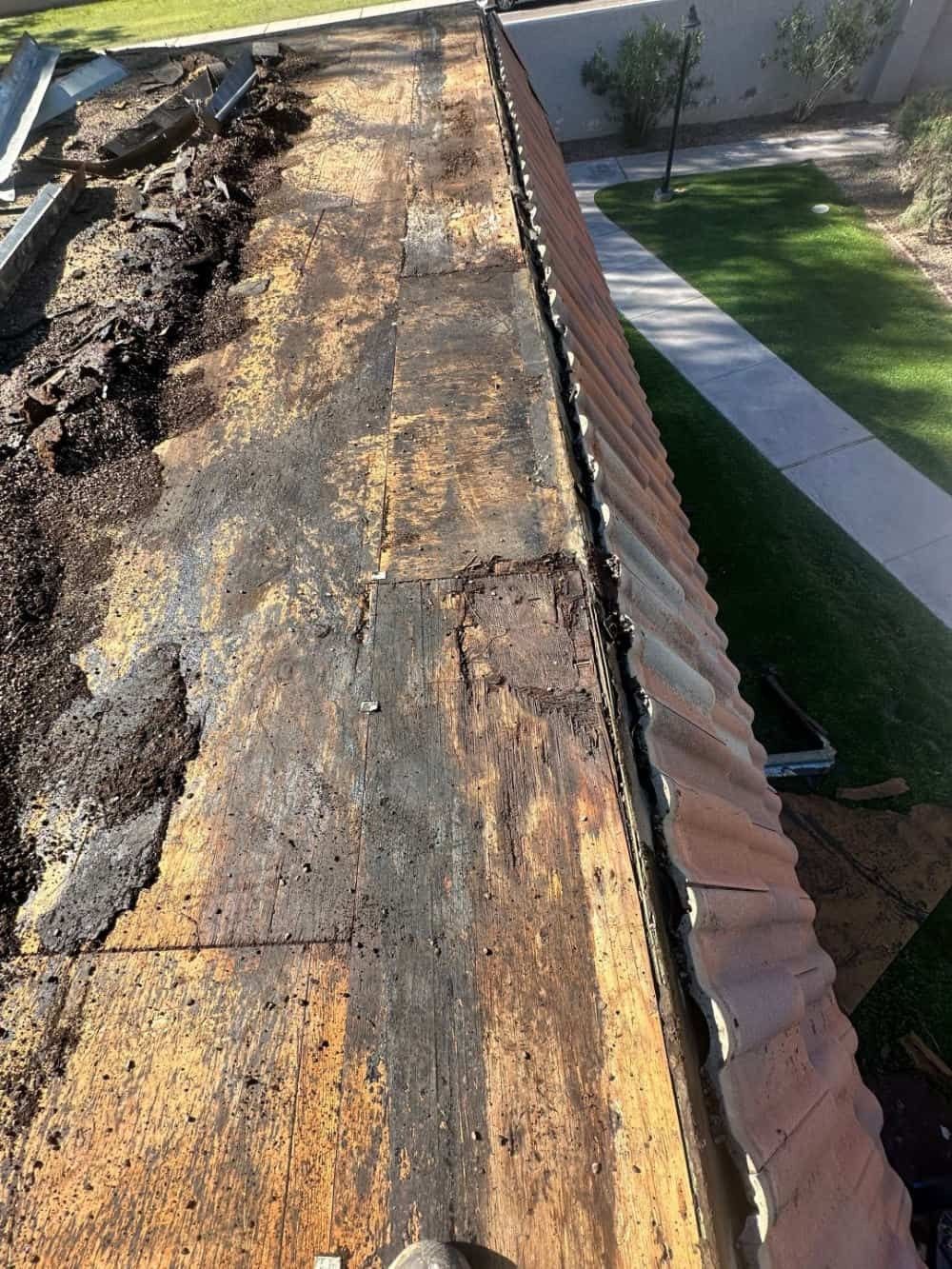
Slow leaks at these joints can rot the roof deck along the edge of a unit before anyone sees a stain. When we open a section and find soft or water-stained decking, we replace those boards before the new underlayment and roofing go back on. Covering rotten wood with fresh tile only hides the problem until the next storm season.
Does the HOA need to approve a townhouse roof repair?
Many HOAs require approval for exterior work, including roof repairs that change materials or colors. A like-for-like repair may not need formal approval, but some communities still want notice. Check your community’s guidelines, and ask your manager before scheduling. We follow the approved materials list and can send the HOA our scope ahead of time.
If your association manages roofs for every unit, our page on working with HOA boards on roof projects explains how we handle approvals at the community level. If repairs keep returning across the row, it may be time to look at replacing the townhouse roof.
Where do you repair townhome roofs in Metro Phoenix?
We repair townhome roofs throughout Metro Phoenix from our Mesa office. Many of the townhome communities we work in are in Chandler, Gilbert and Mesa, where tile and shingle rows sit next to flat foam sections. See how we help townhome owners in Chandler and nearby cities.
For upkeep between repairs, read our tips for caring for multi-family roofs. Call (480) 427-7600, Monday to Friday from 8:00am to 4:00pm, to schedule an inspection.