
How Owners and Managers Can Keep a Multi-Family Roof in Good Shape
A well-run roof program can save a building owner tens of thousands of dollars. Here is how to schedule inspections, pick a contractor, handle repairs and plan for the long term.
Key takeaways
- Caring for a multi-family roof can save, or cost, an owner tens of thousands of dollars over the life of the building.
- Schedule inspections at least twice a year, in spring and fall, and after any extreme storm.
- Hire a licensed, insured contractor with real multi-family experience, and ask about warranties before you sign.
- Leaks, ponding water and structural damage are the most common multi-family roof problems.
- Set a yearly inspection schedule and a maintenance budget so repairs never come as a surprise.
Who is responsible for maintaining a multi-family roof?
In most cases, the property management company, the building manager or the owner is responsible for the roof. Some of them do not realize it, or do not know how much difference good roof care makes. A well-maintained roof can save tens of thousands of dollars over the life of the building, and neglect can cost just as much.
A cared-for roof keeps residents safe and comfortable, protects the building itself and helps the roof reach its full expected life. Large roofing systems come with their own challenges, though. Spotting early damage across several buildings and coordinating repairs across many units takes a plan.
This guide covers the core of that plan: regular inspections, hiring the right contractor, handling common problems early and planning for the long term. For an overview of everything we handle on these properties, see our roof services for apartments, condos and HOAs.
How often should multi-family roofs be inspected?
Inspect multi-family roofs at least twice a year, ideally in spring and fall, so you can check the roof after the hardest weather. Inspections catch damaged foam, leaks, broken tiles and poor drainage before they get worse and cost more. Add quarterly inspections near golf courses, and an extra one after any extreme storm.
In the Phoenix area, the spring visit gets the roof ready before monsoon season and the fall visit catches storm damage once the season ends. During each inspection, focus on these key areas:
- Drainage systems. Gutters and downspouts should be clear so water does not pool.
- Flashing. Look for cracks or gaps around chimneys, vents and skylights.
- Mortar packs. Worn mortar at ridges and hips on tile roofs lets water and wind in.
- Roofing materials. Watch for curling, cracking or missing shingles, broken tile and worn foam coating.
Between professional visits, your maintenance staff can handle simple checks. Our guide for on-site staff doing roof checks gives them a checklist to work from.
How do you choose a roofing contractor for an apartment building?
Choose a licensed, insured contractor with real experience on multi-family properties. Apartment and condo roofs are large, involve many residents and need crews that can work safely around occupied units. Check references and reviews, and ask direct questions about warranties, estimates, timelines and maintenance before you hire anyone.
When you compare contractors, look at:
- License and insurance. The contractor should be licensed and carry enough insurance to protect your property and their workers. In Arizona, you can look up any contractor’s license through the Arizona Registrar of Contractors. Icon Roofing holds Arizona ROC# 333889 CR-42.
- References and reviews. Ask for references from past clients and read online reviews.
- Multi-family experience. Contractors who focus on multi-family roofing understand these properties and have experienced crews.
Questions to ask before you hire:
- What is your experience with multi-family roof inspections and repairs?
- Do you offer warranties or guarantees on your work?
- Can you give me a detailed estimate and timeline?
- Do you offer maintenance? If so, what do you check on each visit?
What problems show up most on multi-family roofs?
Leaks, ponding water and structural damage are the most common multi-family roof problems. Leaks usually start at damaged flashing or worn roofing. Ponding comes from poor drainage on flat roofs. Structural damage comes from high winds and aging materials. Extreme weather and UV exposure speed up all three in Arizona.
| Problem | Typical cause | Usual fix |
|---|---|---|
| Leaks | Damaged flashing, worn shingles, broken tile | Replace flashing or roofing, reseal penetrations |
| Ponding water | Poor drainage on flat roofs, clogged drains | Clear drains, correct slope, repair membrane or foam |
| Structural damage | High winds, aging materials, long-term moisture | Replace damaged decking and roofing |
| Worn foam coating | UV exposure over time | Clean and recoat before the foam is exposed |
Leaks can cause interior water damage fast if no one deals with them. Ponding water on flat roofs leads to structural damage over time. Regular inspections find all of these early, which saves time and money.
When an inspection turns up problems on several buildings at once, rank them. Fix anything letting water into occupied units first. Next, handle problems that will get worse in the next storm, such as loose flashing or blocked drains. Cosmetic wear and slow aging can go into next year’s budget. A good contractor will help you sort the list so the money goes where it protects the most units.
When does a multi-family roof need professional repair?
Call for professional repair when you see water stains on ceilings, sagging sections of roof or heavy granule loss from shingles. These signs mean damage has already reached past the surface. Common repairs include patching small damaged areas, sealing cracks and gaps, and replacing worn shingles, membranes or other roofing parts.
Here is what each type of repair involves:
- Patching fixes small areas of damage so they do not spread.
- Sealing closes cracks and gaps that let water in.
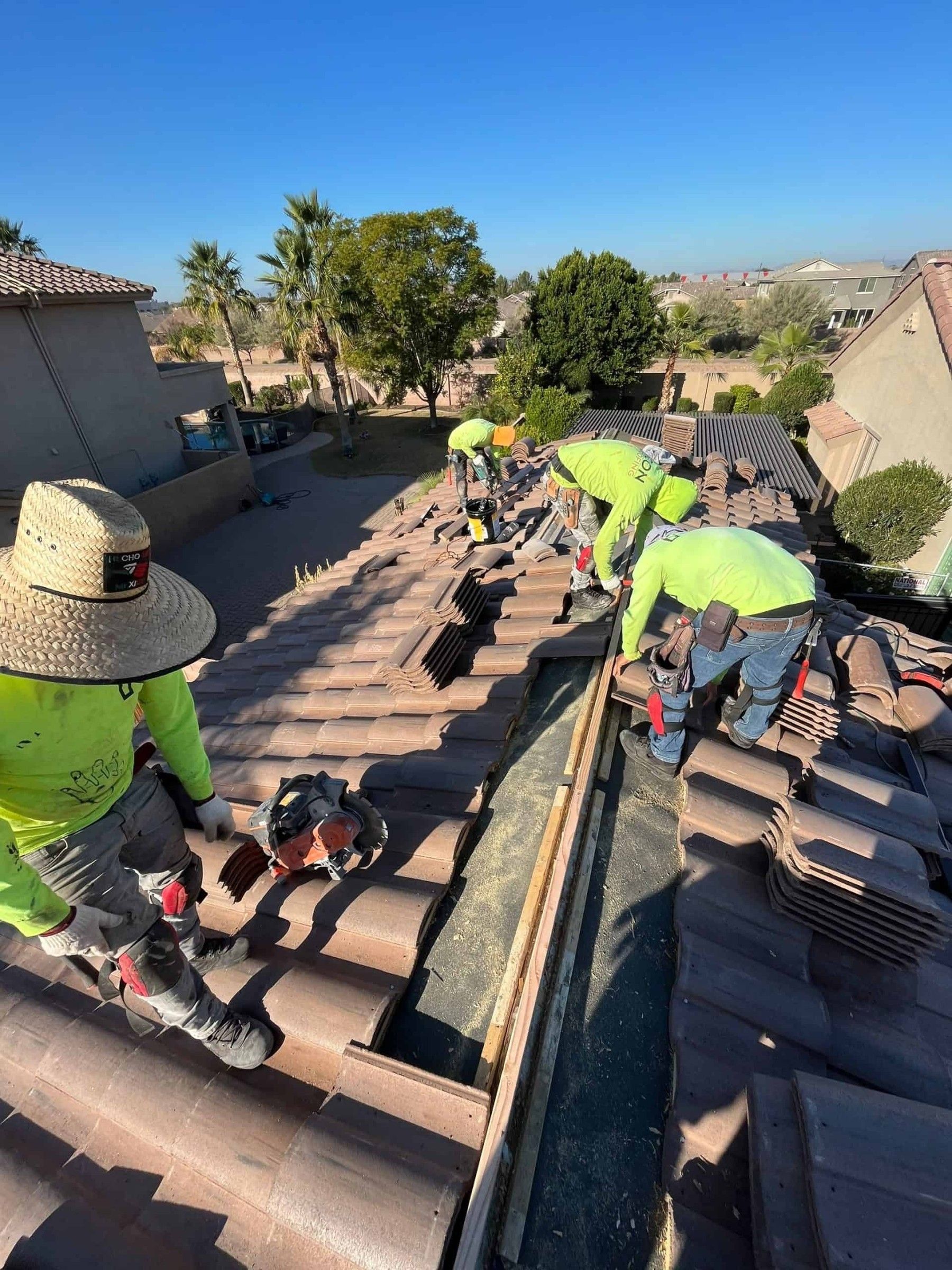
- Replacing materials swaps in new shingles, membrane or other parts so the roof works as it should again.
When you budget for repairs, weigh the immediate cost against the long-term benefit of acting now. Delaying a repair leads to more damage and higher costs later. Our page on repairs for apartment and condo roofs explains how we schedule work around residents.
What preventive maintenance keeps a multi-family roof going?
Preventive maintenance is what extends the life of a multi-family roof. Keep gutters and downspouts clear, keep tree branches trimmed back from the roof, and schedule routine maintenance with a roofing contractor. These steps cost little and stop the most common causes of leaks and drainage damage before they start.
- Clean gutters and downspouts. Remove debris on a regular schedule so water drains properly.
- Trim overhanging trees. Keep branches off the roof to prevent debris buildup and damage from falling limbs.
- Schedule routine maintenance. Work with a multi-family roofing contractor on regular inspections and upkeep.
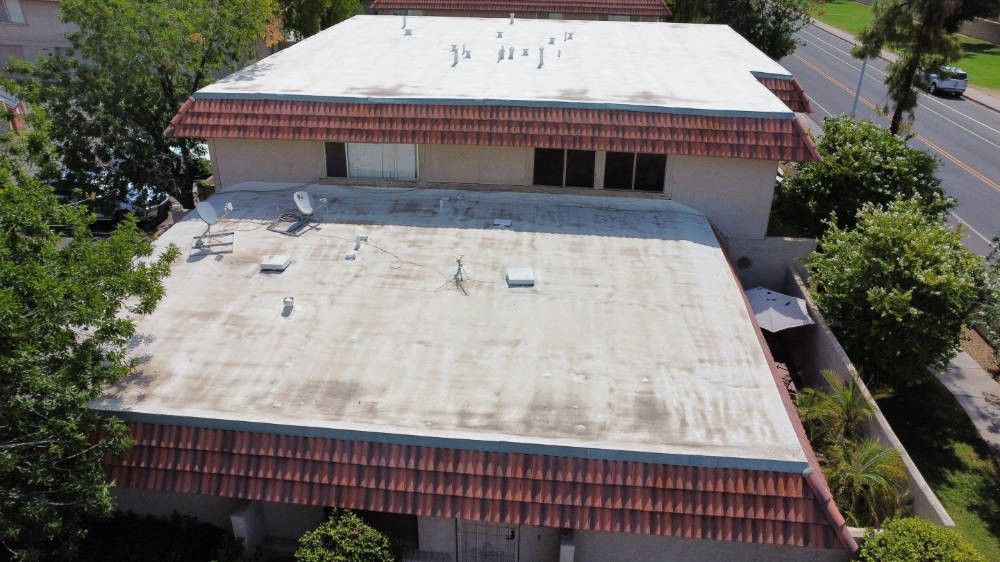
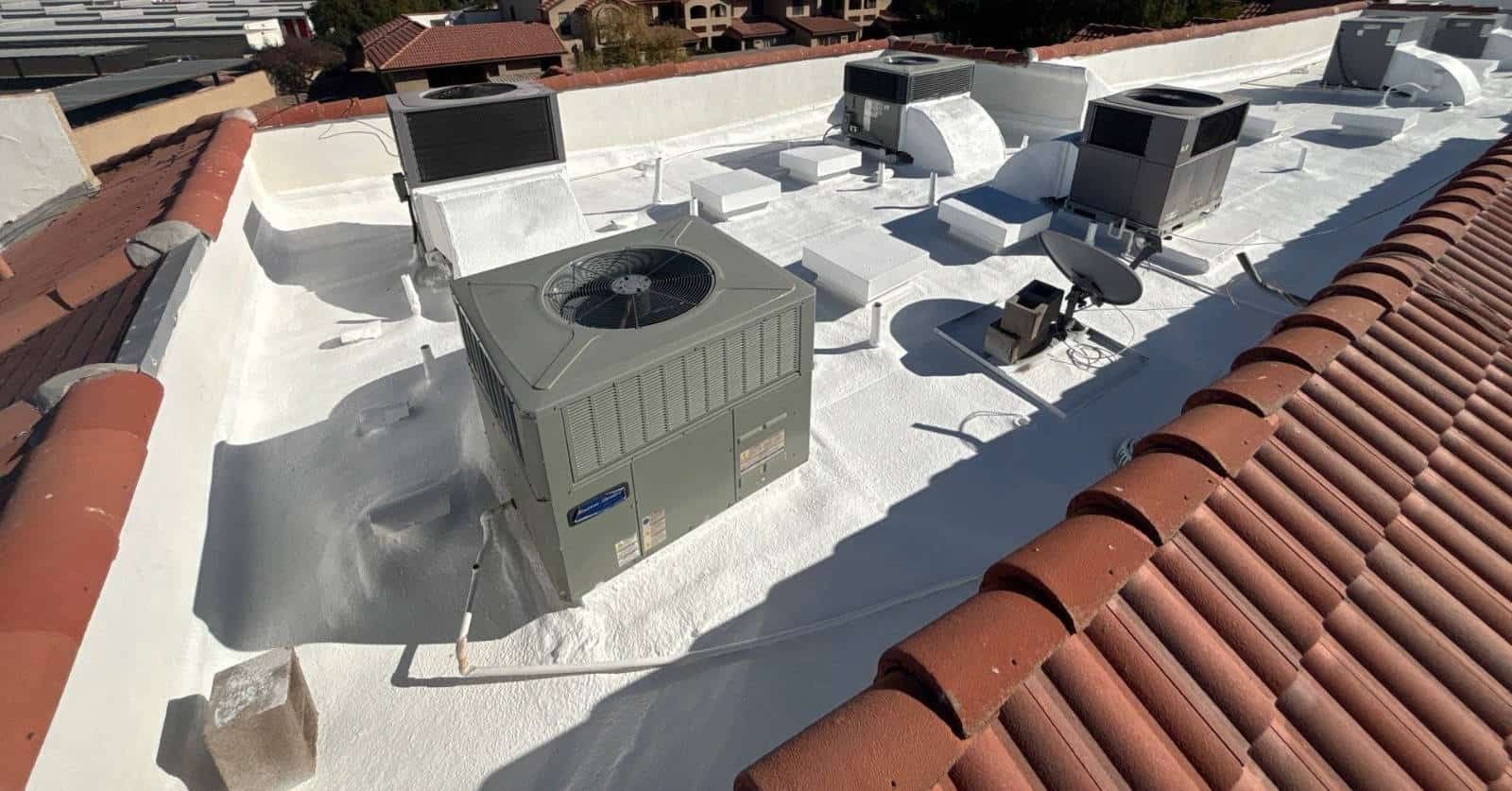
Many apartment buildings in the West Valley have foam roofs, often with tile mansards around the edges. Foam needs its coating renewed on schedule, so it belongs on the maintenance calendar. Our page on roofing in Peoria covers the roof systems we see most there.
Which roofing materials make sense for the long term?
For owners planning long term, upgrading to more durable roofing can pay off. Metal roofing, TPO membranes and modified bitumen are known for long life and resistance to weather damage, which means fewer repairs over the years. Whatever you choose, make sure your contractor offers warranties or guarantees on the work.
Planning ahead matters as much as material choice. Set a schedule for regular inspections, and set aside a budget for ongoing maintenance and repairs. That keeps surprise expenses down and keeps the roof in good condition for years.
A simple roof file for each building makes planning easier. Keep these in it:
- The install date and roof type for each building
- Warranty paperwork from the manufacturer and the installer
- Every inspection report, with photos
- A list of repairs, with dates, locations and costs
With that file in hand, you can see which buildings are aging fastest and plan replacements years ahead. HOA boards can use it to keep their reserve studies accurate.
Caring for a multi-family roof takes a steady approach, from regular inspections to well-timed repairs and, when the time comes, a full replacement. Partner with an experienced contractor, deal with issues early and keep residents safe and comfortable. To set up a maintenance plan or schedule an inspection, call Icon Roofing at (480) 427-7600, Monday to Friday, 8:00am to 4:00pm.