
What a Roof Inspection Finds and Why Every Roof Needs One
Most homeowners never climb onto their roof, so small problems go unseen until water shows up inside. Here is what an inspection catches and how often to get one.
Key takeaways
- We recommend an inspection every year for every roof, and more often if trees or birds are around your home.
- Exposed tile underlayment can only take Arizona sun and heat for about 3 to 9 months, so a broken or missing tile needs quick attention.
- Brand-new and builder-grade roofs often have installation problems that home inspections miss.
- A good inspection report includes photos with problems marked in red and a list of proposed repairs.
- On some roofs, yearly inspections are part of keeping the roof warranty active.
Why do you need a roof inspection?
A roof inspection tells you whether something is wrong with your roof before it turns into a leak, rot or an early replacement. Most homeowners never get up on their roof, so they do not know its condition or even what type of roof they have. The longer a roof goes uninspected, the more likely water gets in.
Think of it like your car. A roof needs regular checkups to keep working the way it should. A good roofer checks every square inch of the roof to make sure it is sound, then tells you how it is holding up and how long it should last.
Some homeowners do not realize how much damage a leaky roof can cause. Others assume that because the roof looks fine from the street, nothing is wrong. An inspection finds the problems you cannot see from the driveway. It also tells you roughly how old the roof is and how much life it has left, which helps you plan. Our guide to the stages of a roof’s life cycle explains where inspections fit into the bigger picture.
What warning signs can you spot from the ground?
You can catch several warning signs yourself: water stains or bubbling paint on ceilings and walls, missing shingles, stains under the eaves, broken or missing tiles, rotted wood at the roof edge, and ceiling cracks. If you notice any of these, call a roofer for a closer look rather than waiting for the next storm.
- Water stains or bubbling paint. These are the most common signs of a roof leak. The water may come from the roof, an A/C unit or a parapet wall. It could also be plumbing, stucco or a window, but it is better to know for sure.
- Missing or loose shingles. Call a professional right away. Sun and heat break down the underlayment beneath a missing shingle, and leaks follow.
- Water stains under the eaves. Staining on the underside of the plywood, fascia or trim is common on older roofs. We call it “writing on the wall,” because it means the roof is slowly failing.
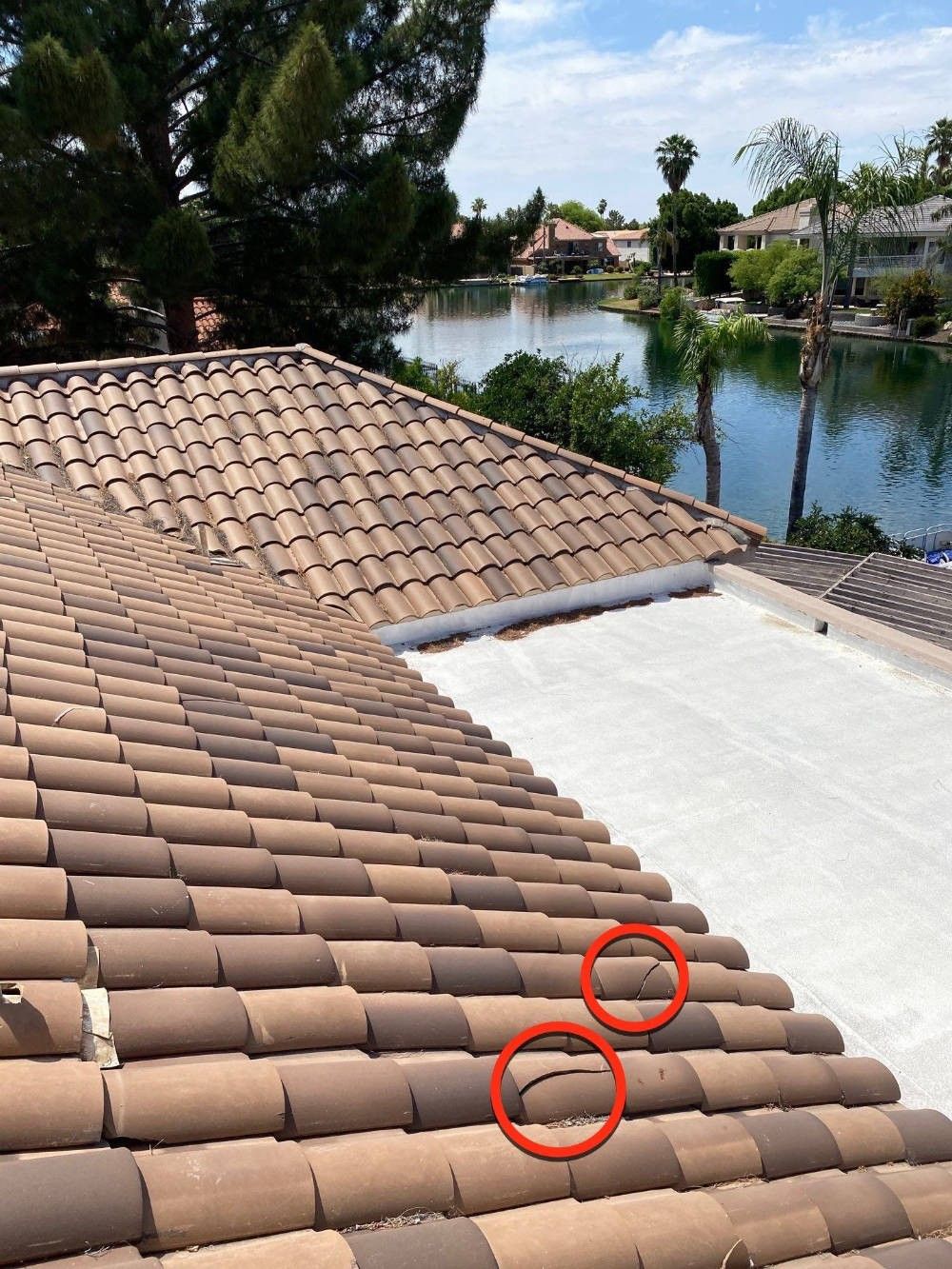
- Broken or missing tiles. Tiles break and fall off during monsoon storms, which is very common in the Valley. The underlayment beneath can only handle direct sun and heat for 3 to 9 months, depending on the product.
- Rotted wood. Rot under the soffits is common on older roofs that have failed. Plywood, fascia, trim and frieze boards are all visible from the ground.
- Cracked ceilings. Cracks are not always water damage. They can be settling or structural cracks, or bad drywall tape, which is common in older homes.
The more often you look around your property, the quicker and cheaper the fix usually is.
You do not need to climb a ladder to do this. Walk around the house once a month and look up at the roof edge, the eaves and the gutters. After a storm, check the yard for pieces of tile or shingle. Inside, glance at the ceilings in closets and around vents, where small stains often show up first. Take a photo of anything odd so you can show it to your roofer.
How often should you schedule a roof inspection?
We recommend an inspection every year for every roof, and more often if trees or birds surround your home. If the roof is in good shape, once a year is usually enough. If it shows wear and tear, schedule inspections more often. Always have the roof checked after a major monsoon storm.
Trees and wildlife do more damage than most people expect. Tree branches, palm fronds, pigeons, roof rats and leaves all cause problems, and the damage usually goes unnoticed until it is too late. The National Roofing Contractors Association also advises regular checks and inspections after severe weather in its roofing guidance for homeowners.
An inspection is about more than leaks. We look for shingle wear, missing flashing, damaged gutters, loose tile work and corners cut during the original installation or the last roof replacement. Skipping inspections is how small issues become bigger, more expensive ones.
Does a brand-new roof need to be inspected?
Yes. Roofing problems get missed on home inspections all the time. Builder-grade roofs often have missing storm collars, stretched tile courses, broken mortar packs, broken tiles and tiles that have slipped out of place. Even if the roof passed a home inspection, a roofer’s inspection makes sure it was installed right.
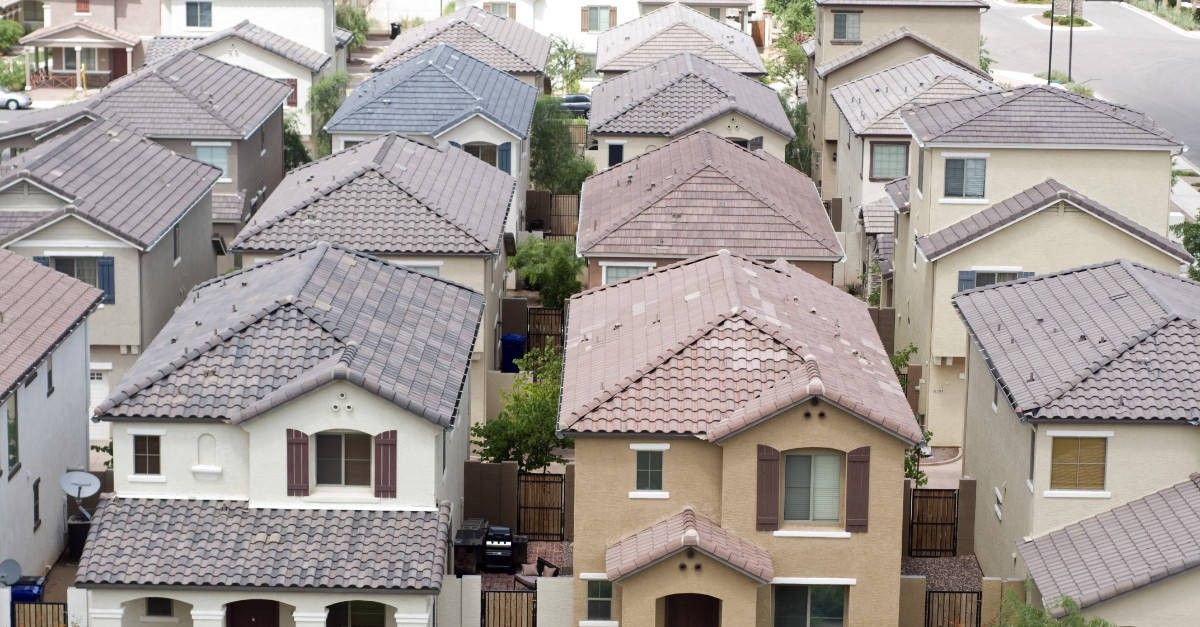
This matters most in newer neighborhoods. Much of the housing in places like Gilbert went up from the 1990s on, and many of those homes still have their original builder-grade roofs. If you live there, our page on roof services for Gilbert homeowners covers the roof types we see most.
A new roof is also the cheapest roof to fix. Catching a missing storm collar or a few slipped tiles in year one costs far less than repairing the water damage they cause in year five.
What is included in a roof inspection?
A roof inspection covers the whole roof and the soffits. We review the roofing material, any warranties on it, and the overall condition and structure. You get photos with problems marked in red, a review of the results in person or by phone, and an email with proposed repairs if any are needed.
Here is what we check:
| Area | What we look for |
|---|---|
| Roof deck | Soft spots, sagging and signs of water damage |
| Roofing material | Missing or broken shingles and tiles, slipped tiles, worn membrane |
| Underlayment | Exposed or damaged sections |
| Mortar packs | Cracked or broken mortar at ridges and hips |
| Valleys | Debris buildup and dead valleys that hold water |
| Flashing | Gaps or damage at walls, vents, chimneys and skylights |
| Chimneys, skylights, dormers and vents | Leaks, cracks and debris trapped behind them |
| Soffits and eaves | Water stains and rotted wood |
The inspection also helps make sure your home is getting proper protection from the elements. In some cases, yearly roof inspections are needed to keep a roof warranty active, so keep your reports.
How much does a roof inspection cost?
Across the Valley, most roof inspections cost between $75 and $500. The price depends on the size of the roof, the type of roof and where the property is. Homes in outlying cities such as Maricopa, Anthem, Florence, Coolidge and Casa Grande usually cost more to inspect because of drive time and fuel.
Ask about pricing when you call, since it depends on the roof. Either way, the cost of an inspection is small next to the cost of a leak that runs for months. You can see our full range of roof inspection services for homes, multi-family buildings and commercial properties.
How do you schedule a roof inspection?
Call or text Icon Roofing at (480) 427-7600 to have your roof fully inspected. Most inspections take about half an hour, and we recommend one every year, plus extra visits if your roof shows signs of wear or storm damage. Office hours are Monday to Friday, 8:00am to 4:00pm.
When you call, tell us what kind of roof you have if you know it, how old it is, and whether you have seen any stains or leaks. That helps us bring the right equipment and focus on the right areas. If you are not sure what type of roof you have, that is fine too. Finding out is part of the inspection.
The more you know about your roof, the more money you save and the better your home holds up.