
How to Tell When Your Phoenix Roof Is Ready to Be Replaced
Heat, UV and monsoon storms wear Phoenix roofs out faster than roofs in milder places. Here are the six signs we look for when a roof needs replacing, not another patch.
Key takeaways
- Phoenix roofs age faster than the national average because of constant sun, extreme heat and monsoon storms.
- On tile roofs, the underlayment under the tile usually fails long before the tiles do.
- If damage covers more than about a fifth of the roof, a full replacement usually makes more sense than repairs.
- A sagging roof deck is a structural warning that needs a professional right away.
- Rising cooling bills with no other explanation can point to a worn roof or wet insulation.
How do you know your Phoenix roof needs replacing?
Your Phoenix roof likely needs replacing if it is near the end of its expected life, has widespread cracked or missing material, keeps leaking after repairs, sags, or is driving up your cooling bills. One sign alone may only call for a repair. Two or three together usually mean the roof is done.
Phoenix gives us more than 300 days of sunshine a year. That is great for weekends and hard on roofs. Extreme heat, strong UV and the occasional violent monsoon storm all speed up wear. Roof surfaces can swing 50°F in a single day, and that constant expansion and contraction cracks shingles, loosens flashing and dries out sealant.
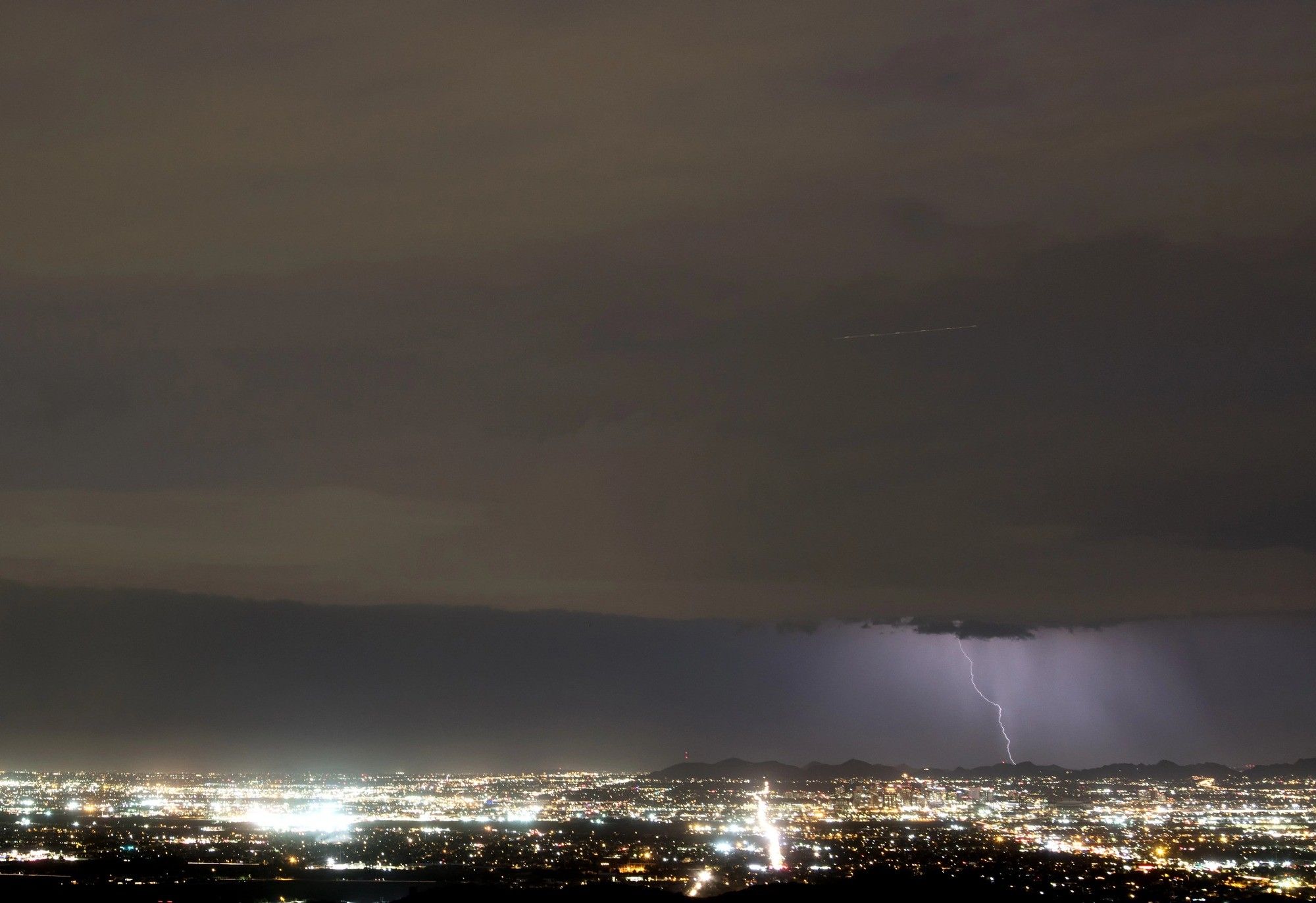
Average highs reach about 107°F in July, and most of our rain comes in short, heavy bursts in summer. These conditions can shorten roof life by 20 to 50% compared with national averages. Ignoring the warning signs can lead to expensive interior repairs and, in some cases, an insurance claim that gets denied because the damage looks like long-term wear. If that has already happened to you, see our page on getting help after a roof insurance denial.
Below are the six signs we look for on tile, shingle and foam roofs across the Valley.
Is your roof past its expected lifespan?
Age is the simplest sign. Desert roofs wear out sooner than roofs in milder climates. Here, asphalt shingles typically last 15 to 30 years, tile roofs 40 to 50 years or more with good care, and foam roofs 15 to 35 years with regular recoating. If your roof was installed before 2000, it is likely time.
| Roof type | Typical life in Phoenix | What usually fails first |
|---|---|---|
| Asphalt shingle (three-tab) | Lower end of 15 to 30 years | Shingles crack, curl and shed granules |
| Asphalt shingle (architectural) | Upper end of 15 to 30 years | Seals at edges and penetrations |
| Clay or concrete tile | 40 to 50 years or more | Underlayment, typically every 15 to 20 years |
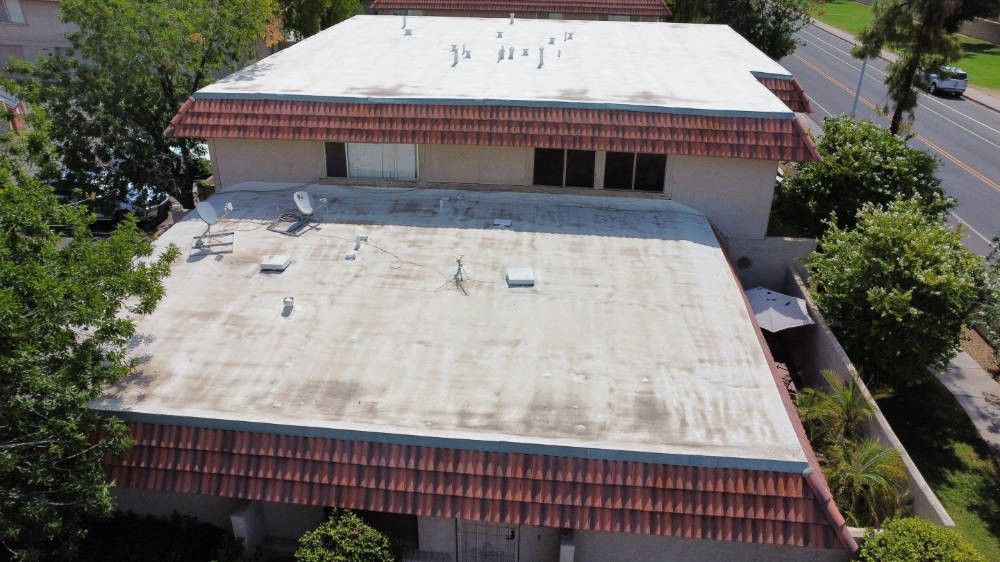
| Foam (flat roofs) | 15 to 35 years | UV coating, which needs recoating every 5 to 10 years |
Tile is the one that surprises people. The tiles themselves can last for decades, but the underlayment beneath them is the real waterproof layer, and it wears out first. A tile roof that looks fine from the street can still leak because the underlayment has dried out and cracked.
Age also matters when storms hit. In 2025, Phoenix homes with roofs over 20 years old were especially vulnerable during the severe September and October hailstorms. Those storms affected more than 11,000 properties, with hail up to 2.5 inches across. Our guide to getting your roof ready for monsoon season covers what to do before the next one.
What visible damage calls for replacement instead of repair?
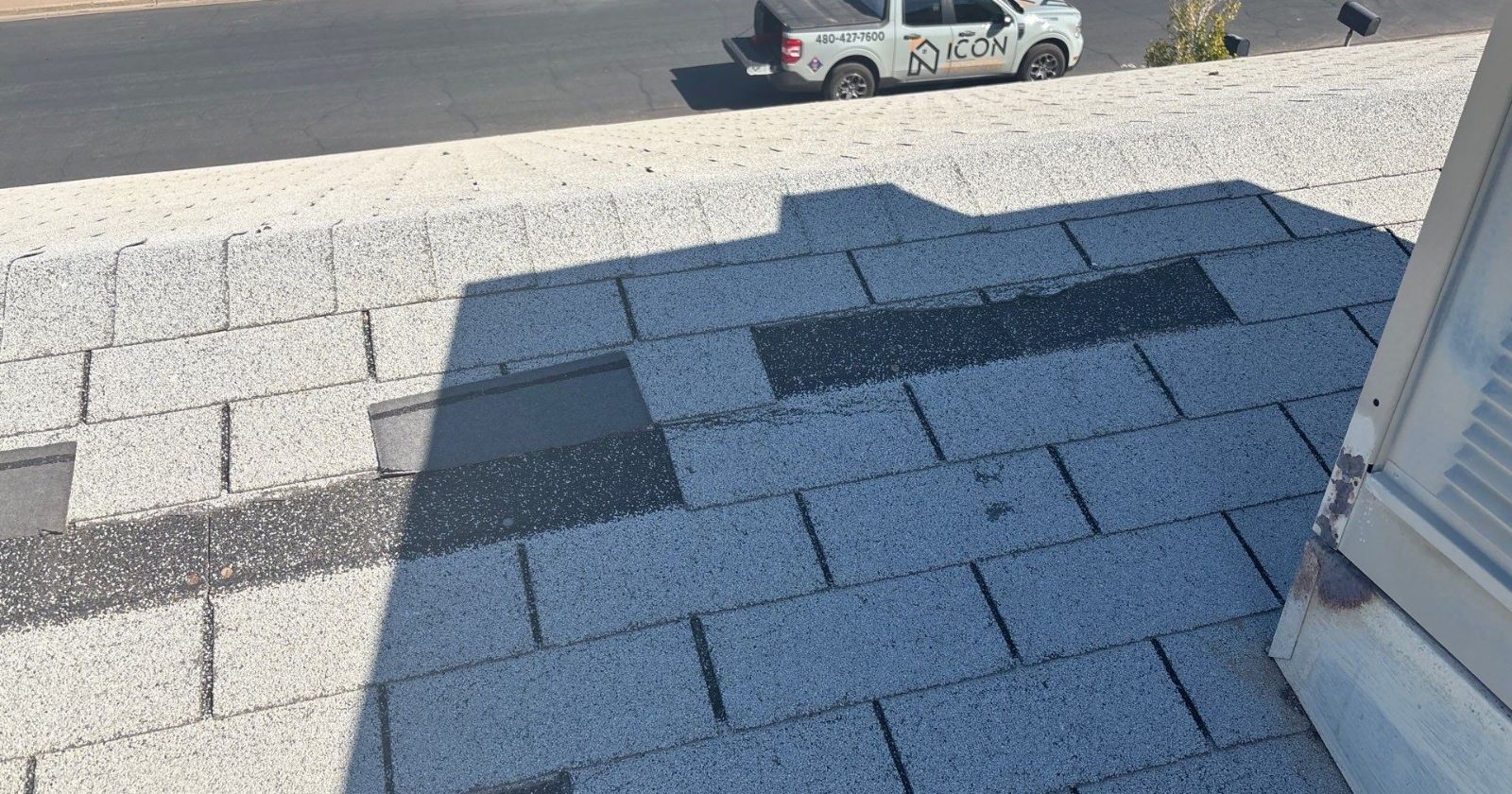
Widespread damage is the line between repair and replacement. If cracked, curled or missing shingles or tiles cover more than about 20% of the roof, patching will not keep the roof sound. Heavy granule loss on shingles and blistering on foam roofs are also signs that the surface material is breaking down.
Inspect your roof from the ground or a safe ladder, or have a professional do it. Here is what to look for:
- Cracked, curled or missing shingles or tiles. Heat curls shingle edges and cracks them. Hail and wind chip tile.
- Granules in your gutters. Granules protect asphalt shingles from UV. When you find a lot of them in the gutters or at the bottom of downspouts, the shingles are wearing out.
- Blisters or bubbles on flat roofs. Foam roofs can bubble when moisture gets trapped. Monsoon rain, which averages about 2.7 inches in Phoenix, makes this worse.
If you are weighing material options for the new roof, our comparison of tile and shingle roofs lays out the trade-offs.
Do leaks and ceiling stains mean you need a new roof?
Leaks mean water is getting past the roof’s last line of defense. One leak may be a repair. Leaks that come back after repairs, or leaks in several places, usually mean the underlayment or flashing has failed across the roof. At that point, replacing the roof is often the better long-term fix.
Water damage is slow and quiet. Signs include:
- Ceiling or wall stains. Brown spots or discoloration point to a leak. In the attic, look for damp insulation or mold.
- Dripping during rain. An active leak in a storm usually means failed flashing or underlayment.
- Higher energy bills. Wet insulation stops working, so your AC runs harder through 110°F summers.
The 2025 monsoon season brought heavy rain and winds over 60 mph, and many leaks we saw that year started at old flashing. If a storm caused the damage, learn how we help with roof damage insurance claims before you call your insurer.
What does a sagging roof deck mean?
A sagging roof deck is a sign of structural failure, usually from long-term water damage or poor installation. It is not something to wait on. Look for uneven roof lines, dips in the deck, visible bowing from the ground, or creaking sounds. Call a professional right away, because a weak deck can get worse fast.
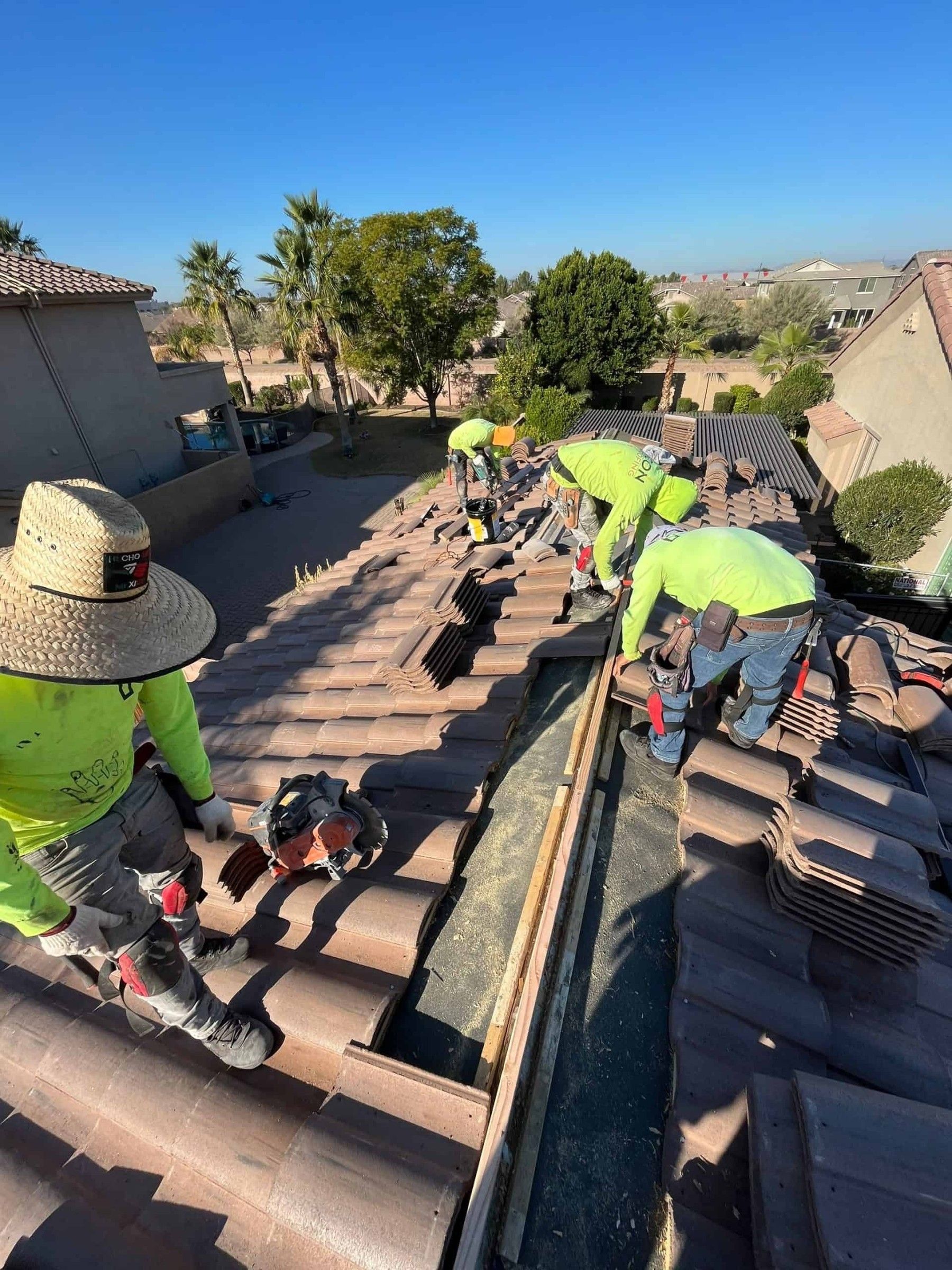
Monsoon microbursts in Phoenix can push winds up to 100 mph, and a weakened deck is far more likely to fail under that load. When we replace a roof with a sagging section, we tear down to the decking, replace rotted boards and check the framing before any new material goes on. That work is what makes the new roof last.
Can debris, dust and moss shorten a roof’s life in Phoenix?
Yes. Moss and algae are rare in dry Phoenix, but they can grow in shaded spots and trap moisture against the roof. Debris from dust storms is more common. It clogs gutters and valleys, holds water against the roof and can cause rot. If buildup has already caused rot, replacement may be needed.
The major 2025 monsoon event that hit Sky Harbor caused widespread tree damage and left gutters across the Valley packed with debris. Clean your gutters and roof valleys after each haboob. If you find soft or dark wood at the roof edge when you do, have it checked.
Why are your cooling bills climbing?
An aging roof loses its ability to reflect heat and keep it out of the attic. If your bills are climbing with no other explanation, your roof may be the cause. Worn shingles or foam can raise energy use by 20 to 30%, while tile roofs hold up better because the tile shades the roof deck.
When you replace, material choice matters for comfort. As a GAF Master Elite contractor, we install GAF systems, and the right shingle color, underlayment and attic ventilation can all help a new roof run cooler.
What should you do if you spot these signs?
Do not wait for the next storm. Get a professional inspection so you know whether you need a repair or a full replacement. We offer free inspections and estimates, and we can help with insurance claims when storm damage is involved. Call (480) 427-7600 or visit our roof replacement services page to start.
We serve all of Phoenix and nearby cities, including Mesa, Chandler and Scottsdale. For more on our work across the city, see our page on roofing in Phoenix. For general maintenance guidance, the National Roofing Contractors Association keeps a set of homeowner roofing resources.
We answer the phone Monday to Friday, 8:00am to 4:00pm. Stay Icon Dry.